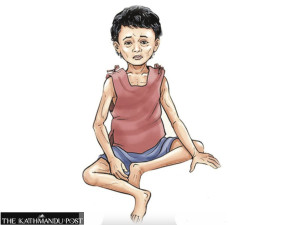
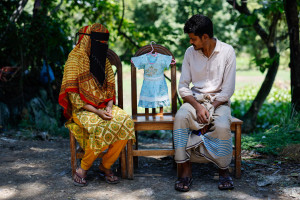
Two percent of children aged six to 59 months in Nawalparasi-West district of Lumbini province have been found suffering from severe acute malnutrition, a preliminary report of a new study carried out by the Ministry of Health and Population, shows.
According to the study carried out in all wards of all seven local levels of the district, with financial support from Helen Keller International, 15 percent of the children of the same age group have also been found suffering from moderate acute malnutrition.
Officials concede that the report indicates no progress has been made in the nutrition sector in the last five years in the districts of Lumbini Province, as the Nepal Demographic and Health Survey (NDHS)-2022, had shown the same figure.
“Yes, our study does not show any improvement in nutrition status in Nawalparasi-West,” said Lila Bikram Thapa, chief of Nutrition Section at the Family Welfare Division under the Department of Health Services. “Though the study has not been carried out in other districts, the situation could be similar there too.”
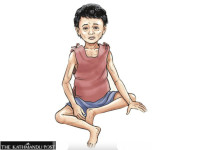
Malnutrition is a silent crisis in Nepal. Severe acute malnutrition means the most extreme and visible form of malnutrition, which requires urgent hospital care. Children suffering from severe acute malnutrition are 10 times more at risk of dying compared to healthy children.
Moderate acute malnutrition, also known as wasting or low weight for one’s height in children, and if not treated properly and on time, it will lead to severe acute malnutrition, meaning that it could lead to higher mortality risk.
Nepal has made significant progress in reducing severe forms of malnutrition among children under five. According to the Nepal Demographic and Health Survey-2022 report, stunting decreased from 57 percent in 2001 to 25 percent in 2022.
Wasting, a debilitating disease that causes muscle and fat tissues to waste away among children under five, decreased from 11 percent in 2001 to eight percent in 2022.
Even though the NDHS report showed some improvement in the country’s overall nutrition status, progress is uneven across provinces. More than 16 percent of children under five years in Lumbini province were found to be suffering from wasting. The problem in Lumbini was even worse than in Karnali or Sudurpaschim provinces, which had 3.8 and 5.1 percent of children suffering from wasting at the time
The national average of wasting was only eight percent in 2022.
Nutritionists say wasting represents failure to get nutrient food in the period immediately before the study. What worries them more is this is not the time during which season factors influence nutrition status.
They say that malnutrition cases in Nepal generally rise in April-May and in September-October, and that households have sufficient food in the harvesting season.
“A lack of progress in nutrition raises questions about the ongoing measures taken to deal with the problems,” said Dr Atul Upadhyay, a nutritionist. “Ongoing programmes being carried out are ineffective, insufficient and fail to identify targeted groups.”
Experts say malnutrition is not only a matter of inadequate food but also of lack of nutritious food, of lack of knowledge about using locally available food, and the growing trend of feeding junk food to children. Poor sanitation and lack of safe drinking water and timely treatment are blamed for the rise in malnutrition problems.
According to experts, malnutrition also affects children’s mental growth, which in turn undermines the country’s economic health. It weakens intellectual capacity, limits productivity in adulthood, and increases vulnerability to certain diseases.
Malnourished children will be stunted if they do not get treatment on time. Such children are also prone to be affected by multiple non-communicable diseases later in life.
Nepal also has an international obligation to improve the condition of malnourished children.
The country needs to reduce stunting to 15 percent from the existing 25 percent by 2030 in order to meet the SDG targets, wasting to four percent from the current eight percent, underweight condition to 10 percent from the existing 19, and anaemia to 10 percent from more than 43 percent at present.
Arjun Poudel is a health reporter for The Kathmandu Post. Before joining the Post, he worked for Sagarmatha Television, Naya Patrika, Republica and The Himalayan Times.




 21.87°C Kathmandu