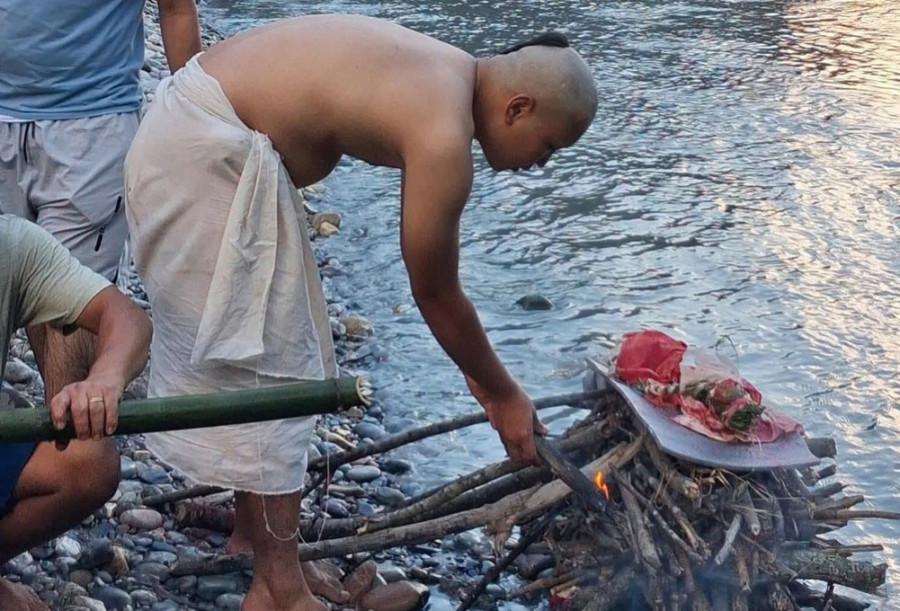
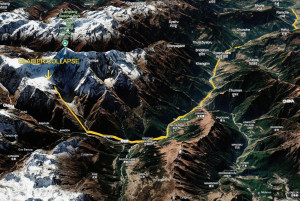
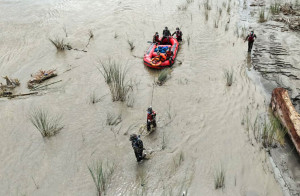
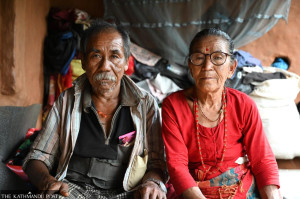
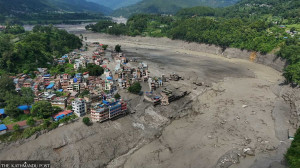
As of Wednesday, the confirmed death toll from the devastating Bhotekoshi flood stood at 1,399, while 5,179 people remained missing—more than three times the number confirmed dead. With little hope of finding their loved ones alive, several families of the missing have already performed funeral rites, using effigies made of kush, a sacred grass. Many others are waiting for government relief before they can perform the final rites for loved ones they believe they have lost forever.
Yet even when families accept that their loved ones are no more, Nepal’s existing laws do not. As a result, those whose loved ones remain missing are ineligible for government support. Without a body, they cannot obtain a death certificate. Without the certificate, they cannot claim relief or other assistance announced by the government.
The alternative is to wait 12 years under Nepal’s Civil Code. Section 40(1) of the code states that a person who has been continuously missing for 12 years, or whose whereabouts have been unknown for 12 years to people who would reasonably be expected to know them, shall be presumed dead unless there is evidence that the person is alive. Section 40(4) of the Code does enable a concerned person to apply to a court for a judicial declaration of death where someone has gone missing in a disaster or accident. But it would be both insensitive and financially burdening for the family members to go through a legal ordeal while in grief.
Such a provision is highly impractical in the circumstances facing families of Bhotekoshi flood victims. Even when local governments are willing to provide support, they remain bound by the law.
The legal hurdles also extend beyond immediate relief. The ancestral property cannot be passed on to other family members without evidence of the owner’s death. This prevents the deceased’s spouse and children from fully exercising their property rights and creates further complications in joint families, including the partition of land among siblings.
This is not a new problem. Hundreds of families of people who disappeared during the 1996–2006 Maoist insurgency have faced similar legal uncertainty for years. Decades after the conflict ended, many are still struggling to exercise their rights over property registered in the names of their missing family members. The state’s failure to resolve this problem has left families caught between the reality of a disappearance and a legal system that refuses to recognise the death.
The issue has been raised repeatedly, yet a lasting solution remains elusive. The Bhotekoshi disaster has once again exposed the consequences of this legal gap. Families of those missing in the floods are now facing the same uncertainty that conflict-affected families have endured for decades. Local governments, too, have recommended that the federal government provide a legal way to address the problem.
The government should not wait for another disaster to expose the same shortcomings. It should immediately remove existing hurdles for the families of those missing in the Bhotekoshi disaster to access relief and other essential state support without having to wait years for a presumption of death. At the same time, the government should initiate amendments to the relevant laws and take them through Parliament so that families can exercise their rights over property and other assets.
The Bhotekoshi victims should not become another generation of families trapped in legal limbo. It is time to end this legal uncertainty once and for all.




 15.48°C Kathmandu