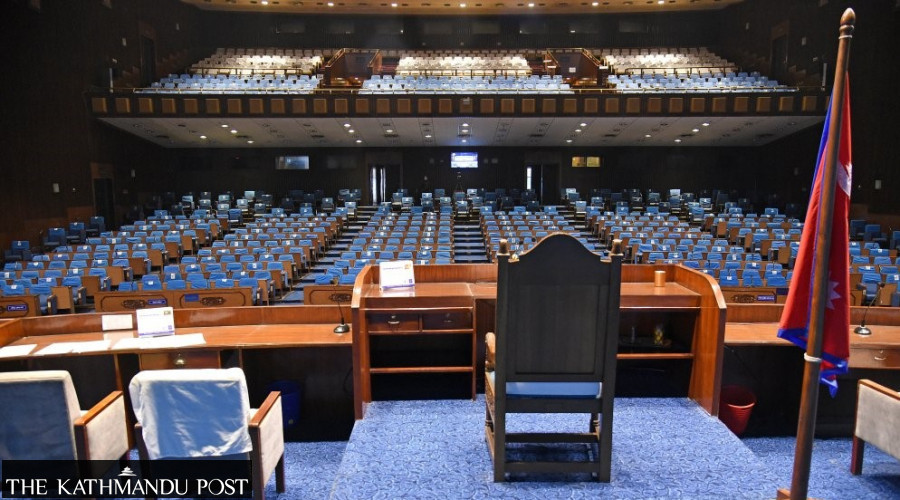
The new House of Representatives will formally take full shape on Thursday, with the Election Commission set to provide certificates to 110 lawmakers elected under the proportional representation system. Then, next week, all 275 members will take the oath of office, as they begin their five-year term as parliamentarians. It will also mark the start of their test as lawmakers. Two parliaments elected after the promulgation of the constitution in 2015 were underperformers. The first federal parliament, elected in 2017, gave a thumping majority to the alliance of CPN-UML and CPN (Maoist Centre), which later merged into the Nepal Communist Party. The NCP had close to two-thirds parliamentary majority. However, the tussle among its top leaders greatly undermined the party’s electoral mandate. Then-NCP chair and prime minister twice dissolved the House, in 2020 and 2021. Even as the Supreme Court reinstated it on both occasions, parliamentary proceedings were affected. The reinstated lower house was focused on making and unmaking governments. Also, the UML, which was ousted from the government, resorted to months-long parliament obstruction as a protest over different issues. Consequently, the parliament could not focus on lawmaking.
The performance of the House elected in 2022 wasn’t satisfactory either. It also became a victim of inter-party feuds. While the Nepali Congress kept it hostage for days, demanding the formation of a parliamentary committee to investigate cooperative frauds, the Rastriya Swantantra Party followed suit. It, backed by the Rastriya Prajatantra Party, resorted to months-long obstruction, demanding a probe into the visit visa scam. That again directly hampered the lawmaking process. And the House died a premature death following its dissolution after the Gen Z movement. As a result, it could not even enact crucial laws needed to implement the constitution.
Studies by an Upper House committee suggest that the country still needs 39 Acts for full-fledged implementation of the constitution: only 111 of the 151 laws required to implement the 2015 charter have been enacted. These include crucial ones on education and federal civil service. Others, including those related to health, citizenship, and the authority of the President and Vice President, are also pending. The studies also reveal that some laws currently in force date back to 1953. Some other Acts date back to the Panchayat era (1961–1990) and need to be urgently updated.
The functioning of the three tiers of government and full-fledged implementation of the constitution have been affected by the lack of crucial laws. The new Parliament has the responsibility to make up for its predecessors’ non-performance. While the RSP, which will form the government, must take the lead in making Parliament effective, other parties also have the responsibility to cooperate to ensure that the required laws are passed on time.
The RSP secured close to two-thirds riding on the agendas of reforms. And reforms, in most cases, demand legal changes. Having won such overwhelming public support, it should be allowed to have necessary legal instruments to honour its pledges. While the Congress, UML, and other opposition parties share the responsibility for maintaining checks and balances on a powerful government, they should not waste Parliament’s crucial time on protests for their own sake. The public is also not in a mood for such political shenanigans right now. Yet it is the RSP lawmakers who should get the ball rolling by making good use of the public mandate they have garnered.




 15.26°C Kathmandu