



 18.82°C Kathmandu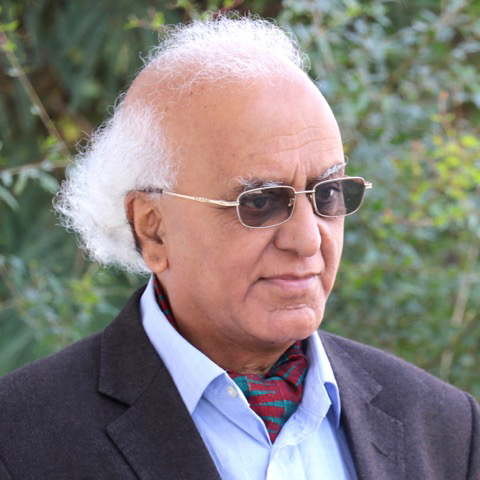

Mon, Oct 19, 2026
Columns
How Nepali literature should respond to political changes
Contemporary Nepali literature does not overtly reflect the chaotic nature of today’s political climate.
bookmark
Abhi Subedi
Published at : September 27, 2026
Updated at : September 27, 2026 08:38
Change is the dominant metaphor in Nepal today. Everything is judged through the lens of change. Political transformation is the most gripping. The shifts marked by the Gen Z protests of 8–9 September 2025 and the subsequent events have become a metonymy of change, and they also constitute the ethos of the times. Political and social changes make up history. Lyrical, poetic or literary manifestations of change are yet to appear. How this is represented in creative literature in Nepal is a subject of study.
In Nepal, change is often attributed to political transformation. Institutional and social transformations occur when a society begins to see new modes of metamorphosis. At such times, political changes are common, especially in countries that must cope with both human and natural interventions. Actions of those who handle state affairs and try to bring things to order after chaotic moments are featured prominently in all discussions in society through media and academia.
With my experience in creative writing, literary criticism, teaching and interpreting literature, I can say that literature is a powerful medium that can represent the moods of changing times more powerfully and successfully than perhaps any other medium of expression. Though it would be too hasty to draw conclusions based on changes I consider important, I would like to say that the consonance between the times and the moods of widespread change is a very important subject. Change is both universal and local. Literature is the most eloquent medium to show both.
Literary response to changing political times does not happen overtly. It often occurs through metaphor, metonymy and symbolism. But there is also another side. Literature can respond directly by promoting writings that are close to propaganda of certain political systems. Literature is both flexible and complex in giving voice to changing political times. This subject has engaged creative writers, literary critics and pedagogues who interpret the nuances of literary writings to show the moods of the times; political change is one of them.
Nepali literature has responded to various changing political times. I would like to recall a couple of interventions in Nepali literature and in political times. King Mahendra’s dissolution of the elected parliament in 1960 and the introduction of what was called a party-less Panchayat system in 1962 marked an important phase of modern Nepali politics and the literary response. Nepali literary writers responded to this political change by writing poetry that did not obtrusively oppose the king’s idea of creating a dream-laden political system, which was the king’s Panchayat vision developed to counter and suppress the multiparty democratic norms.
In an article titled “Literary Response to Panchayat Utopia”, published in the first issue of Martin Chautariʼs journal Studies in Nepali History and Society (June 1996), I made it a point to write that the literary writers responded to the king’s political system by means of rebellious poetic writing that was modernist in style and norm. We followed a method of interpreting history through literature, as propounded by scholar and academic Hayden White in his book Metahistory.
One important characteristic of Nepali democracy is the passionate response of the masses towards it. The literary response is founded on the same passion. We should see where we are at this time. It is a somewhat complex subject that defies any neat analysis, especially at this moment. We can see that the current Nepali literary writings do not overtly reflect the complex and somewhat chaotic character of the political times. Nepali literary writers do not follow the same modus operandi as other analysts.
The Nepali literary practice shows that Nepali writers have their own modes and methods of writing about society and epochal changes. There also exists a tradition of Nepali authors writing in a direct style about the political conditions and the social and ideological changes in the country. Some writers oriented to political ideas see themselves as ‘progressive’ because they believe that the role of the writer is to write with politics as their principal guide. There are others who write on other diverse themes. They do not necessarily draw their motifs from any defined areas. Free choice of themes, styles of expression, and experimentation guide them. But what is also obvious is that such writers saw a dichotomy between their different pursuits, especially in politics and literary writing.
The famous binary of politics and literature has been a subject of discussion among writers and critics. Some say their writing is a non-political praxis. They cite the famous confession of BP Koirala that he is a socialist in politics and an anarchist in literature.
Nepali literature in the current political climate has been neither vocal nor allusive about the political changes. This is a subject of detailed critical study. Literary activities do not evince direct euphoria or dismay about the political changes that have occurred in Nepal. A look at the published works in poetry, fiction and drama shows that the usual trend of writing has not changed. Instead, some interesting and good works written by writers in Nepal and the diaspora about dynastic Nepali history are produced and read.
No major literary works have given voice to current political changes. Interestingly, some good fictional works about indigenous people, traditions and their existence have come out and drawn the attention of readers and institutions. Poetry has been a powerful genre in Nepali literature. But the poetry I have been reading does not seem to weave the genius of the current times and moods into poetic creation. However, as a literary critic and writer, I must say that the dearth of directly politically oriented literature, especially poetry and fiction, does not reflect the disadvantage of Nepali creative writing. But it is natural for us to wait to see literary works that depict both the angst and euphoria of changing times.
Abhi Subedi
Abhi Subedi is a poet, playwright and a columnist.




Most Read from Columns
Before you take credit for Khula Manch, read its history
Shah went to the UN to speak for Nepal, then left before he could make the most of it

Bhotekoshi flood wasn’t a freak event. It’s the Himalaya doing what it does

Lesson learned after the death of Ronaldo
Why passive neutrality won’t take Nepal anywhere
Editor's Picks




E-PAPER | October 19, 2026

×