Has Nepal actively supported multilateralism in recent years? Is it now seeking global support for an unprecedented natural crisis through its most favoured and established diplomatic platform—multilateralism? Or are natural disasters themselves transforming Nepal’s diplomatic practices? Indeed, we need a more detailed and objective discussion of these self-critical questions before assessing the fragility of contemporary multilateralism and developing our diplomatic strategies.
It is fair to say that Nepal could not have fully escaped—more precisely, has not given sufficient attention to—the broader critical perception that Nepal often consumes most of its diplomatic energy responding to power games among a limited number of superpowers. As clearly illustrated in Nepal’s Foreign Policy 2020, the country pays particular attention to the changing nature and dynamics of the world order, particularly those shaped by shifts in the material power capabilities of the superpowers. It is also widely claimed and criticised that Nepal often alternates between external balancing and hedging—two primary strategies emphasised by material power-based theories of international relations—in its relations with the major powers. On the other hand, its overemphasis on political relations with a limited number of major powers has been interpreted as evidence of Nepal’s waning interest in multilateralism in recent years.
In this background, we must not underestimate the fact that Nepal’s position and strategies at the 81st UN General Assembly could mark a turning point in Nepal’s diplomatic path. The international community will interpret our diplomatic interests, strategies and future direction through the words, language and positions we articulate. Our prime minister’s speech will also mark the return to Nepal’s normal diplomatic practice following the political upheaval of September 2025. Nepal and its prime minister will also receive unprecedented attention at this Assembly.
Hence, we must consider two responsibilities simultaneously: making a sincere and compelling appeal to the international community for its support to overcome the natural crisis, as well as reaffirming our commitment to multilateralism with a clear vision for its future. In fact, we must recognise that we have entered a phase of developing a new Nepali vision of multilateralism centred on the climate change crisis.
To develop this vision, we first need to establish a clear and shared understanding of the contemporary state of multilateralism—particularly the nature and causes of its fragility. As Robert Keohane, a prominent neoliberal institutionalist, defines it, multilateralism is “the practice of coordinating national policies in groups of three or more states, through ad hoc arrangements or by means of institutions.”
Not only is the quantitative prerequisite of the participation of more than three national governments important, but several qualitative dimensions of multilateralism are also globally emphasised. Among these, three are particularly significant. First and foremost, we cannot conceive of multilateralism without placing generalised principles of conduct at its centre. Political scientist John Ruggie defines this core principle as one that ‘specifies appropriate conduct for a class of actions, without regard to particularistic interests of the parties or strategic exigencies that may exist in any specific occurrence’. It therefore precludes ad hoc or arbitrary responses driven by the particular interests and circumstances of individual states. It is thus unsurprising that multilateralism embodies the universal ideals that have shaped the liberal international order in the post-war era.
Agreed indivisibility is the second key quality of multilateralism. The members of multilateral communities are expected to share the burden collectively. More precisely, this principle has roots in the idealism that was influential during the inter-war period. It assumes that states can formulate reciprocal policies by taking into account both their own national interests and those of others. Adherence to international norms ultimately benefits all member states and humanity as a whole. The third main principle is diffuse reciprocity. As political scientist James Caporaso states, members of multilateral arrangements ‘expect to benefit in the long run and over many issues, rather than every time on every issue’.
What are the key phenomena or issues that seriously challenge the practical application of these basic principles of multilateralism in the contemporary world? Several issues and agendas have already been widely highlighted in global debates. These include the rise of the nation-first principle; heated trade competition and the revival of protectionism; the growing use of negotiationism; direct negotiations among the leaders of key countries that bypass key bilateral and multilateral institutions—a natural practice in the era of populism; the weak performance of several intergovernmental organisations in managing conflicts among member states; and so forth.
Two fundamental and interconnected issues underpin the global discourse on the crisis of multilateralism. First and foremost, a lack of committed global leadership fails to uphold and carry forward traditions that have already proved effective, bring key disputes to the table, and initiate discussions aimed at resolving them. In fact, the absence of effective leadership in multilateralism is a key psychological factor underlying the persistent discourse of crisis. We are already witnessing a clear global polarity: strong demands from middle powers to revitalise multilateralism, contrasted with the largely normative commitments of the superpowers.
Second, the visible limitations of international organisations in addressing issues such as trade, human rights and the environment have raised questions about their effectiveness and, more broadly, the liberal international order. Questions about whether states can actually unite to resolve collective problems have come to dominate academic and public discourse, gradually influencing politics and policymaking as well.
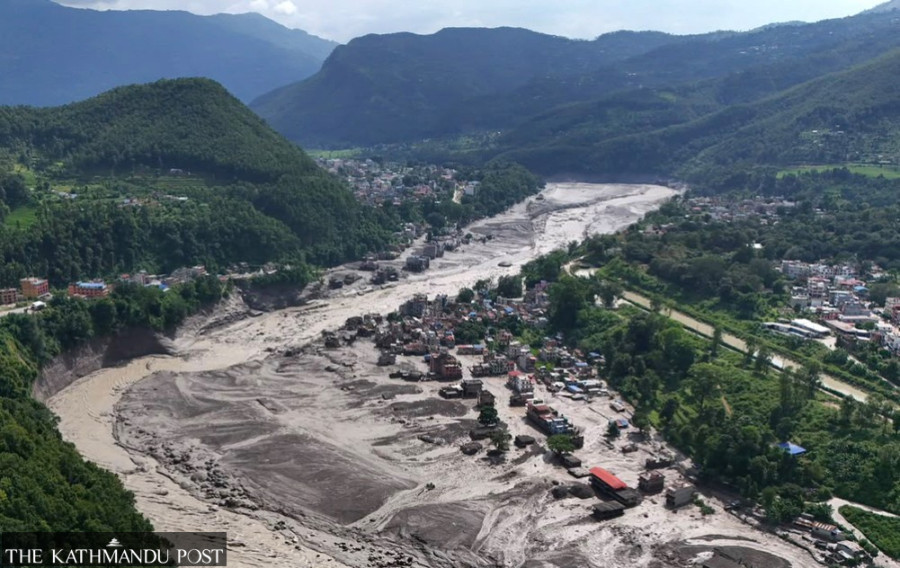
Now, how are we presenting these issues when making an appeal for multilateral action? We can resonate with the people and governments of many countries around the world who are earnestly seeking to restore multilateralism only by offering a genuine vision for addressing the underlying crisis of multilateralism. Yes, Nepal has a natural authority for this advocacy today. However, advocacy for multilateralism alone does not seem sufficient at this juncture. We must not hesitate to employ minilateralism to achieve effective outcomes, including sustained diplomatic efforts to promote Nepal’s leadership on the Himalayan-centred global climate crisis and to mobilise international support for addressing the consequences of the Rasuwa floods.




 23.84°C Kathmandu


.PNG&w=200&height=120)