



 23.73°C Kathmandu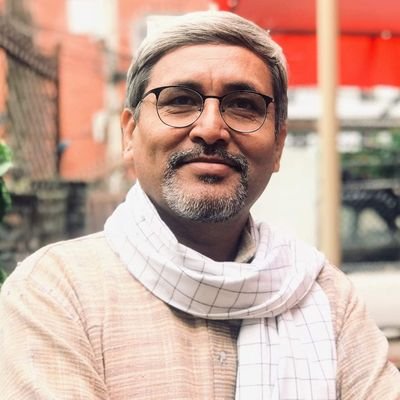

Sun, Oct 18, 2026
Columns
Democracy amid disaster: What kind of state do we need in a crisis?
A disaster grants rulers extraordinary power and authority, raising the question of whether they will use that power to protect citizens or restrict them.
bookmark
Chandrakishore
Published at : September 7, 2026
Updated at : September 7, 2026 22:06
Today marks the first anniversary of the Bhadaure Chatyang (Gen Z uprising). A year ago, the upheaval on Nepal’s streets drew the world’s attention. Today, the Bhotekoshi flood has left the world stunned. One event laid bare the restlessness of democracy, while the other has exposed the state’s preparedness and capacity. Against this backdrop, it is necessary to discuss the future of democracy in Nepal.
The massive flood along the banks of Bhotekoshi has receded. But what the river swept away remains: the empty spaces where bridges once stood, the traces of homes scattered by the flood, belongings buried in the mud, and the lingering anxiety in the eyes of those who do not know where their next day will begin. A disaster may appear to pass, but its impact lingers long after. Bhotekoshi has not only revealed the terrifying face of Himalayan instability. It has also posed a difficult question for Nepal’s state and democracy—what should the state be like in times of crisis?
The greater the natural disaster, the more powerful the state appears. The army, armed forces and police move into the disaster zones. Helicopters fly. Orders are issued. Information begins to flow to a single centre. Citizens expect immediate decisions and security. This is natural. But this is perhaps democracy’s most sensitive moment.
A disaster grants rulers extraordinary power and authority, raising the question of whether that power will be used to protect citizens or to restrict them. A disaster itself does not weaken democracy. The system of governance adopted in the name of disaster can weaken it. When the government treats an emergency as a ‘time when questions should not be asked’, when control over information is framed as security, when criticism is seen as an obstruction, when the existence of provincial and local governments is ignored, when the federal Parliament is not updated in time and when all decisions begin to concentrate in a single centre by sidelining political parties, a disaster becomes an opportunity for democratic contraction.
Democracy rarely ends in a single day. It shrinks gradually. This is where the concept of departure democracy becomes relevant. The distance between citizens and the state keeps growing. The process of government decision-making moves further from citizens, and they cease to be active participants in the state, becoming merely recipients of orders, relief and information. Disaster can further widen this distance.
But the reverse is also possible. A disaster can make the government more accountable if information is open, if the government shows humility towards institutions, if parliament is taken into confidence, if trust is placed in the capacity of local governments, if the role of civil society, political parties and ordinary citizens is respected and if there is coordination with the institution of the President. Only then can disaster strengthen democracy rather than weaken it. That is why the real question is not how powerful the government was in the time of crisis, but how transparent, accountable and citizen-centred the power was. Surviving a disaster is not only a question of the state’s capacity. It is also a question of what kind of citizen and what kind of democracy we want to preserve amid the crisis. Will the same demand for transparency and accountability raised by the young generation also apply in times of disaster?
Dopamine politics seeks visibility. Disaster governance requires institutional memory. Nepal must understand this difference. One more thing has become clear after this flood: the federal government cannot fight the disaster alone, and certainly not by relying solely on the security apparatus. Security personnel play an extremely important role. Their tireless effort and dedication are being openly praised. But making the army the sole synonym for disaster governance can undermine the idea of a democratic state.
Local government is the first to witness a disaster, provinces are a vital link for regional coordination, and the federal government is responsible for coordinating national resources, policy and international cooperation. Viewing the issue with a global perspective is also the federal government’s task. Only when these three levels work, not as substitutes for one another but as partners, does federalism prove its real utility in times of crises. The stronger the tendency towards coordination within the federal government, the more effective the state will be during a disaster.
A year ago today, the young generation that took to the streets did not merely demand a change of government. Within it lay a deeper aspiration—more transparent governance, greater accountability, a more open society, and a government based on values. It is necessary to understand that aspiration. Institutions should not be used to justify the centralisation of power. Tendencies that went overlooked in the past—when citizens continued to trust the judiciary, or other organs of the state, even as these institutions slowly became instruments of executive dominance—must not be repeated. An elected government should not be run from closed rooms. Organs of the state should not tend to become puppets of the executive.
Popularity is not an alternative to democracy. A popular leader can also be democratic. But popularity does not place them above democratic control. Social-media popularity may be a popular mandate, but it is not a certificate of freedom from accountability. The danger arises when populism puts on the cloak of democracy while institutions within it grow weaker. From the outside, the government may appear close to the people, yet the decision-making process moves further away. We can call this barricading democracy. Invisible barricades begin to be felt all around. The aspiration of Gen Z was the opposite. It was an aspiration to remove such barricades.
The Bhotekoshi disaster reminds us that the same democratic aspiration is also essential for disaster governance. To fight a disaster, one needs not only a strong state, but a trustworthy one. Not only a government that issues orders, but a government that listens. And above all, a government that does not turn the citizen into a passive subject in times of crisis. Extraordinary power may be needed in times of disaster. But extraordinary power must be matched by extraordinary accountability.
This is the point where the difference between ‘disaster governance’ and ‘disaster regime’ becomes clear. The first enhances the state’s capacity in a crisis while preserving the citizen’s agency. The second can turn crisis into an opportunity for centralisation, information control and the weakening of democratic oversight. So, we must decide—do we want a state that stands over us in a crisis, or a democratic state that stands with us in a crisis?
The waters of Bhotekoshi have receded. But this question is still flowing before democracy. True reconstruction will begin when citizens can once again ask the state: you kept working to save us, but did you also save our democracy?
Chandrakishore
The author is a veteran journalist.





Most Read from Columns

Before you take credit for Khula Manch, read its history
Shah went to the UN to speak for Nepal, then left before he could make the most of it

Bhotekoshi flood wasn’t a freak event. It’s the Himalaya doing what it does
Lesson learned after the death of Ronaldo
Why passive neutrality won’t take Nepal anywhere
Editor's Picks

Dashain paints the country in festive colours
Buying a goat for Dashain? Look for the green mark

Explained: Why does an hour long flight to Dhangadhi cost more than a flight to New Delhi?
Bhotekoshi flood wasn’t a freak event. It’s the Himalaya doing what it does

How Tenzing Sherpa became Nepal’s breakout star at the Asian Games
E-PAPER | October 18, 2026

×