



 14.2°C Kathmandu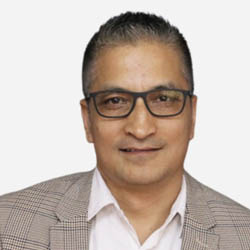

Fri, Oct 16, 2026
Columns
Raised $4 billion. Time for a new round
There is no better time than now for Finance Minister Wagle to hit the road to showcase his vision for Nepal’s economic prosperity and ask international investors to commit their capital and resources to Nepal.
bookmark
Suman Joshi
Published at : July 21, 2026
Updated at : July 21, 2026 21:24
A decade ago this summer, a 41-year-old economist stood among the architects of one of the fastest, most credible disaster assessments a poor country has ever produced. Nepal’s National Planning Commission (NPC) had one month to answer a pressing question after the 2015 earthquakes killed nearly 9,000 people: How much would it cost to rebuild and could the world be persuaded to pay for it?
Swarnim Wagle, then a member of the Commission, steered that process jointly with the World Bank, UNDP, the EU, ADB and JICA to deliver on June 15, 2015, a Post Disaster Needs Assessment (PDNA) which put the damage at roughly $7 billion and reconstruction needs at $6.7 billion, about 30 percent of GDP. Ten days later, at the International Conference on Nepal’s Reconstruction (ICNR), held under a tent in Tundikhel, the world answered. Over $4 billion was pledged, with India committing $1 billion, China $483 million, the World Bank $500 million and ADB $600 million.
It remains one of the more remarkable feats of economic diplomacy in Nepal’s modern history. This is why, when Wagle took oath as Finance Minister on March 27, so many people in Kathmandu’s business community allowed themselves a flicker of hope. Finally, here was a technocrat who had actually done the thing everyone talks about doing. He converted Nepal’s chronic credibility deficit into hard commitments from people who did not have to say yes.
The RSP’s near two-thirds majority in the March election meant that Nepal had, for once, the thing every economist says the country lacks: Political stability with a clear reform mandate and no coalition to appease. If ever there was a moment to convert legitimacy into capital, this was it.
On May 29, Wagle delivered the largest budget in Nepal’s history: Rs2,124.34 billion, targeting 7 percent growth up from 3.85 percent the year before. He doubled the income tax exemption threshold, cut the top marginal rate 10 points to 29 percent, simplified customs from 11 tariff tiers to seven, abolished excise duty on 360 goods and announced a sovereign wealth fund to deploy part of Nepal’s record $24 billion reserves. He proposed easier exit rules for foreign investors, a mechanism for Nepali firms to list on foreign exchanges through Global Depositary Receipts and a pledge to pursue new investment-protection and double-taxation treaties. On paper, it read like a market-friendly reset.
The market did not agree. In the first 100 days of the Balendra Shah government, the Nepal Stock Exchange fell on 45 of 67 trading days, sliding from a pre-inauguration high near 2,950 points to a six-month low around 2,570–a decline that continued even after the budget directly addressed long-standing investor demands. Nearly Rs600 billion in market value evaporated. Non-performing loans officially climbed to 5.6 percent. Private investment as a share of GDP fell from roughly a quarter to under a fifth. And most tellingly, by June, only 35 percent of the year’s capital budget had been spent, worse than the 44 percent managed by the previous government over the same period. A government elected explicitly to fix execution was executing worse than its predecessor.
Wagle, today, holds an interesting position, for he now has to cure the disease that he once diagnosed. As an opposition MP in April 2024, watching Nepal stage yet another underwhelming investment summit, he said plainly, “It’s been 30 years that Nepal has been asking foreigners to invest in Nepal. But they are not coming. Why should they come?”
He is now the man who has to answer his own question.
The PDNA playbook was built for sovereign-to-sovereign pledging: Governments and multilateral development banks committing grants and concessional loans against a public reconstruction bill that everyone had a humanitarian stake in closing. What Nepal needs now is a structurally different type of money—catalytic capital and commercial foreign direct investment. Providers of such capital only respond to measurable impact and risk-adjusted return.
Development Finance Institutions (DFIs), like IFC, the US Development Finance Corporation, British International Investment and ADB’s private-sector window, exist to provide catalytic capital to absorb early risk that commercial money won’t yet touch, proving out a market so others can follow. Nepal’s hydropower, agri-processing and climate-resilient infrastructure sectors are strong candidates as they are theoretically bankable. But there isn’t enough confidence among DFIs because of currency risk, uncertain offtake agreements, land acquisition friction, inconsistent policies and practices on the flow of foreign capital in and out of the country.
Multinational and regional private equity already active elsewhere in South Asia, portfolio investors and sovereign co-investors that are more commercially oriented want none of the development narrative. They want comparables. They want to see what has already worked in Nepal, what an exit actually looks like in practice and what an arbitration clause is worth when tested.
Wagle is uniquely equipped to speak to both audiences. His own 2011 World Bank research on FDI-specific regulation argued that what attracts FDI into a country is regulatory design, not the size of the tax break on offer. Few Nepali ministers could make that argument to a room of institutional investors in their own analytical language.
And there is no better time than now for Wagle to hit the road to showcase his vision for Nepal’s economic prosperity and ask international investors to commit their capital and resources to Nepal. Invite the hyper-scalers to set up ring-fenced 30 MW data centres alongside hydropower plants we have. Approach established infra builders specialising in building mega projects to commission rail networks to connect key cities under BOOT or HAM. Convene a marathon session with DFIs to improve their confidence to have them commit their capital for Nepali businesses in addition to the hydro and financial sectors.
Let’s not use geopolitics as an excuse to delay getting started. Given the clean governance and broader management bandwidth the new government brings to the table, coupled with Nepal’s superior brand equity, the perceived geo-political challenges should be manageable, especially with respect to our economic agenda.
Catalytic capital conversation should come before commercial roadshows in Singapore, Mumbai or Dubai, because early risk-absorption by development finance institutions is what makes the subsequent commercial pitch credible in the first place. Ideally, the newly proposed sovereign wealth fund should be positioned as a co-investment signal—evidence that Nepal is willing to put its own reserves alongside foreign capital.
And whatever gets negotiated needs an institutional home that survives the minister who negotiated it to ensure a delivery mechanism with statutory backing so that a cabinet reshuffle or the next election cycle does not strand half-built projects.
The continuity between Wagle’s two biggest tests, a decade apart, is the fact that his skill has always been producing numbers and arguments so rigorous that sceptical outsiders have no choice but to trust them. Can the man who previously raised $4 billion for a broken nation now persuade international private capital to invest in a politically stable Nepal brimming with potential?
Suman Joshi
Joshi is a former banker turned private equity investor.


.PNG&w=200&height=120)

Most Read from Columns
Before you take credit for Khula Manch, read its history
Shah went to the UN to speak for Nepal, then left before he could make the most of it

Bhotekoshi flood wasn’t a freak event. It’s the Himalaya doing what it does

Lesson learned after the death of Ronaldo
Why passive neutrality won’t take Nepal anywhere
Editor's Picks

Constitutional Bench caught in seniority, ‘pick and choose’ dispute

A Dom boy’s long road to becoming a doctor

From blankets to handmade dolls, two foreign women bring comfort to flood survivors

News Analysis: When institutional defence exposes institutional fault lines

It’s a bird … it’s a plane … it’s the Indian ambassador’s farewell tweets
E-PAPER | October 16, 2026

×