



 14.69°C Kathmandu

Sat, Oct 24, 2026
Columns
Is Rs25,000 enough compensation for a state-induced humanitarian crisis?
Can a one-time payment adequately compensate for the destruction of not only homes but also the social, economic and emotional foundations that sustain people’s lives?
bookmark
Ansuda Poudel
Published at : July 18, 2026
Updated at : July 18, 2026 22:45
The government of Nepal’s decision to provide Rs25,000 as compensation to families displaced by recent settlement clearances raises a difficult but necessary question: Can a one-time payment adequately compensate for the destruction of not only homes but also the social, economic and emotional foundations that sustain people’s lives?
Forced displacement isn’t simply the loss of shelter. It disrupts a full spectrum of life and wellbeing, including access to health care, education, nutrition, livelihoods, sexual and reproductive health rights, social networks and support systems, privacy, safety and human dignity. Can an amount of Rs25,000, even as a temporary solution, meaningfully compensate for losses that arose because of a process that should have been guided by constitutional guarantees, human rights obligations and dignified relocation, which instead resulted in a preventable humanitarian crisis?
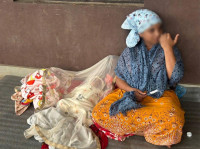
On April 26, the government began clearing settlements inhabited by landless dalits, landless people and informal settlers across Kathmandu Valley and other parts of the country, with operations continuing in several locations. According to official governmental records, more than 3,500 households, approximately 9,000 families and over 16,000 individuals have since been forcibly displaced. The demolitions took place before adequate planning and preparation of alternative housing, livelihood restoration, or long-term rehabilitation, leaving thousands navigating prolonged uncertainty and impacted by the crisis brought by displacement
The preliminary report jointly published by Nepal Mahila Ekata Samaj, Nepal Basobas, Gen Z Movement Alliance, backed by NAWHRD, compiled through field observations, ethnographic research, interviews, consultation with experts and review of official government data, media and relevant sources, presents a troubling picture. Beyond the widespread loss of homes, livelihoods and security, the assessment recorded the loss of lives of seven displaced individuals who have lost their lives including an infant during relocation, chronically ill people because of the holding centre’s situation and two by suicide, post-government operation.
Families were placed in holding centres, far from their workplaces, leaving many without a source of livelihood. Children experience far more than interruptions to their education. They lost familiar routine, friendships and stability essential for healthy development while being placed in a new environment and schools where discrimination and uncertainty persisted. The lack of adequate safeguards during the eviction process, coupled with an inadequate approach to rehabilitation, placed older people, persons with disabilities, pregnant women, infants, and chronically ill individuals at even greater risk. The repeated portrayal of these communities as ‘illegal encroachers’ further deepened stigma and social exclusion at the time when dignity and protection were needed most.
Months later, many families are still waiting for clarity while the government’s screening process continues with vague promises and little clarity about what comes next. The recent flooding of the Kirtipur holding centre, which displaced families once again, underscores how temporary arrangements have prolonged rather than resolved the crisis.
The question of landless and informal settlements in Nepal is neither simple nor new. It is the cumulative result of incomplete land reforms, urban poverty, caste-based discrimination, political conflicts, natural disasters, violence, unequal development, and long-standing structural failures. Precisely because this problem is so complex, it demands careful planning, clear implementation plans, meaningful consultation, and dignified relocation mechanisms before any large-scale action is undertaken. Settlement management was never the problem. The process was.
Often dismissed as ‘encroachers’, these communities remain indispensable to the urban economy. They constitute a significant workforce in the informal economy that keeps the city functioning. Their continued marginalisation reflects decades of exclusion from secure housing, land rights, and social protection, not a lack of contribution. Managing settlements should therefore have meant managing a complex social reality, not simply clearing land.
Nepal’s constitution, through Article 37 (Right to Housing) alongside Article 42 (Right to Social Justice), establishes residential security as a basic right and outlaws forced displacement without strict legal justification, a requirement for state-led inclusion of vulnerable and marginalised groups like landless Dalits. International human rights standards, including ICESER, UNDHR, UN General Comment No 7, and the UN Basic Principles and Guidelines on development-based evictions, require relocation to be lawful, dignified, transparent, participatory and accompanied by adequate rehabilitation. Sudden displacement without comprehensive alternatives appears fundamentally inconsistent with those commitments. Management and relocation should have preceded demolition, not followed by it.
The government has justified the settlement clearances on the grounds of flood risk mitigation, urban planning, and the restoration of public land. These are legitimate public objectives, and no one disputes the state’s responsibility to manage settlements or protect the public’s interests. However, the legitimacy of those objectives depends not only on what is done but on how it is done. Relocating thousands of families is one of the most complex responsibilities a government can undertake, which sets precedents for upcoming policies related to such issues. Hence, effective, transparent and participatory planning and implementation can not be treated as afterthoughts.
This is why the decision of compensation of Rs25,000 is fundamentally tone deaf. Compensation offered after the fact cannot restore livelihoods, interrupted childhoods, fractured communities, or months of uncertainty spent in temporary holding centres. Nor can it undo the trauma of displacement or replace planning that preceded demolition.
Settlement management was necessary. Long-term management of the landless remains necessary. What was not necessary was allowing a decade-old governance and systemic issue to evolve into a humanitarian crisis. Such efforts must be pursued in ways that uphold constitutional rights, protect human dignity, and ensure that those already marginalised should not be further burdened as a cost of development. Sustainable development is always transparent, people-centric, and participatory. The true measure of democratic governance is not how quickly land is cleared but whether citizens are given a fair chance to rebuild their lives with dignity, security and hope.
Ansuda Poudel
Poudel is a queer feminist activist and a student of political science and sociology.




Most Read from Columns



Editor's Picks





E-PAPER | October 24, 2026

×