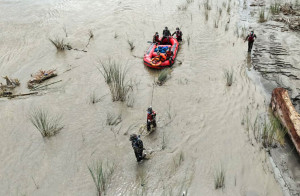
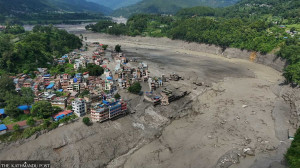
The incessant rain of October 4-5, 2025, completely submerged the Durga Bhagwati Municipality of Rautahat District. The flood not only entered people’s homes but also inundated the municipal hospital. Among the displaced were women in the late stages of their pregnancy seeking maternal health services. The local government, with the support of humanitarian agencies, immediately set up a temporary maternity unit that provided emergency delivery care for 21 women. This story is not isolated to Durga Bhagwati Municipality. The floods and landslides brought by the same rainfall event affected 30,000 families in Bagmati, Madhesh and Koshi provinces. Such disasters occur every year, impacting the lives and economy of the country.
According to the 2024 Nepal Disaster Report, 32,375 disaster incidents occurred between 2018 and 2024. These disasters took the lives of 2,996 people, of whom 1,278 were men and 1,678 were women. This data illustrates that women are disproportionately impacted by calamities. Yet, these numbers are not sufficient to explain the complex nature of disaster vulnerability. Besides women, children, the elderly, people with illnesses, persons with disabilities, Dalits, the landless and the poor are affected by disasters. Existing socio-cultural norms and economic structures further increase the vulnerability. Though this report acknowledges the impacts of disasters on these vulnerable groups, it has limited Sex, Age and Disability Disaggregated Data (SADDD). Such data is necessary to identify who is at risk and why, and could further support preparedness and response planning.
Different organisations have defined vulnerability. The United Nations Office for Disaster Risk Reduction (UNDRR), for instance, defines vulnerability as “the conditions determined by physical, social, economic and environmental factors or processes which increase the susceptibility of an individual, a community, assets or systems to the impacts of hazards.” Vulnerability is also unevenly distributed across society.
Women face increased disaster risk due to their unequal caregiving burden, which is likely to reduce their mobility. At the time of the 2015 earthquake, for example, many women could not immediately escape to safety because they were unable to leave their children behind. They are at risk of physical and sexual harassment in temporary shelters. Their limited access to information and resources, and the loss of livelihood could further diminish their independence. Likewise, children who largely depend on adults for care and protection, too, are at risk during disasters. They could get injured, become malnourished, experience psychological traumas and experience disruption of education.
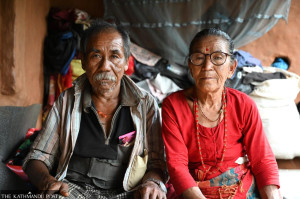
Additionally, people with illnesses, the elderly and persons with disabilities face challenges related to mobility during evacuations and a lack of medications, further impacting their health and well-being. In addition, poor, indigenous and marginalised groups such as Dalits often live in high-risk areas such as floodplains and unstable slopes due to a lack of safe and affordable alternatives and have limited access to any form of social protection. These are also the groups that are systemically excluded from leadership, capacity-building opportunities, disaster preparedness and relief distributions.
Nepal’s disaster management is mostly governed by the Disaster Risk Reduction and Management (DRRM) Act (2017), Disaster Risk Reduction and Management (DRRM) Rules (2019), National Policy for Disaster Risk Reduction (2018) and National Disaster Response Framework (NDRF). These policies and frameworks highlight prioritising vulnerable groups and promoting inclusive planning and actions. Yet, implementation at the local level is still weak. Despite acknowledging that disasters have differential impacts on various groups, disaster preparedness and responses remain generalised. For example, early warnings and instructions are communicated in formats that are not comprehended by persons with hearing and visual impairments, and also by people who speak different languages.
Likewise, emergency shelters frequently fail to meet basic safety and cultural standards due to inadequate privacy, lack of nearby and secure sanitation facilities and the absence of physical support structures such as ramps for persons with disabilities. Since disaster incidents are becoming more frequent owing to Nepal’s geographic and climatic fragility, disaster risk reduction and management need to move beyond a one-size-fits-all approach. Therefore, a vulnerability-centred approach is essential for more equitable disaster risk reduction.
The first thing the Nepal Government can focus on is strengthening the data and information related to disasters. The country already has the Bipad Portal and the Disaster Risk Reduction Portal under the Nepal Disaster Risk Reduction and Management Authority, which itself is an admirable effort. However, SADDD could be systematically organised and made accessible to identify the impacts of disasters across various at-risk populations and develop targeted interventions for preparedness, response and recovery measures.
Many local governments have developed Local Disaster and Climate Resilience Plans (LDCRPs). One of its core components is vulnerability and risk assessment, which involves identifying hazards and vulnerable groups. These plans need to be reviewed and updated from time to time. Non-governmental organisations can provide technical and financial support to remote municipalities to develop an LDCRP and help them understand that it is not just an administrative requirement but a step towards safeguarding the community, especially the weak and vulnerable.
The early warning system should be inclusive and available in different formats and languages, catering to the needs of diverse groups. While developing evacuation plans, the mobility constraints of groups such as the sick, elderly, pregnant women and persons with disabilities need to be addressed. Likewise, emergency shelters should have inclusive, secure and accessible Water, Sanitation and Hygiene (WASH) facilities, such as placing taps at heights that are accessible to people in wheelchairs and placing secure locks at appropriate heights in the washroom.
Another important aspect to focus on is the meaningful representation of women and marginalised groups in disaster governance. These groups are often excluded from disaster management planning, capacity building and decision-making. Even if they are included, their presence is tokenistic, and they are sidelined by elites in the community. It is essential to create an enabling and safe environment for these marginalised groups to strengthen disaster preparedness, response and recovery, since their experiences and knowledge contribute to equitable disaster risk reduction.
Several studies point out that disasters are becoming more intense due to unpredictable climate, increased urbanisation and unplanned development activities such as haphazard road constructions. As a result, Nepal can anticipate more disaster-related human and economic losses. Therefore, in addition to building robust infrastructure, it is necessary to promote inclusive disaster governance to safeguard vulnerable communities and address their needs. In the end, Nepal and every other nation need to prioritise building an inclusive, safe and disaster-resilient society and make sure that no one is left behind.




 15.48°C Kathmandu