



 22.73°C Kathmandu

Thu, Oct 22, 2026
Columns
Unlocking the shackles of tea export
Nepal does not have much leverage to retaliate against India’s action. It needs to update and operationalise agreements and address critical trade bottlenecks.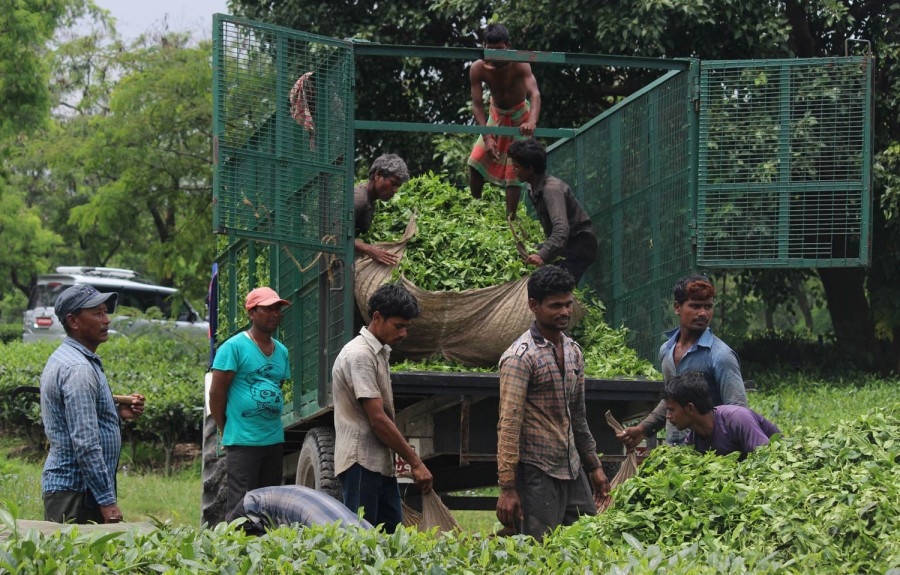
bookmark
Purushottam Ojha
Published at : July 6, 2026
Updated at : July 6, 2026 21:47
Nepali tea exporters finally experienced some relief following a few weeks of obstacles in exporting their products to India. The arrangement for sample testing of 20 percent of the total consignment is the cause of the respite; otherwise, all export consignments would require testing in Indian food laboratories.
Tea and coffee have been Nepal’s rising export products since the early decades of this century, although their cultivation started at different periods. The history of tea plantation goes back to the 1860s during the premiership of Jung Bahadur Rana. The district commissioner of Ilam, also called Badahakim, encouraged farmers to plant tea saplings imported from the Darjeeling district of India, which is in a juxtaposed location on the other side of the border. Tea is a wholly obtained agricultural product of Nepal and qualifies for market access under all preferential trade agreements concluded by the country. This product is also linked to farmers’ income and generates direct employment for around 40,000 people from 37 tea industries and indirect employment for several thousand people.
Tea plantation gradually expanded to other hilly districts in Koshi Province, mainly Jhapa, Panchthar, Taplejung, Dhankuta and Tehrathum. More farmers in Sindhupalchowk, Kabhrepalanchowk and Makawanpur districts in Bagmati, and Palpa, Gulmi and Pyuthan districts in Lumbini Province are making good progress in the commercial cultivation of tea.
India is the nearest as well as a big market for Nepali exports. Out of the total tea exports in FY 2024-25, almost 87 percent, with a total value of Rs4.2 billion, were exported to India. The remaining 13 percent were exported to EU countries, the US and East Asian countries. India is the destination for processed black tea, while green tea is exported to third countries.
The preferential trade agreements concluded between Nepal and India allow duty-free access to all kinds of primary and agricultural products to each other’s country on a reciprocal basis. The Indian government allows duty-free access to Nepali goods that meet the rules of origin criteria, except for three products designated under the most favoured nations (MFN) list and four products under the tariff rate quota. However, Nepali products are facing problems in export on account of standards, quality tests and certifications, import licensing, safeguards and anti-dumping measures imposed by the government of India.
Entry barriers, particularly for agricultural products, are high under the cover of quarantine, food safety and standards. Although these are taken as legitimate measures of international trade rules, from the perspective of protecting human, animal and plant health, in many jurisdictions, importing countries use them to shield their domestic products from outside competition.
The application and ease of non-tariff barriers have been experienced as a hide-and-seek game for Nepali exports to India. Similar products going to the same market in the same season create competition in supply and prices. Agricultural products like tea, ginger and vegetables are classic examples that must pass through rigorous tests in Indian food laboratories whenever production in India is high. The entry gets easier during low production in India. Oftentimes, trade becomes a hostage to geopolitical concerns, as is currently being experienced at the global level.
The bilateral trade treaty concluded between the governments of Nepal and India in 2009 has made provisions for resolving sanitary issues and phytosanitary-related barriers. First, the treaty expresses the commitment of the two countries to take measures for the free flow of goods from each other; second, the provision includes mutual recognition of the inspection and test certificates issued by the competent authority of the signing Party, with a caveat-meeting the mandatory requirement of the importing country; third, government of India to support Nepal in improving technical standards, quarantine, testing facilities and related human resources capacity; and fourth, the treaty has also constituted field level committee at the land customs stations, with a view to protect the perishable goods from quality deterioration due to delays in border clearances. All these provisions were made to streamline the sanitary and phytosanitary (SPS) measures and facilitate bilateral trade.
Finding the right path
Poor performance of the Nepali export trade is attributed to several factors, including high transit transportation cost, low workforce productivity, outdated technology in production, lack of skilled human resources and low level of saving and investment in the industrial sector. Agricultural goods (excluding vegetable oil and fats) constitute around 16 to 18 percent of the export basket, and these are subjected to strict quarantine and quality checks by the importing countries. Traditionally, India is the destination market for most of the agricultural products from Nepal. Very few agricultural products, like green tea, prayer beads (Bodhichita) and medicinal herbs, are exported to China. Nepal and China also signed a memorandum for the facilitation of the export of citrus oranges and buffalo meat from Nepal. But these memorandums also fell prey to the SPS measures.
The agreement concluded with both neighbouring countries includes provisions for enhancing cooperation and supporting Nepal in improving the quality infrastructure for test and certification so that the debacles on market access are resolved, and the flow of products is eased. A permanent solution should be explored to make the provision of the bilateral agreement operational, which remains on paper. Nepal does not have much leverage to retaliate against India’s action. So, priority should be given to updating the existing agreements with a focus on implementation and the formation of a joint mechanism for review and monitoring.
The efforts in improving the quality standards, tests, and certifications should also be pursued domestically, with a view to getting accreditation of international (ISO) standards. This requires strengthening the institutional and human resources capacity of the country. Nepal legislated the Accreditation Act in 2022, which includes provisions for creating the Accreditation Board and the Nepal Accreditation Centre. This centre is supposed to accredit the institution to carry out inspection, test and certification and ensure conformity with the required standards of the importing countries. However, the operation of this Act remains in limbo. Hence, a two-track path should be pursued to address the SPS-related barrier; first, taking up national initiatives to improve the quality infrastructures at par with international standards, and second, negotiating for permanent solutions with the major trading partners, including India.
Purushottam Ojha
Ojha served as commerce secretary for the government of Nepal.





Most Read from Columns





Editor's Picks





E-PAPER | October 22, 2026

×