



 18.18°C Kathmandu

Mon, Oct 19, 2026
Columns
From Bangladesh to the Himalayas
The country now boasts a growing roster of communities that view the Himalayas as a second home.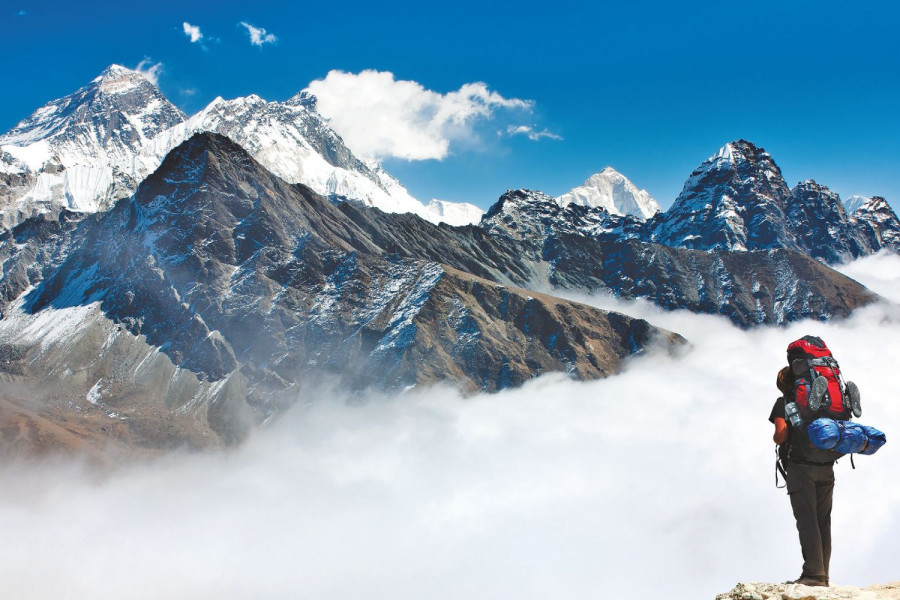
bookmark
Faisal Mahmud
Published at : June 27, 2026
Updated at : June 27, 2026 21:42
For decades, Nepal occupied a distinct, romantic corner of the Bangladeshi imagination. It was a land of prayer flags, thin air and the distant, blinding white of the Himalayas—a playground for the eccentric few. Today, romance has yielded to a booming market. Kathmandu has become the undisputed capital of adventure travel for a burgeoning Bangladeshi middle class.
The data chart a remarkable trajectory. In 2024, some 48,000 Bangladeshis visited Nepal. By 2025, that figure had climbed to nearly 70,000. This year, tourism officials in Kathmandu expect arrivals from Bangladesh to touch the 100,000 mark. For Nepal’s vital tourism industry, its South Asian neighbour has emerged as one of the fastest-growing source markets. For young Bangladeshis, the Himalayan republic is now the default setting for trekking, mountaineering and testing one’s physical limits.
Geopolitics and bureaucracy have inadvertently accelerated this trend. Prolonged closures and mounting uncertainties surrounding Indian tourist visas have forced Bangladeshi globetrotters to look elsewhere. Nepal, with its hassle-free visa-on-arrival regime, short flight times from Dhaka, relative affordability and unmatched topography, has been the primary beneficiary of New Delhi’s bureaucratic stiffness.
Yet the shift is driven by more than mere convenience; it reflects a deeper demographic transformation. A generation ago, foreign travel for affluent Bangladeshis was a conservative affair, revolving around shopping trips to Bangkok or family visits to Kolkata. Today’s younger travellers seek experiences over consumerism. They want to trek through the Annapurna Conservation Area, watch the sunrise over Poon Hill, cross swaying suspension bridges and camp beneath snow-capped peaks.
This experiential shift has fostered a vibrant, homegrown mountaineering subculture in Bangladesh. What was once a niche pursuit has matured into a well-organised ecosystem of climbing clubs and outdoor outfitters. Social media feeds in Dhaka are routinely filled with images of local hikers traversing the Langtang Valley or trekking to Everest Base Camp. High-altitude success has added nationalist fervour to the trend.
The recent ascent of Mount Everest by Nurunnahar Nimni, who became the third Bangladeshi woman to summit the world’s highest peak, was celebrated as a major national milestone. Bangladesh now boasts a growing roster of Everest summiteers and an expanding community that views the Himalayas as a second home.
The phenomenon has also produced a subtle but important cultural exchange between the two countries. Nepali trekking guides increasingly count Bangladeshis among their most reliable repeat clients, while many Bangladeshi travellers return from the mountains with a deeper appreciation for Nepal’s history and ethnic diversity.
Online forums and travel groups dedicated to Himalayan trekking have flourished, offering everything from altitude-acclimatisation advice to discussions on responsible tourism. The growth of direct air links between Dhaka and Kathmandu has further strengthened these people-to-people connections, creating a steady flow of visitors whose interactions extend far beyond commercial transactions.
For many young Bangladeshis, a trek in Nepal has become a rite of passage, comparable to a backpacking trip through Europe for previous generations. What was once viewed as an exotic foreign destination is now a familiar landscape where friendships are formed, confidence is built, and a shared South Asian identity often finds its most meaningful expression.
Crucial to this boom has been the rise of dedicated trekking agencies, such as Tourgroup BD, which cater to first-time trekkers while preaching a gospel of environmental and cultural responsibility. On the trails, the ethos among these organised groups is generally one of deep respect. Leaders emphasise low-impact travel, strict waste management and courtesy towards the local guides, porters and lodge owners whose labour makes Himalayan tourism possible. The prevailing sentiment among these visitors is one of gratitude rather than the ugly entitlement that often characterises mass tourism.
This hard-earned goodwill explains why a recent controversy generated such intense angst within Bangladesh’s travel community. The incident, involving a Bangladeshi trekking host who filmed a Malaysian tourist without consent during a Himalayan trek, sparked fierce backlash online in both countries. Beyond the immediate breach of privacy, the episode touched a raw nerve in Dhaka. Many feared that the boorish behaviour of a single digital content creator might tarnish the reputation of a national cohort that has spent years cultivating a civilised presence in Nepal.
Such anxieties are understandable in an industry built entirely on hospitality and trust. Yet it is a mistake to judge an entire tourism movement by its worst-behaved outliers. When a country begins exporting tens of thousands of tourists annually, occasional lapses in judgment and cultural friction are statistically inevitable. The true test of a travelling public lies in how its peers respond to such behaviour. In this instance, the swift and overwhelming condemnation of the incident by Bangladeshi travellers themselves suggests that the offence was an aberration, not the rule.
The vast majority of Bangladeshis who head to the mountains do so as respectful guests and enthusiastic consumers. They inject vital cash into remote trail economies, sustain local tea houses, and view Nepali culture with genuine admiration. In doing so, they have transformed a simple holiday trend into a meaningful exercise in bilateral soft power.
As annual arrivals march towards six figures, the onus of maintaining this harmony will increasingly fall on individual travellers, agencies, and social-media influencers. The Himalayas are an effective teacher of humility; their sheer scale has a way of reminding humans of their insignificance. One unfortunate online scandal cannot erase years of mutual goodwill. The passionate defense of a code of conduct on the trails by Bangladeshis themselves proves a heartening point: in the high Himalayas, respect remains the norm.
Faisal Mahmud
Mahmud is a Dhaka-based journalist.




Most Read from Columns
Before you take credit for Khula Manch, read its history

Shah went to the UN to speak for Nepal, then left before he could make the most of it
Bhotekoshi flood wasn’t a freak event. It’s the Himalaya doing what it does
Lesson learned after the death of Ronaldo
Why passive neutrality won’t take Nepal anywhere
Editor's Picks




E-PAPER | October 19, 2026

×