



 23.73°C Kathmandu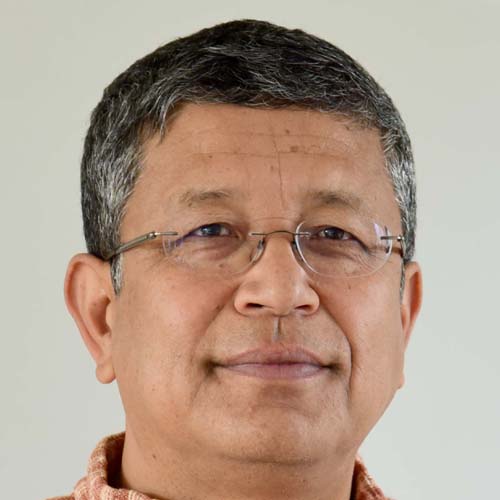

Sun, Oct 18, 2026
Columns
Nepal spends when the rain arrives, then it washes all away
We are likely to witness a massive waste of taxpayer money this fiscal year as well..png&w=900&height=601)
bookmark
Deepak Thapa
Published at : April 29, 2026
Updated at : April 30, 2026 08:43
If the past is any guide, in the matter of some weeks, one of the most hard-up nations in the world, i.e., our very own, will be using money from our strained national treasury to literally flush it down the drain. That will happen with what has been termed asare bikas or ‘development done in the month of Asar’, the last one in our fiscal year, when there is a mad scramble to spend earmarked funds.
Although it has been happening every year, the situation last time around was distressing. The government spent a massive Rs233 billion in Asar, 2082 Bikram Sambat. That is a gargantuan figure indeed and represented 15.4 percent of the entire government expenditure for the whole of that fiscal year. The money was used up in days on development projects just as the monsoon downpours would have begun, which, in more than a few cases, would have been simply washed away. And all because the fiscal year was coming to a close.
There is no universal rule about when a fiscal year should begin and is all a matter of custom. Probably for the sake of convenience, much of the world start their calendars concurrently with the international calendar year. Nepal is among the handful of exceptions. We are also exceptional because our budget year commences middle of the month, mid-July, to coincide with the beginning of the month of Saun in the Bikram calendar that kicks off our fiscal year.
One source explains the significance of the month of Saun, or Shrawan for those more inclined to its Sanskrit form, because the annual tax to be paid to the state was named after the month, shrawanka, shagon and sawane in the Lichchhavi, Malla and Shah periods, respectively. Yet, another claims that the beginning of the fiscal year hews to the agriculture cycle: “By aligning the fiscal year with these agricultural patterns, the government can better plan and manage the budget in relation to agricultural outputs and economic activities tied to farming.”
Whatever may be the case, it seems to be a tradition rooted in a different time and to suit a different purpose. That is why the calls to do something about this senseless waste every year by changing the fiscal year itself make sense. We are, of course, hamstrung by both the heavy rains in the summer and the short and frigid winter months, but it should be no mean task to figure out what would work best.
Hoping that the new kids in town would have recognised this problem, I looked at the election manifesto of the ruling Rastriya Swatantra Party (RSP) and pored through the one hundred ways in which the policies adopted would lead to a so-called radical transformation. I also looked at the second list of one hundred action items related to governance reform as well as the ‘National Commitment’ paper that purports to synthesise the election pledges of the six political parties represented in the House of Representatives. In vain, it turned out, and we are likely to witness a massive waste of taxpayer money yet again.
Multiple layers of roads
Whenever Prime Minister Balendra Shah is referred to as Balen the rapper, there is a chorus of those who immediately take exception and point out that he is also an engineer and reportedly working towards a PhD to boot. Hence, this section should be very pertinent to that aspect of his persona.
Anyone who has lived long in Kathmandu will have noticed how the floor of the Bishal Bazaar supermarket in New Road has gone from being a couple of steps up from the footpath to being level with it. As for me, given where my home is, I am quite familiar with the route from Maitidevi to Ratna Park, which is actually one of the few areas outside of the Kathmandu city core that has long had a continuous stretch of houses lining both sides of the street. Those walking that road will notice two things about the houses along the main road. The ground floors of newer constructions are at a much higher elevation than the pavement and to get to which temporary (and sometimes permanent) steps will have been provisioned. Meanwhile, the older houses are at a level lower than the road, and in the case of very old buildings, almost the entire ground floor appears to be below it.
As one can imagine, no one in their right mind would build something below ground level. And, like anyone who has walked that route for decades would be aware, all those houses that appear sunken had once proudly risen above road level. The culprit in most cases is nothing but the asare bikas that sees the re-layering of perfectly fine roads with already multiple layers added over the years, with the pedestrian walkway then lifted to keep up with the street level.
The houses that rise some feet above the street are not preparing for the floods but are anticipating the continuous elevation of the road. It has worked out for many of the houses with their ground floor having come level with the footpath over time. Until then, residents have to resort to those extra step(s) to ingress and egress the buildings, which itself can put the owner at the receiving end of people like Balen Shah, who, as mayor, ordered the removal of any contraption encroaching on public space.
That system of continual layering instead of first digging up the road and then paving it again to fix it is also why safety is at a premium in places where the drainage system runs under it. Manhole covers either stick out of an otherwise smooth road or sink in deep, depending on whether the second, third, or nth, layers are yet to be laid on or have already been. Besides the inconvenience of having to manoeuvre around these protrusions and causing slowdowns and accidents, the life-threatening hazards these obstacles pose are very real. Yet none in authority seems to have raised any objections so far.
Cities around the world do not face that problem, and even buildings more than a century old have their ground levels perfectly aligned with the pavement. There must be a system in place ensuring that. Even if we were to implement that solution, it will be decades before the city’s street buildings are lined up perfectly. Until then, we have no choice but to either step up or step down from the street level to enter a shop. Unless we follow what Chicago did in the mid-1800s by raising the whole city up multiple feet. In our case, we would have to both lower and elevate, but who knows, we might even be graced with a directive to that effect straight from the man at the heart of what appears to be slowly turning into a Balen Presidency.
Deepak Thapa
Deepak Thapa has been a fortnightly columnist with The Kathmandu Post since 2009, writing on a range of topical social and political issues.





Most Read from Columns

Before you take credit for Khula Manch, read its history

Shah went to the UN to speak for Nepal, then left before he could make the most of it

Bhotekoshi flood wasn’t a freak event. It’s the Himalaya doing what it does

Lesson learned after the death of Ronaldo

Why passive neutrality won’t take Nepal anywhere
Editor's Picks

Dashain paints the country in festive colours

Buying a goat for Dashain? Look for the green mark

Explained: Why does an hour long flight to Dhangadhi cost more than a flight to New Delhi?
Bhotekoshi flood wasn’t a freak event. It’s the Himalaya doing what it does

How Tenzing Sherpa became Nepal’s breakout star at the Asian Games
E-PAPER | October 18, 2026

×