



 20.28°C Kathmandu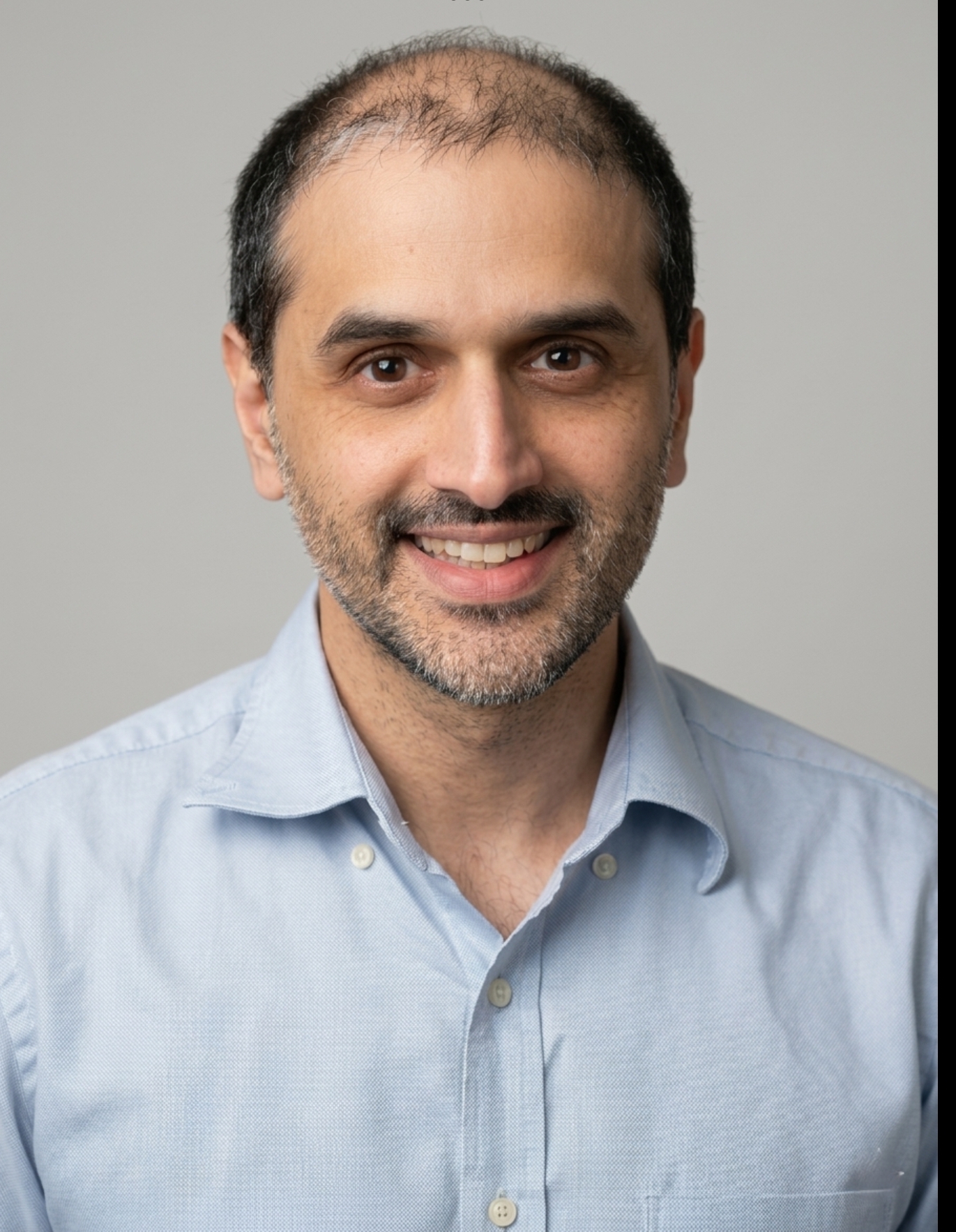

Sat, Oct 17, 2026
Columns
RSP’s economic blueprint
It should prioritise the use of public money for reasonable purposes.
bookmark
Rishi Raj Sharma
Published at : March 23, 2026
Updated at : March 23, 2026 06:56
The overwhelming electoral mandate for the Rastriya Swatantra Party (RSP) offers an unprecedented opportunity to improve Nepal’s economy, which has been perpetually held back by poor governance. Economic policy advice is often centred around which sectors to support—e.g., tourism, information technology services, manufacturing, hydropower, agriculture— or what type of spending to emphasise—e.g., infrastructure, health, education. While it is easy to identify a long list of ‘areas of improvement’ for Nepal’s economy, it is more important to emphasise fundamental changes that will affect all sectors and policy areas. On the economic front, two priorities should be central for the RSP government: Reversing the misallocation of public funds and dismantling syndicates and cartels.
Reversing misallocation of public funds
There are two main reasons for the severe misallocation of public funds in Nepal. First is the high level of corruption across all government levels, which was a major driver of the Gen Z protests that ultimately sparked the recent political changes. Corruption can take the form not only of outright kickbacks for politicians, senior officials and political parties, but also the growing trend towards ‘white elephant’ schemes—the most prominent examples in recent years include view towers in remote hill districts and airports in the wrong places that remain unused or underused.
A second and more subtle reason for misallocation is the limited administrative capacity of the government. The latter is starkly highlighted every year by the fact that a substantial fraction of the development budget goes unspent. Apart from the unspent money, the frantic spending concentrated in June/July at the end of the fiscal year (the so-called asare bikas) indicates that much of the spending is effectively unspent from the perspective of providing public goods. Whether due to corruption or administrative incapacity, the net result is that a substantial portion of the government budget has been severely underutilised.
An underutilised budget is extremely costly to the economy. Revenues are generated by taxing consumers and firms, causing higher prices and reducing money available for private investment, or by incurring more debt, a significant burden given that over 20 percent of the government budget already goes towards paying interest on existing debt. When this money is underspent, the public sector becomes a sinkhole for the already limited resources available to consumers and businesses in Nepal.
The key economic priority for the RSP government should be to spend government money on broadly reasonable public uses. This is more important than identifying the ‘optimal’ uses in theory; if the money cannot be spent, it has no value. Administrative capacity should be the key driver of budget allocation, with relatively modest but implementable spending worth far more than ambitious projects that are not realised in the foreseeable future. Under the circumstances, there is also no justification for a budget that would require raising taxes or increasing borrowing in the near future.
Fixing an underspent budget would substantially boost the economy in the short run while also providing the long-term benefits of public spending.
Dismantling syndicates and cartels
Anti-competitive syndicates, cartels and middlemen are pervasive throughout the Nepali economy. Unsurprisingly, Nepal ranks in the lowest quintile among all countries in the area of market competition in the World Bank’s Business Ready (B-READY) survey. The existing economic system is one in which rent-seeking activities—often involving courting politicians—are more profitable than the real business of providing goods and services to consumers.
The government should tackle and break up syndicates and cartels, particularly in transportation, trucking, construction and agricultural wholesale. These syndicates hurt consumers by raising prices and increasing price volatility. They also hurt legitimate businesses in multiple ways, including by raising input prices and reducing prices received by domestic producers, especially farmers. More broadly, they create vested interests to maintain red tape and barriers to entry that prevent competition and entrepreneurship.
Tackling syndicates and cartels would be a natural cornerstone of a ‘first 100 days’ agenda for the new government. From a political perspective, the RSP is in an ideal position to break up these vested interests on account of its overwhelming mandate, combined with the widespread unpopularity of syndicates and cartels. The government will have the public backing needed to deal with the potential backlash and short-run disruption created by these interest groups. As time goes by, anti-incumbency sentiment against the government can increase, and as new elections approach, governments tend to become increasingly sensitive to short-term disruption. Addressing this problem immediately would help establish the RSP government as a disruptor of the extractive status quo.
Cautious transformation
The RSP’s political success comes with very high expectations. A natural response to these expectations may be to ‘go big’ by proposing too many disparate aims and excessively ambitious spending plans. This would be a trap that could spread the government’s capacity thin and perpetuate past patterns of poor economic governance. The two priorities laid out above are feasible and would be transformational for Nepal in the long run while also yielding substantial benefits in the short run. The pursuit of a programme of cautious transformation would lay solid foundations for expanding the range of feasible policymaking options in the future.
Rishi Raj Sharma
Sharma is an Associate Professor and the W Bradford Wiley Chair in International Economics at Colgate University in New York.




Most Read from Columns

Before you take credit for Khula Manch, read its history
Shah went to the UN to speak for Nepal, then left before he could make the most of it

Bhotekoshi flood wasn’t a freak event. It’s the Himalaya doing what it does

Lesson learned after the death of Ronaldo
Why passive neutrality won’t take Nepal anywhere
Editor's Picks

Dashain paints the country in festive colours
Buying a goat for Dashain? Look for the green mark

Explained: Why does an hour long flight to Dhangadhi cost more than a flight to New Delhi?
Bhotekoshi flood wasn’t a freak event. It’s the Himalaya doing what it does

How Tenzing Sherpa became Nepal’s breakout star at the Asian Games
E-PAPER | October 17, 2026

×