



 16.49°C Kathmandu

Mon, Oct 12, 2026
Columns
Nepal-Japan relations: Old ties, new gains
The friendship between the two countries has already stood the test of time. Now, it must deliver shared prosperity.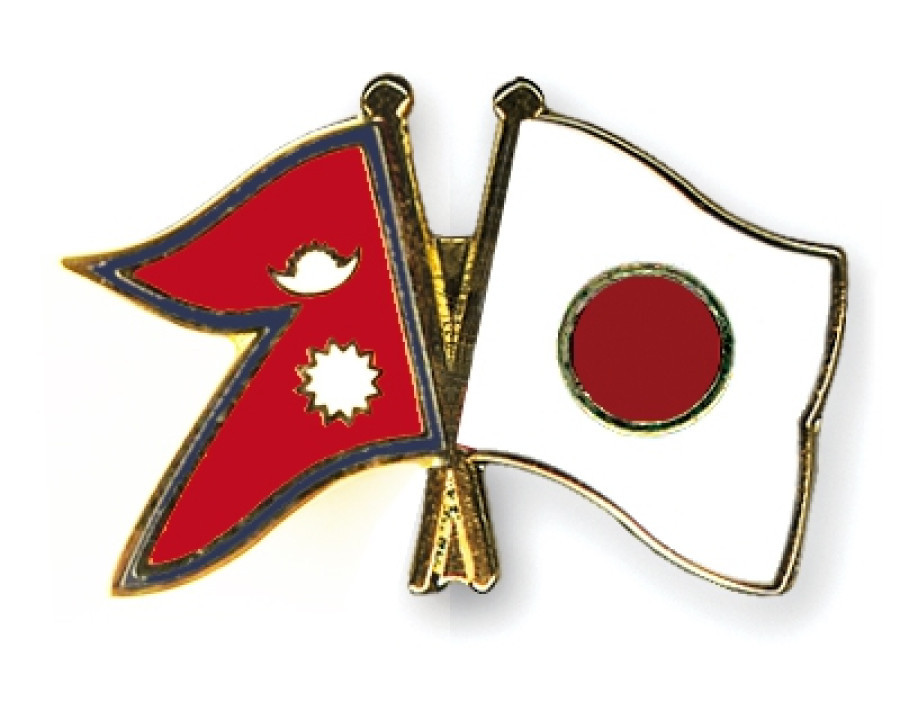
bookmark
Sunil KC
Published at : March 20, 2026
Updated at : March 20, 2026 07:12
Nepal-Japan bilateral relations, founded on democratic values, have grown from strength to strength over seven decades. Long-standing cultural ties predate the establishment of formal diplomatic ties in 1956. In the course of time, high-level official visits and evolving cross-sectoral cooperation have shaped bilateral ties. Japan’s relationship with Nepal is based on a firm belief in the quality of Nepali products, which is also seen in its effort to source raw materials from Nepal. Interestingly, the bark of the Edgeworthia gardneri shrub, locally called Argeli in Nepal, is used to produce Japan’s currency.
Japan remains one of the investors and a major source country for Foreign Direct Investment (FDI) in Nepal. According to Nepal Rastra Bank, Japan holds 1 percent of the total FDI stock in Nepal at Rs3.35 billion. Out of which, Rs24.6 million is in the agricultural sector, Rs849.3 million in the industrial sector, and Rs2.48 billion in the services sector. Japan maintains robust economic relations through joint ventures related to TV assembly industries, hotels, horticulture and construction operating in Nepal.
Given its untapped potential, Japan is interested in investing in Nepal’s hydropower, agriculture and infrastructure sectors. Drawing from Tokyo’s expanding engagement in the Bay of Bengal region, Nepal’s central zone of economic partners, there are key takeaways that can help in developing a strong Nepal- Japan bilateral economic framework for the future.
Northeast India has long been central to Japan’s economic ambition in the Bay of Bengal region. In 2023, Japan proposed the development of a new industrial hub equipped with supply chains connected to India’s Northeast and further to Bhutan and Nepal. In a show of Japan’s growing confidence in the region, Deputy Foreign Minister Hori Iwao very recently highlighted the importance of Northeast India's strategic location and its potential to become a powerful growth engine when integrated with Nepal, Bhutan, Bangladesh and Southeast Asia while speaking at a conclave in Meghalaya, India.
Functionally, Japan views the Bay of Bengal region as a getaway for growth. It has undertaken several initiatives focused on multilayered infrastructure connectivity, such as the Bay of Bengal Industrial Growth Belt and Matarbari Deep Sea Port, slated to benefit landlocked Nepal on the connectivity front. It is willing to back connectivity initiatives linking Northeast India to the Bay of Bengal and the Indian Ocean Region, investing in private-sector cooperation in areas such as economic security, semiconductor development, and clean energy initiatives
Nepal’s investment climate is improving, with a stable government in sight. It is an ideal time for both countries to work towards developing a 10-year joint economic framework. The new government should consider preparing a 10-year investment partnership strategy with Japan, identifying priority sectors and specific projects suitable for Japanese companies. Such a roadmap would signal seriousness and help position Nepal as a more business-friendly destination for foreign direct investment in the region.
Nepal received a BB minus sovereign credit rating in 2025, which reflects low external debt and growth potential, aiming to boost investor confidence in key sectors like energy, infrastructure, and manufacturing. Additionally, to foster more investment and streamline investment procedures, Nepal amended the Foreign Investment and Technology Transfer Act (FITTA) in 2024. Presently, the Nepali government has provided economic support provisions to exporters operating in Nepali SEZs, who receive a 5-year full income tax holiday and custom duty waivers on raw materials. Nepal can establish a specialised SEZ for Japanese companies.
Japan has granted Duty-Free and Quota-Free (DFQF) market access to many products from least developed countries (LDCs), including Nepal, since 2001. Now that Nepal is graduating from the LDC status, Japan can help Nepal’s smooth transition from the LDC, continuing the DFQF, and also help upskill Nepali entrepreneurs, including the Small and Micro Industries (SMEs), where mostly women are involved. Further, a push to initiate a free trade agreement between Nepal and Japan can be favourable to both nations for long-term economic ties.
Reiterating Nepal’s strong political willingness to increase foreign investment, President Ramchandra Paudel, during his Tokyo visit in February, urged the Japanese business sector to invest in Nepal’s key sectors, including mining, manufacturing, information technology, agriculture, tourism and hydropower. He categorically emphasised Nepal’s emerging favourable business climate.
Japan’s increasing visibility as a leading provider of infrastructure investment across Asia manifests its long-term commitment to fostering regional connectivity and economic growth. Japan’s connectivity initiative of ‘quality infrastructure investment’ through ‘Partnership for Quality Infrastructure: Investment for Asia’s Future’ draws attention in this regard. The initiative is designed to create jobs for local people, increasing local skills and improving people’s lives.
Japan’s support for Nepal’s energy sector spans ages. Decades ago, the Japan Bank for International Cooperation (JIBC) helped finance the Kulekhani hydropower project. Today, Japanese financial institutions are once again showing interest in Nepal’s energy potential. Nepal must take clearer steps to create a stable and predictable business environment.
Japanese institutions are known for providing long-term loans at relatively low interest rates. Nepal can encourage them to invest in hydropower and renewable energy projects, which could give a strong push to Nepal’s energy sector. To turn its hydropower opportunity into reality, Nepal will need better transmission lines and stronger public-private partnerships.
In 2025, Nepal and Japan signed a concessional loan agreement worth 34.59 billion Japanese yen (approximately Rs31.76 billion) for the Koteshwor Intersection Improvement Project in Kathmandu. The project, financed through JICA, aims to address traffic congestion through the construction of flyovers and underpasses along the Koteshwor-Jadibuti corridor. The loan reflects Japan’s long-standing approach to development financing, which typically involves highly concessional terms, including long repayment periods and low interest rates.
In a testimony to improved people-to-people ties, the Nepali diaspora in Japan has grown significantly, making it the fifth-largest foreign community in the country. Ties are also reinforced through Sister City Agreements between Kathmandu and Matsumoto, Pokhara and Komane, and Tukche and Toga, which involve cultural and educational and technical exchanges.
Earthquake-prone Japan and Nepal have a history of helping each other. During the Great East Japan Earthquake, Japan received 5000 blankets from the people of Nepal. The Nepali diaspora is known to have even provided cooked meals to affected people during the crisis period. Following the 2015 earthquake, Japan provided seamless assistance extending from emergency and humanitarian assistance for recovery and reconstruction.
Japan and Nepal can work together to deepen the longstanding partnership. Expanding the Government of Japan’s One Village One Product (OVOP) Program, designed to district specific products that have a comparative can be a good move. Under the initiative that kick-started in 2006, products like Trout fish and buckwheat have been commercially successful under the initiative.
Yet another sector where Japan can help Nepal is human capital development, where research institutions can also play an important role. Policy think-tanks and research organisations could collaborate to study investment opportunities between the two countries. Their research, policy briefs and investment guides could help provide updated information to the business community. An annual Nepal-Japan investment dialogue involving both Nepali and Japanese investors could further institutionalise these exchanges and build confidence among businesses.
Japanese training organisations could partner with Nepali institutions to develop vocational programs that match Japan’s labour market needs. Institutions such as JITCO could consider establishing offices in Kathmandu to facilitate cooperation between Nepali training institutes and Japanese companies. A stronger institutional cooperation could further promote investment flows. Nepal’s Investment Board and Japan External Trade Organisation (JETRO) could explore formal collaboration through a memorandum of understanding to facilitate Japanese investment in Nepal.
If Nepal can create a predictable and business-friendly investment environment, aiming at economic diplomacy, Japan could become one of its most important economic partners in the years ahead.
The friendship between the two countries has already stood the test of time. The next challenge is ensuring that this friendship also delivers shared prosperity.
Sunil KC
KC is the founder of the Asian Institute of Diplomacy and International Affairs (AIDIA).




Most Read from Columns

Before you take credit for Khula Manch, read its history
Shah went to the UN to speak for Nepal, then left before he could make the most of it
Why Nepal’s latest disaster needs a local name—not just a scientific label

Lesson learned after the death of Ronaldo
What Lubra can teach Nepal about climate-induced migration and resettlement
Editor's Picks

Constitutional Bench caught in seniority, ‘pick and choose’ dispute

A Dom boy’s long road to becoming a doctor

From blankets to handmade dolls, two foreign women bring comfort to flood survivors

News Analysis: When institutional defence exposes institutional fault lines

It’s a bird … it’s a plane … it’s the Indian ambassador’s farewell tweets
E-PAPER | October 12, 2026

×