The election has concluded peacefully and fairly. The naysayers—analysts and political leaders who, until a few days before polling, questioned whether the election would take place—have been silenced. The remarkable victory of the less than five-year-old Rastriya Swatantra Party (RSP) over the long-established older parties has overturned all previous assumptions about electioneering in Nepal and has placed us in a position that could either serve as a launchpad for a new beginning or remain another illusion of change.
Overturned assumptions
A day before the beginning of the silence period, I asked a friend of mine, “So, who will win the election? Is the Balen wave real?” He answered, “Yes, the Balen wave is real, but you know, the distribution of Masu-Bhat and procurement of votes takes place during the silence period. Who knows what will happen in the next three days?” The silence period is a three-day period before the polling day when any overt campaigning for votes is prohibited by law. Interestingly, a business entrepreneur I spoke to a couple of days before the period told me that he was approached by a political operative who offered to deposit Rs50 million into his account for two days and pay him a 3–5 percent commission for the favour. Apparently, the law allows businesses to withdraw large sums of money without the limits applicable to personal accounts. This electoral performance of the CPN-UML and other political parties demonstrates that the era of buying votes is over. Voters have become much smarter than politicians think.
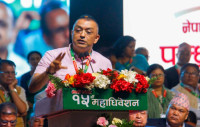
A few days before the polling, despite the growing wave for the RSP, KP Sharma Oli stated in a television interview that the ‘RSP will not win more than a couple of seats’. He was probably counting on the support of his cadres. This election has shown that cadres' support can be misleading. Cadres may organise and attend the rallies of their party candidates, but they may not vote for the candidate. Look at the size of the rallies for UML candidates and the votes they received. The image of UML candidate Surya Thapa about to collapse under the weight of the bright sunflower garlands around his neck comes to mind. He not only lost the election but was a distant third.
Another takeaway from the election was that playing a village jester, making absurd and unachievable development hyperbole, hurling personal insults at opponents, or engaging in television theatrics do not secure votes. Voters view such behaviour as an insult to their intelligence. Oli lost the election by almost three and a half times fewer votes than his nearest rival, Balen Shah; Rishi Dhamala, the TV anchor renowned for his theatrics, secured a total of 655 votes.
RSP’s sweeping victory disproved the narrative spun by the older parties that winning an absolute majority under the current constitution is impossible. If the trend established by this election continues, future elections can be expected to be a genuine test of how well competing political parties perform. Parties that follow through on their election promises will win; those that do not will lose. Those who still believe they can deceive the public will go nowhere. The question now is, with its nearly two-thirds majority, will the RSP be able to deliver on its promises? Is this the start of a new era?
Advent of a new era
The RSP has a massive mandate and an ambitious agenda. Their agenda, published in their Commitment Paper, 2026, includes, amongst others, improving public service, fighting corruption, and achieving seven percent annual economic growth. None of these objectives can be realised unless the old laws and certain sections of the constitution are amended to align with the aspirations of the new generation and of a modern democratic nation. The RSP recognises this, and it is hoped that amending old, outdated laws would be its priority. However, they must also acknowledge that no matter how strong or relevant the laws are, they will not strengthen people's trust in the government unless they are enforced fairly across all citizens.
The main problem with previous governments was the lack of fair enforcement of the existing laws. Over the last two decades, the politicians from the major political parties have politicised every public institution, turning them into their vassals. As a result, public institutions failed in their constitutional duties. The Commission for the Investigation of Abuse of Authority did not pursue allegations of corruption involving politicians; police baulked at actions against maleficent politicians, and the bureaucracy turned into an agency for harassment of service seekers. The list could go on.
The strict enforcement of existing laws and the strengthening of public institutions must progress alongside the updating of laws for RSP to succeed. As a first step towards demonstrating the new administration's commitment to enforcing the law and combating corruption, perhaps the new Prime Minister should include in his address to ministers and senior bureaucrats a warning that, henceforth, no malpractice will be tolerated in his government. Anyone suspected will be immediately suspended, and if the allegations are proven, dismissed. Details of what will be regarded as malpractice and what will be deemed punishable should be established as a policy document and published.
The RSP, with nearly two-thirds majority in parliament, has a near-clean slate to reform the governance model and update laws. In his recent blog post in Nepal Unplugged, Alok Bohara, emeritus professor at the University of New Mexico, identified three potential temptations that large election victories often produce: the temptation to dismantle institutions; the temptation to suppress internal debate in the name of unity; and the temptation to move too quickly without building durable public institutions. The RSP needs to be mindful of these temptation traps and avoid them.
Democracy fails without oversight of the government. The lack of a strong opposition in Parliament necessitates Nepal’s civil society to monitor the government and hold it accountable.
Nepal is on the brink of change. Whether that change is positive or if the country falls further into darkness remains uncertain. Much depends on how the RSP majority government performs. The failure of this government will lead the country into despair, driven by the belief that ‘nothing works here’. Overcoming this will take many years and more conflicts. Should that happen, the election will be for nothing. It will be remembered only as another illusion of change, like those immediately following the restoration of democracy (1990) and the adoption of the new constitution (2015).




 16.07°C Kathmandu



.PNG&w=200&height=120)