



 17.12°C Kathmandu
Sat, Apr 4, 2026
Columns
Publisher’s note
Karki delivers election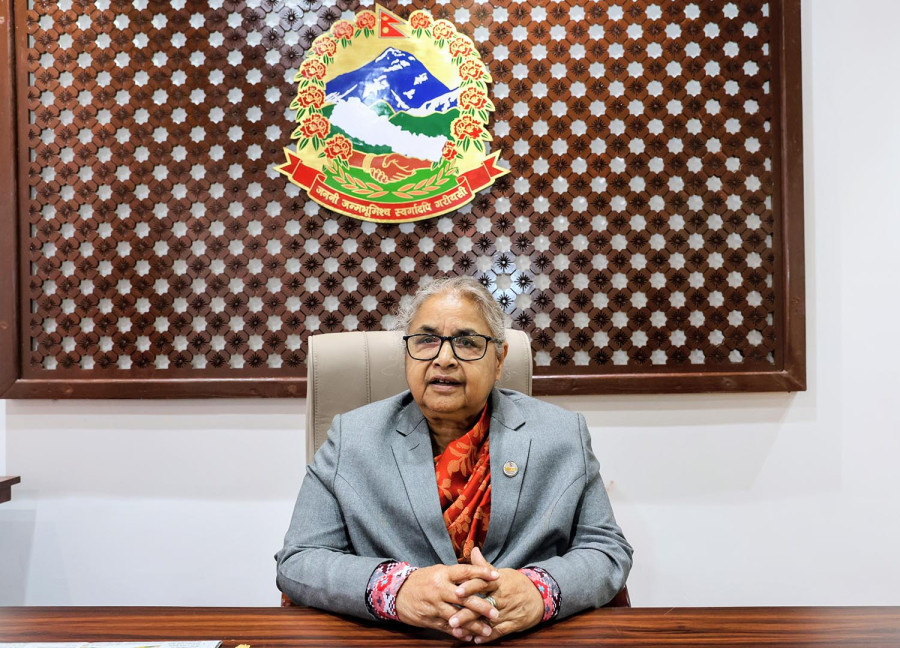
bookmark![]()
Published at : March 6, 2026
Updated at : March 6, 2026 06:28
At a time when the country was caught up in a vortex of uncertainty, Sushila Karki’s decision to assume the country’s executive leadership on September 12 represented a formidable challenge. It was not a smooth transfer of power. There was no previous leadership to formally hand over power to her, no political organisation to support her, and the public was doubtful—as the state apparatus was itself gripped by fear. What Karki had before her was the colossal challenge of steering the country out of this crisis.
By conducting elections on the very date she had announced at her oath-taking, she has paved the way for a peaceful transition. Alongside her earlier reputation as a bold former chief justice, she will now also be remembered as a capable prime minister.
Moreover, it was the prudence of President Ramchandra Paudel—who deftly protected the constitution while opening a new political path—that laid the foundation for today’s success. On Thursday, the unwavering commitment of Prime Minister Karki and her team, including Home Minister Om Prakash Aryal, ensured that the election was not only successfully completed but also relatively peaceful.
For this, the Election Commission deserves unreserved praise. Even though only half of the commission’s posts were filled, the leadership shown by Acting Chief Election Commissioner Ram Prasad Bhandari—in building trust among political parties, formulating policies on time, and mobilizing manpower—played a crucial role in ensuring largely peaceful polls.
Kantipur Media Group has been a witness to the country’s every political rise and fall since the democratic change of 1990. Every movement has brought gains for the country, though in some cases sections of society, economy, and media have been harmed in the process.
The repression carried out by the then government during the Gen Z movement of September 8—driven by a generation disillusioned with the same political leadership and style—deeply wounded Nepali society. Yet the infiltration that took place under the cover of the movement— and the destruction that followed the next day—also caused irreparable damage to Nepal.
The killing of 22 unarmed youths on the first day of the movement represented the height of brutality. Likewise, the looting and arson the following day, September 9, at the Parliament building, the President’s residence, the Supreme Court, Singha Durbar, the Ministry of Health, media institutions, and private industries and properties were punishable crimes.
The attacks carried out on the offices of Kantipur Media Group—which has consistently exposed the country’s irregularities—as well as on the private residence of its publisher were not accidental. Yet by entrusting the responsibility of investigating these events to the state apparatus, Kantipur Media Group continues to stand firmly by its professional duty.
The Kantipur family is encouraged by the successful completion of the elections and remains hopeful about the future. According to the Election Commission, around 60 percent of voters cast their ballots. The shared aspiration of all Nepalis—those who were able to participate in the election and those who were not—is peace, good governance, and prosperity.
This election will not only produce a new parliament and a new government. It has also given a mandate to manage and institutionalize the legal, constitutional, and political uncertainties created by the events that unfolded in the second week of September.
Beyond that, it has placed responsibilities on the new leadership to ensure political stability, good governance, transparency, accountability, improved public service delivery, a secure investment climate, job creation, and overall economic development.
In this new context, by continuously questioning and critiquing the upcoming political leadership, Kantipur will continue to fulfill the role of a responsible media institution.
Best wishes to all.






Most Read from Columns

Editor's Picks
Nepal risks losing up to 132,000 jobs, $1 billion after LDC exit
Raped and left to die, teenager’s family wants answers

Bengal tigers move to mid-hills. Sighted in Palpa, Arghakhanchi
Escaping poverty at home, Nepali women fall into the Gulf trap
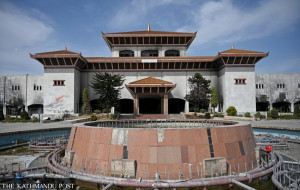
Once the heartbeat of Nepali democracy, now a ghostly shell
E-PAPER | April 04, 2026

×