Implementing an inclusive and gender-responsive lens is essential to ensure safety, accessibility, and economic opportunities for vulnerable groups.POST FILE PHOTO
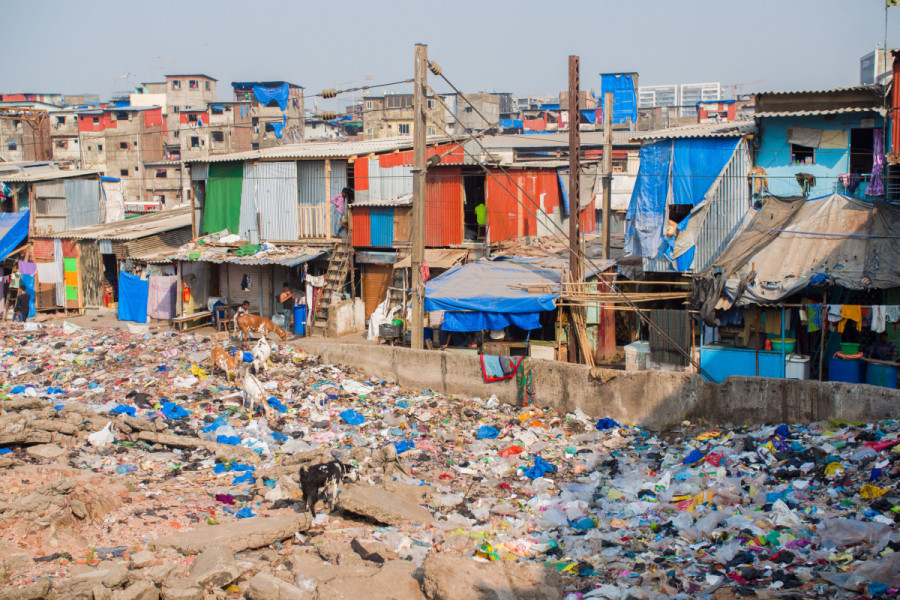
According to the national Census held in 2011 in India, metropolitan Kolkata is home to over 14 million people. Once the capital city of India, today over 30 per cent of the city’s inhabitants are slum dwellers. In Kolkata, lack of affordable housing has pushed many to informal settlements called bastis. Migrant labourers and low-income families often settle in slums, where they live in highly unhygienic and overcrowded conditions. While they provide access to the city’s centre, and perhaps even to an income, they lack in basic provisions such as adequate sanitary facilities, clean and potable water, and electricity.
Over the years, both central and state governments have launched multiple programmes and policies to facilitate slum redevelopment in India. This has often taken place through two methods, either through in-situ rehabilitation and infrastructure development in existing slums, or by rehabilitating slum dwellers to off-site locations. Rehabilitation, however, may or may not lead to welfare of slum dwellers. Empirical research has shown that redevelopment of slums often leads to impoverishment. This impoverishment includes loss of livelihood, joblessness, loss of community, loss of access to common resources, and marginalisation. Off-site rehabilitation especially, adds to impoverishment and vulnerability, as it adds to joblessness, loss of existing communal spaces and connections, and even homelessness.
Post off-site rehabilitation, residents still prefer to continue living in slums, close to job opportunities and community. Rehabilitation and redevelopment throughout West Bengal have been advocated, but often not successfully executed. On several occasions, the Ministry of Housing and Urban Poverty Alleviation (MoHUPA) has allocated funds for slum redevelopment and rehabilitation in Kolkata, as well as in other districts of the state. However, many of these projects have ended up getting cancelled, curtailed, or dropped. In 2011, the Kolkata Municipality Corporation implemented the Basic Services to Urban Poor (BSUP) mission, which aimed at providing better housing and facilities to the urban poor.
This was part of the larger Jawaharlal Nehru National Urban Renewal Mission (JNNURM) which aims to provide basic amenities and necessities to low-income urban dwellers in 63 Indian cities. BSUP projects around the country have aimed to provide urban informal residents with formal housing, social security benefits, clean water supply, sanitation, and education. Many redevelopments and rehabilitation projects were undertaken under this project, but many remain incomplete. Specifically in Kolkata, redevelopment has, in the past, revolved around eviction with inadequate efforts of off- site rehabilitation. When rehabilitation is present, it often consists of barriers for many. Rehabilitated families are often not given formal housing options, but temporary makeshift huts with shared toilets, built by the government on empty plots.
The shift to these temporary structures caused distress amongst the residents, as it forced many to be separated from community, and made accessing workspaces difficult. Rehabilitation to offsite housing projects in Kolkata has been found undesirable by many slum residents. Off-site redevelopment project not only remove residents from familiar neighbourhoods but also come with maintenance costs. Inability to meet income requirements for high maintenance costs has contributed to collapse of infrastructure in many rehabilitated projects. Formal housing provided through government schemes is often dilapidated, and many prefer to move back to slums they previously occupied. Another reason why off-site redevelopment fails is the assumption that slum dwellers fall under a homogenous group. Difference in income, religion, caste, and migration status can affect the rehabilitation process.
Rehabilitation is usually aimed at Economically Weaker Sections (EWS), but without conversation with slum dwellers, or considering their lived experiences, it is met with dissatisfaction. Not all slum dwellers may fall under EWS category, or have formalized proof to show their EWS status, which leads to separation of family and community. Situations such as these lead many to go back to slums. Slum redevelopment in India fails because it does not include participatory measures in planning or execution. Time and again, redevelopment projects use a top-down approach, where government bodies execute decisions without initiating conversations with slum residents.
Positive impact of redevelopment is possible when rehabilitation is done in-situ, includes participatory planning, provides quality housing, and takes into consideration needs of slum dwellers. It is essential for slum redevelopment projects to be foresighted, as short-term goals of rehabilitation alone have led to repeated failures. Projects need to combine social security schemes with redevelopment projects, making sure that residents can adapt to a new space and lifestyle. Redevelopment is a socio-spatial phenomena and therefore needs to take into special consideration the utility of spaces in slums. Slums are often used as both living and workspaces by residents and proliferate through construction of one or two storey buildings in adjacent available plots.
This allows usage of courtyard spaces for various income generating activities, as well as support community living, which is essential for many to support their jobs. Rehabilitation into multi-storey buildings therefore actively contributes to a loss of income. Women, in particular, benefit from the spatial structure of slums, as it allows them to leave their children in the care of neighbours while attending work, or to carry out household chores such as cooking and washing laundry while remaining close to their children. Many find it difficult to adjust to the lifestyle of multi-storey buildings, which encourages a more individualistic form of living and reduces community engagement.
In Kolkata, there has been a severe lack of in-situ redevelopment, and a growth in gentrification. Redevelopment efforts in Kolkata have been inefficient, and off site has detrimental effects on slum dwellers. Indian cities therefore need a strong shift toward in-situ slum redevelopment, where communities remain embedded in the existing space and neighbourhood. Such approaches must integrate upgraded infrastructure, secure tenure, and access to services, while being shaped through participatory planning and continuous dialogue with residents. Implementing an inclusive and gender-responsive lens is essential to ensure safety, accessibility, and economic opportunities for vulnerable groups.
The writer is an Associate at the Cities Forum, where she works with international development organizations, national governments, and private stakeholders.




 19.45°C Kathmandu