



 23.78°C Kathmandu
Thu, Oct 22, 2026
Books
Why local stories matter in children’s books
Sanjeep Maharjan, illustrator and story developer of the newly published book ‘Sangye Wants a Shyoldo’, discusses the book formation process and how a village in Rasuwa inspired it.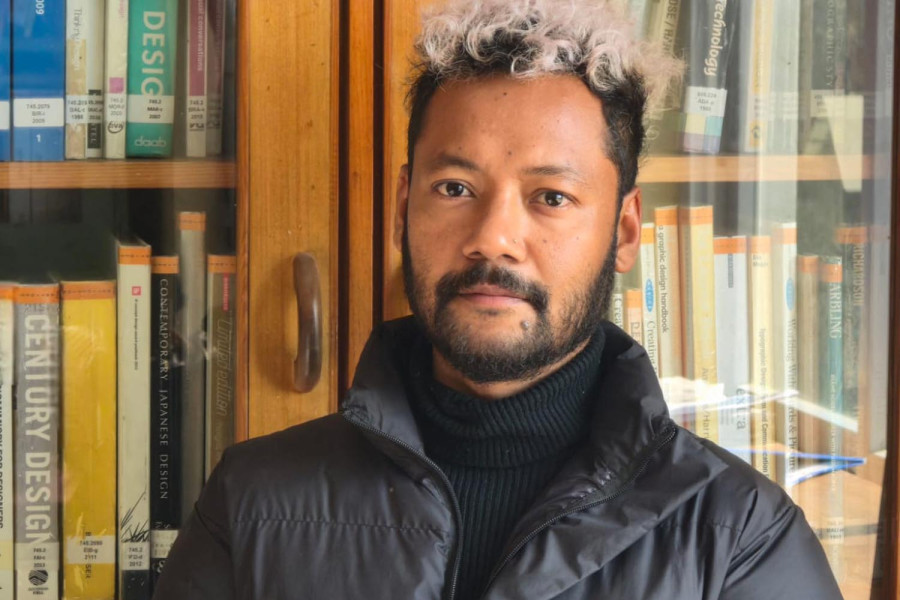
bookmark
Sanskriti Pokharel
Published at : January 22, 2026
Updated at : January 22, 2026 21:03
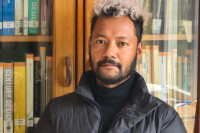
Sanjeep Maharjan is a sculptor and visual artist based in Kathmandu. He specialised in sculpture for his undergraduate studies and later completed an MA in Fine Arts from the University of Wolverhampton, UK.
Maharajan, an assistant professor at the Department of Art and Design, Kathmandu University, is the story developer and illustrator of the newly published ‘Sangye Wants a Shyoldo’, an illustrated children’s book inspired by Tamang culture and traditions.
In this conversation with the Post’s Sanskriti Pokharel, Maharjan discusses how he merged storytelling with illustration in ‘Sangye Wants a Shyoldo’ and the importance of children’s books to reflect local stories and lifestyles in Nepal.
What is ‘Sangye Wants a Shyoldo’ about, and what inspired you to write it?
‘Sangye Wants a Shyoldo’ is an illustrated children’s book inspired by my time in Gatlang village, Rasuwa, where the Tamang community resides. I stayed there to research their lifestyle and skills, and was inspired by their connection to nature and self-reliance. Everything they eat and wear is made by themselves, in a way that is sustainable and respectful of their surroundings.
During my stay, I learned how sheep move throughout the year, how their wool is turned into thread, and how fabric is made. I also learned the traditional way of stitching a coat called a ‘shyoldo’ from an elderly man in Gatlang. The technique is remarkable: fabric is folded like origami, so nothing goes to waste, showcasing the community's creativity and resourcefulness.
I was also captivated by the vibrant landscape and rich vegetation, which I photographed and later used as inspiration for illustrations. The story follows Sangye and Mingmar, who live in Gatlang, as Sangye dreams of owning a shyoldo. Mhemhe Dungo, the village’s master tailor, is known for making the most beautiful shyoldos, but will he make one for Sangye? Through this book, I wanted to share my experience and celebrate the Tamang culture.
The story revolves around whether Sangye will get his shyoldo. How did you build suspense and keep young readers engaged?
The story isn’t really about suspense, but I wanted it to feel playful for young readers. I built a sense of expectation by letting them imagine what might happen, then revealing it in a way that matched that expectation. Although the text tells one story, the illustrations tell another, with secret gestures hidden throughout.
This adds a layer of fun and discovery, keeping readers engaged as they notice details that aren’t in words. By the end, everything comes together beautifully, making the experience playful and enjoyable for children.
How did you approach blending illustration with storytelling in this book?
Blending these two aspects was a special process. The story was written in words by my friend, writer and poet Yukta Bajracharya.
I had a rough idea of the story and planned the characters’ actions and adventures, which gradually developed into a full story. Then I started creating the illustrations. Once the illustrations were complete, Bajracharya added the final text to match the visuals. This approach was different from the usual one, where the story comes first, and the illustrations follow. It allowed images and words to complement each other more playfully and integrally.
How important is it for children’s books to reflect local stories and lifestyles in Nepal?
It’s crucial that children’s books reflect local stories and lifestyles. Too often, we don’t see our identity and diversity represented, and children are more exposed to influences from the West or India.
Showing local Nepali stories helps children understand that our culture, traditions, and ways of life are unique and valuable. It also highlights that our art, knowledge, and perspective of the world are special in their own way, which is essential for fostering pride and a sense of belonging from a young age.
Out of art history, culture, and storytelling, which influences your work the most?
I read a lot about art history, partly because I teach world art studies at the Kathmandu University School of Arts. Professionally, that’s a big influence, but I also draw inspiration from various artists, whether it’s Haruki Murakami or Dan Brown, who approach art in very different ways.
Lately, I have been interested in ideas around colonisation and decolonisation. I find it inspiring to see artists from the Global South exploring their roots and reflecting on how colonisation has shaped mindsets, norms, and everyday life.
Understanding how people saw the world before these influences and rediscovering local wisdom, traditions, and perspectives have inspired my work.
How do you see your work evolving in the next few years, especially in bridging traditional and contemporary art?
It is important to understand our roots while also embracing change. As an artist, I have studied traditional art like Paubha, its iconography, and the philosophy behind the deities. I see Paubha as a form of abstract art, where complex ideas are represented figuratively so they are easier to understand.
In my work, I try to respect these traditional concepts while also bringing my own interpretation and involvement. This allows me to experiment with different media and contemporary approaches, bridging the traditional and modern in a way that keeps the art evolving.
Sanjeep Maharjan’s five book recommendations
Sophie’s World
Author: Jostein Gaarder
Year: 1991
Publisher: Aschehoug
This book changed me. When I read it years ago, it felt as if my sense of reality had expanded.
The Da Vinci Code
Author: Dan Brown
Year: 2003
Publisher: Doubleday
The Fibonacci sequence is a key idea in Brown’s book, and it inspired the way I approach form and design.
Kafka on the Shore
Author: Haruki Murakami
Year: 2002
Publisher: Shinchosha
Murakami moves beyond conventional ways of thinking and explores ideas in an unusual and imaginative manner.
Harry Potter and the Prisoner of Azkaban
Author: J K Rowling
Year: 1999
Publisher: Bloomsbury
Rowling had a strong impact on me as a teenager. Her writings filled me with a sense of hope.
The Little Prince
Author: Antoine de Saint-Exupéry
Year: 1943
Publisher: Reynal & Hitchcock
This book is special because it encourages us to see the world through an innocent yet meaningful perspective.
Sanskriti Pokharel
Sanskriti Pokharel, a former reporter and sub-editor at the Post, is a final-year student of Journalism, Mass Communication, and English Literature at St. Xavier's College, with experience in media, research, and communication.


Editor's Picks





E-PAPER | October 22, 2026

×