From sisno to sorbet: Inside Tusa’s effort to reimagine Nepali food
The Bhaktapur-based restaurant combines heritage space, village ingredients, and modern techniques to build a new dining identity. Photos: Courtesy of Axis Studio
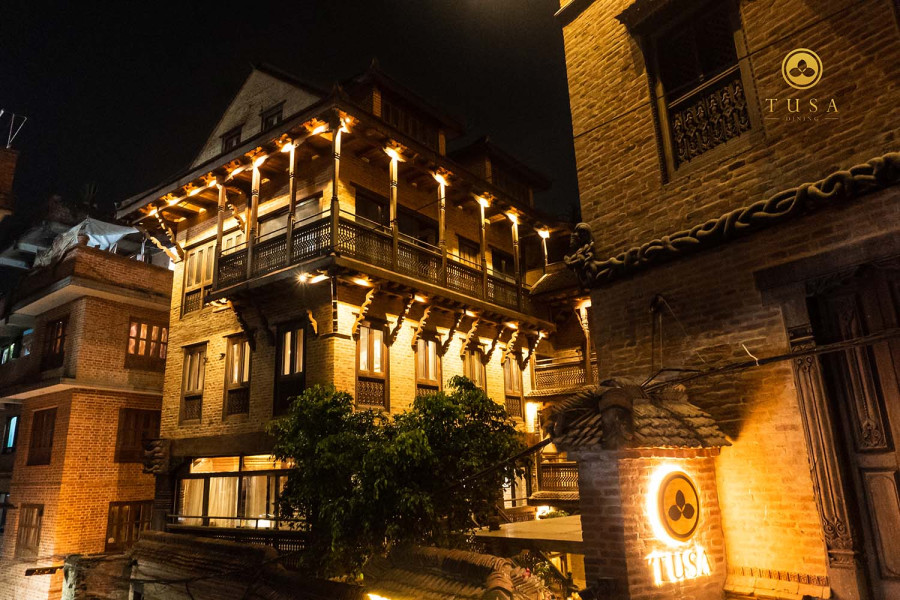
Finding Tusa is a journey in itself. Much like any other neighbourhood, in the heart of Bhaktapur, a bustling city with medieval Newa architecture, to find Tusa, you have to navigate through a maze of narrow lanes and brick houses.
“Many of the fine dining places in other countries are located in secluded areas,” says Rupesh Bohara, one of the three founders of Tusa Dining.
“While all three of us could answer questions about French cooking with ease, we struggled to name our own country’s dishes beyond the usual few,” Bohara says.
'Tusa', meaning 'sprouts' (symbolically representing new beginnings), is an answer to those questions. Parashuram Pathak, Sagar Shrestha and Rupesh Bohara left their shiny toques and comfortable careers to start afresh in their own homeland.
As all the founders had worked abroad to master culinary arts as a profession, they were often at a loss when it came to their own country’s cuisine. That gap became a turning point. Together, they opened Tusa in 2024.
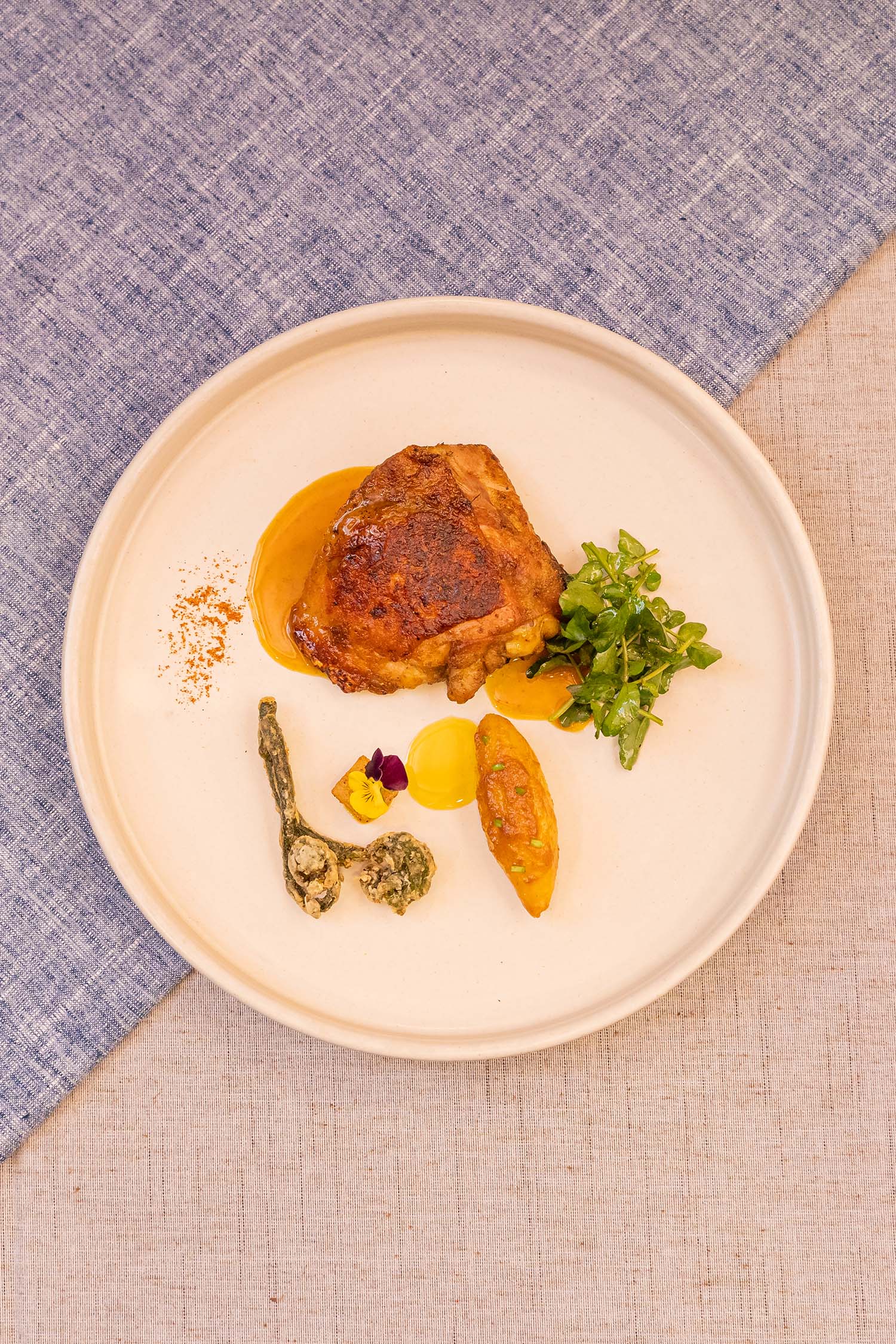
Chicken with simsag and fiddlehead
When you enter the gates, it feels as though an entire durbar has been packed into a single space. A pavilion at the centre with direct sunlight; besides, there is a mini-bar where the most exotic seasonal berries are extracted to produce drinks (like Ainselu, Himalayan Raspberry, often found in the hills).
The pavilion has all kinds of cookbooks, all signed by the authors/chefs themselves. Tusa’s owners are admirers of these celebrity chefs.
This small reading area is open to all students with hospitality or culinary arts backgrounds, encouraging deeper engagement with the craft of cooking beyond just a profession.
Inside the three-storey building, there is an open-plan kitchen area, meant to immerse diners in a sensory experience.
“To cook in this open area is to perform as a chef,” claims Bohara, who regards culinary arts as no different from any other creative expressions. For him, the kitchen is both a stage and his daily workspace.
The building where Tusa now stands was built by Rabindra Puri, a heritage conservationist and UNESCO prize winner. Even the place's architecture was intentionally designed to match the delicacies they were presenting.
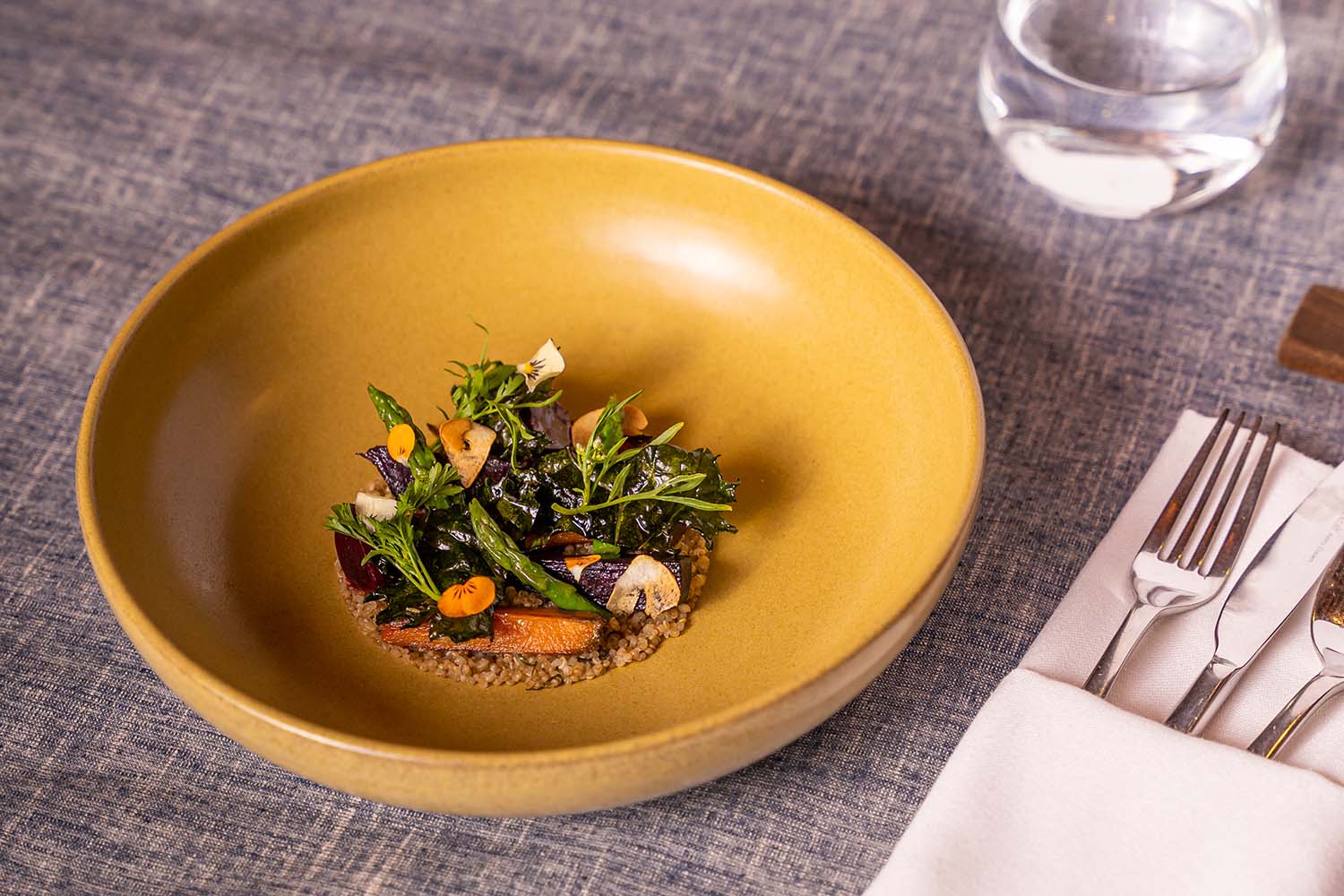
Vegetable garden
To describe the food, Bohara calls it ‘modern-progressive’ Nepali food. Unlike what most people would consider a fine dining experience, the owners themselves do not. It is because, having witnessed what 'fine dining' actually looks and feels like in other parts of the world, they believe the country’s culinary scene is still in the early stages of that journey.
Their food combines local ingredients with modern cooking techniques. Even though their menu changes almost four times a year with the seasons, some of the dishes are reinventions of Nepali cooking. A few times, whipping up an entirely new concept and the others just fusing different ingredients together.
Until now, balancing experimentation with authenticity has been a challenge. Fundamentally, the objective of ensuring the Nepali essence remains the same, but what changes is the technique and presentation.
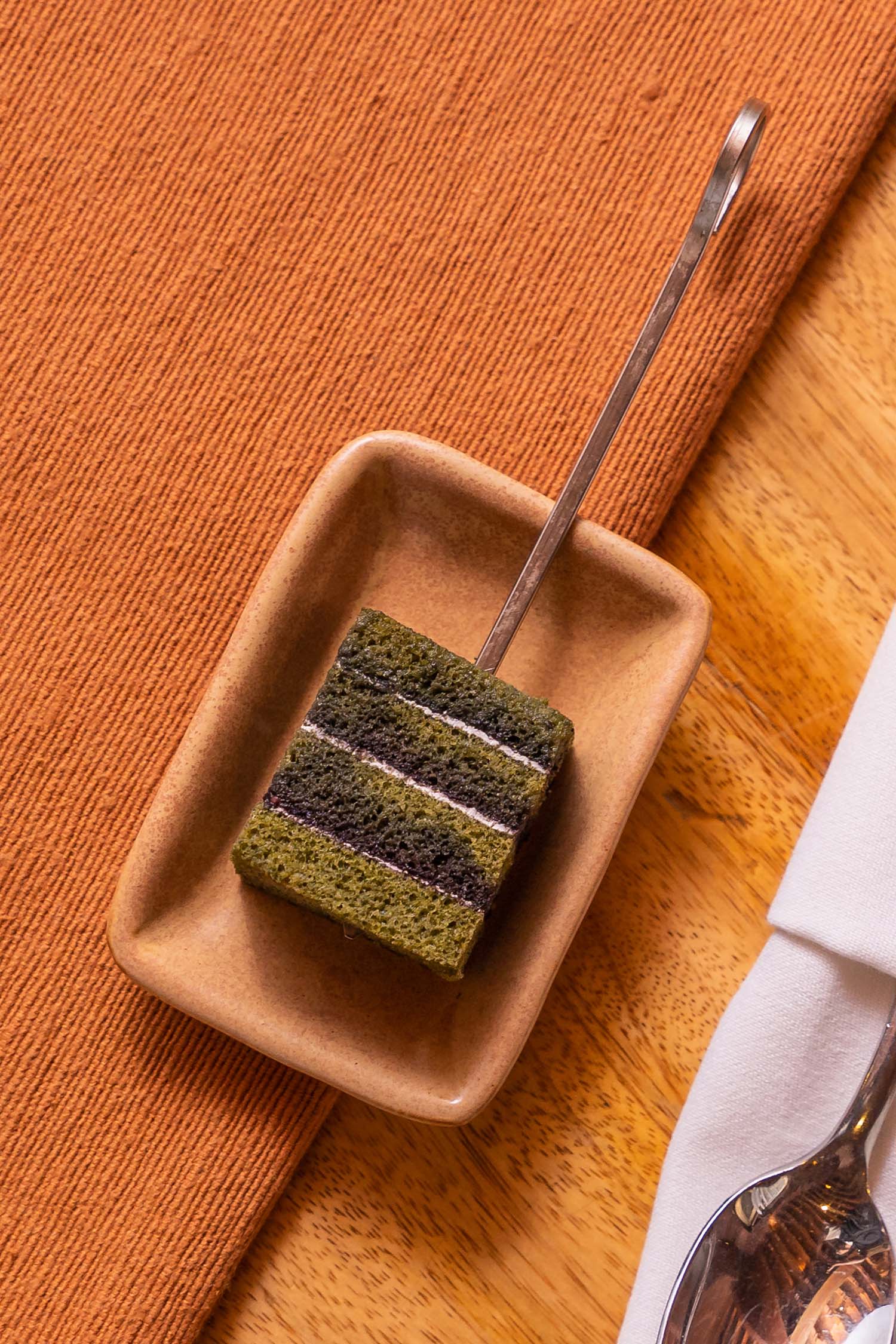
Sisno cake is one of the menu’s beloved dishes. Traditionally, nettle leaves, or sisno, are turned into a soup-like dish and eaten with rice. But Tusa has completely turned the plates upside down, creating a dessert from a plant considered ‘nutritious’.
Similarly, chyakhla, a porridge made out of crushed grains, mainly corn, also similar to grits, takes a new form when combined with chicken. Instead of using conventional grains, the restaurant uses chicken to make the thick, porridge-like dish.
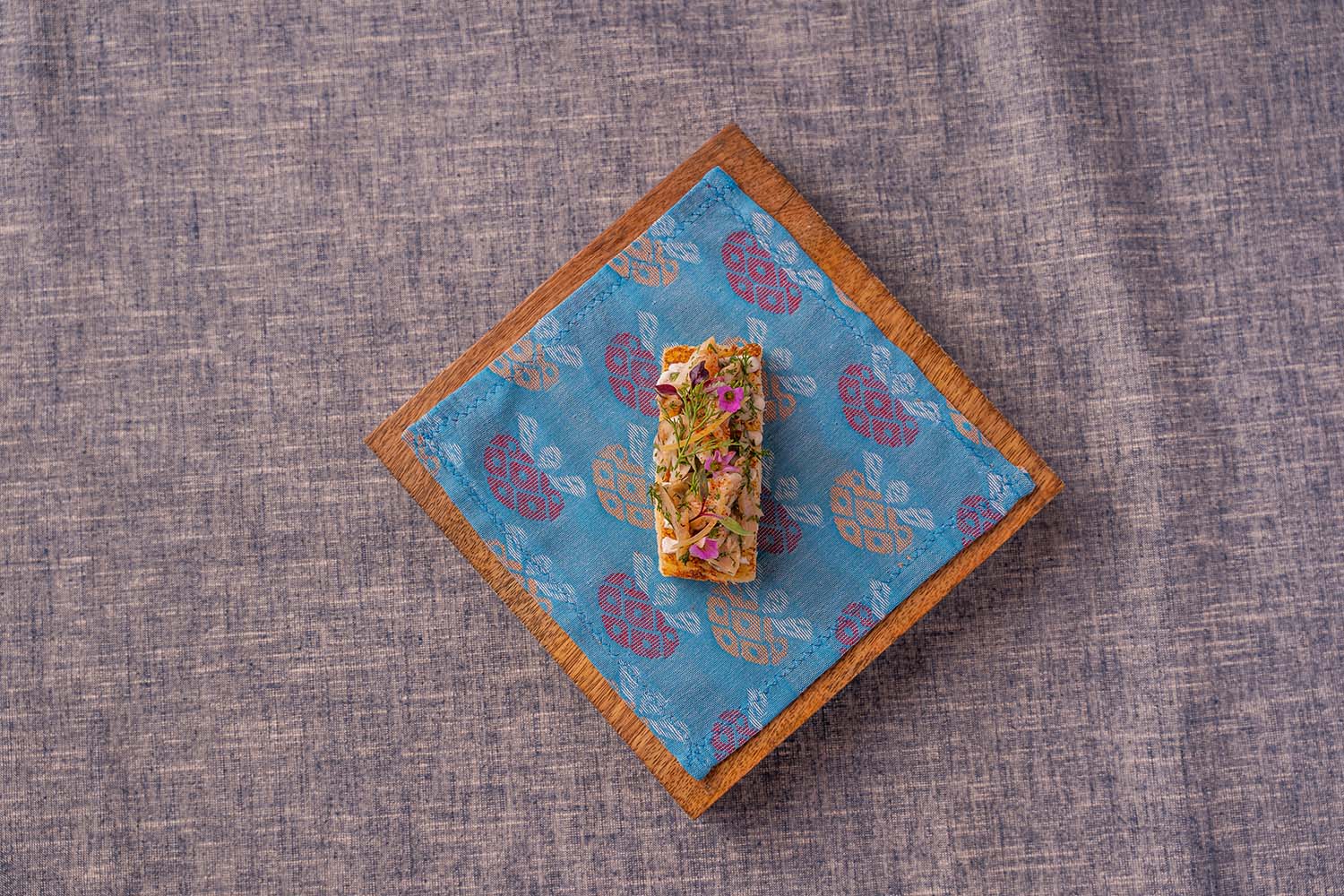
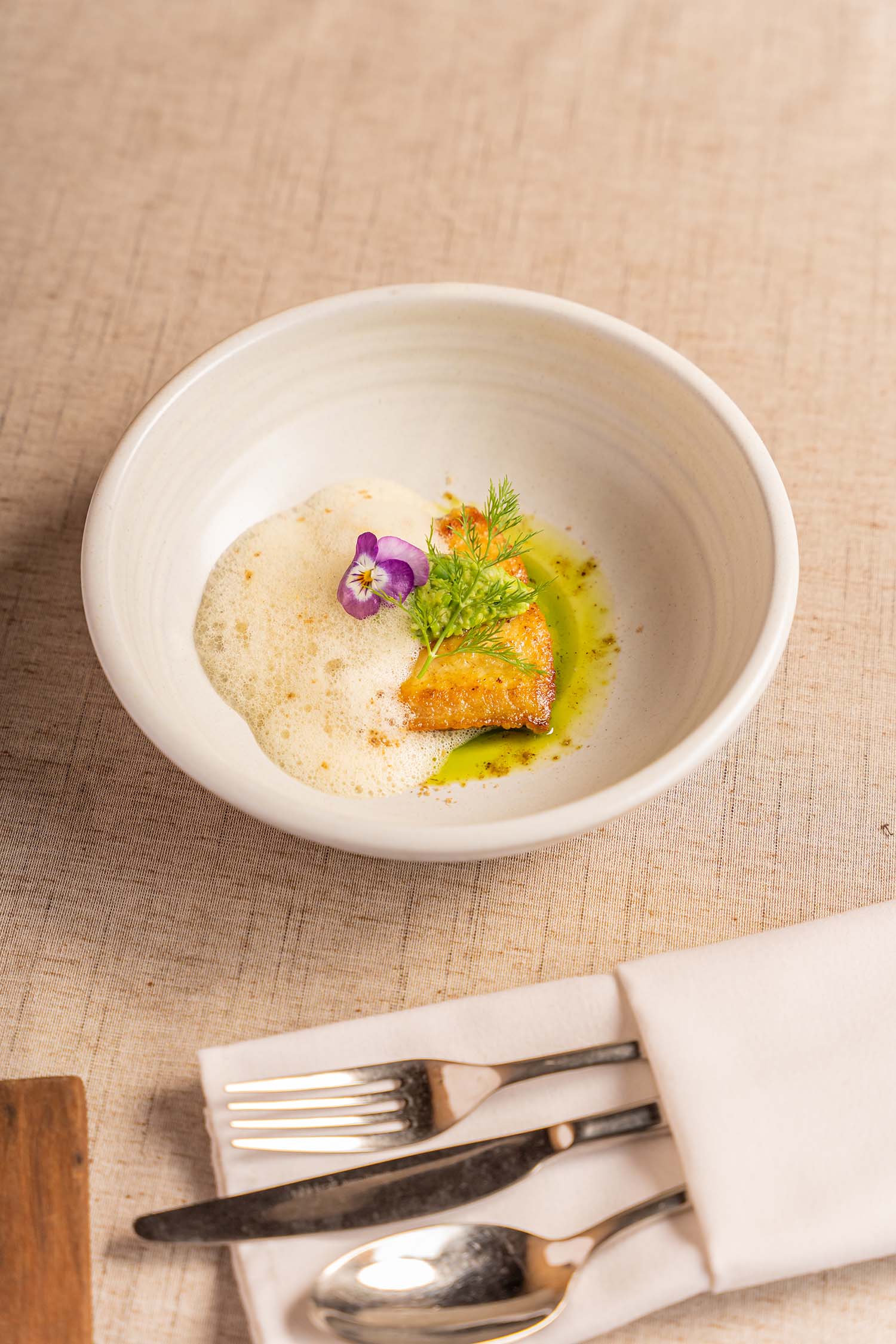
Fish kachila
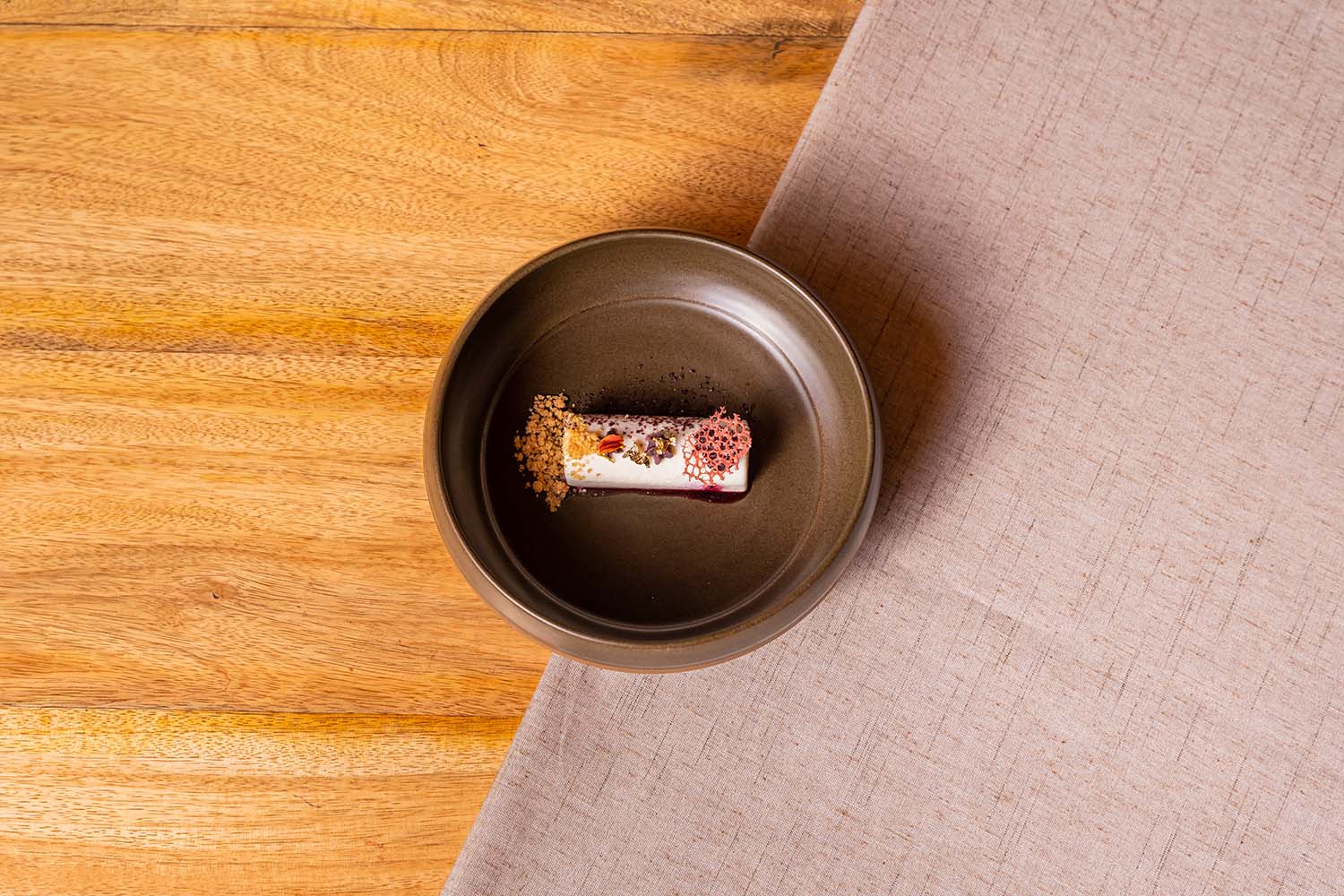
Using Laligurans to make a sorbet, a dairy-free frozen dessert typically made from fruit puree, is yet another new invention of the national flower. The dish connects the diners to its season, celebrating the short-lived period when the rhododendrons fill the hills and mountains with their scarlet hue.
But making these exotic and experimental dishes comes at a heavy cost, one that uses local and ethnic ingredients that are not commercially viable at all times.
These products are not utilised as they should be. Nepal’s biodiversity offers so many natural products, but when sought in nearby markets, they are nowhere to be found due to mass extraction. Sea buckthorn, Chari Amilo—such items are used in Michelin-star restaurants, but here their use and importance are a lesser-talked-about concern. That not only limits opportunities for restaurants but also serves as a reminder that abundance alone is not enough without systems that connect producers, markets, and consumers.
“Last year, we went to Dolpa; our welcome drink was saffron tea. Could you believe it? An ingredient so expensive served in a remote area—we were stunned,” says Bohara.
While extracting ingredients like saffron, the founders also immerse themselves in the stories and practices of villages. Sticking to a single cooking and preserving technique quickly becomes monotonous as a chef, so to draw on Nepal’s diverse gastronomic ways, they travel.
“While we were on our research trip, we came across an older lady eating Yarshagumba dipped in honey,” shares Bohara, who, along with the other founders, now carries a memoir of food traditions, far from being seen in mainstream practices.
By hearing stories from Aamasin villages and peeping at the kitchens of local homestays, the team at Tusa gives both a story and a life to their food. Jiri, Jhapa, Illam, and Sankhuwasaba are among their many stops, each offering a new lens through which to view food and then presenting it to their diners.
As much importance is given to the anecdotes behind every seasonal harvest as to the final product.
The menu is meticulously curated to cater to every guest’s preference, whether they are pescatarian or vegan. It is a gesture to make sure they enjoy their food.
“We often say, ‘Atithi Devo Bhava’, a symbol to respect our guests. That tradition follows in every dining experience,” says Bohara. From Sadhguru to the Duke of Edinburgh, Tusa has served all its guests with the same principle.
The diners now comprise both locals and foreigners.
“We are seeing a rise in our Nepali audience, and that’s something we always hoped for,” mentions Bohara. Dining would mean the chefs' briefing about every course on the menu. In doing so, diners would also learn about the country's lesser-known culinary heritage and biodiversity.
Now, Tusa has expanded to Canberra, an effort to take Nepali cuisine to a global stage and rid it of the labels ‘underrated’ and ‘under-represented’.




 14.7°C Kathmandu