A cinema of choice: Inside Gauthali Entertainment’s feminist practice
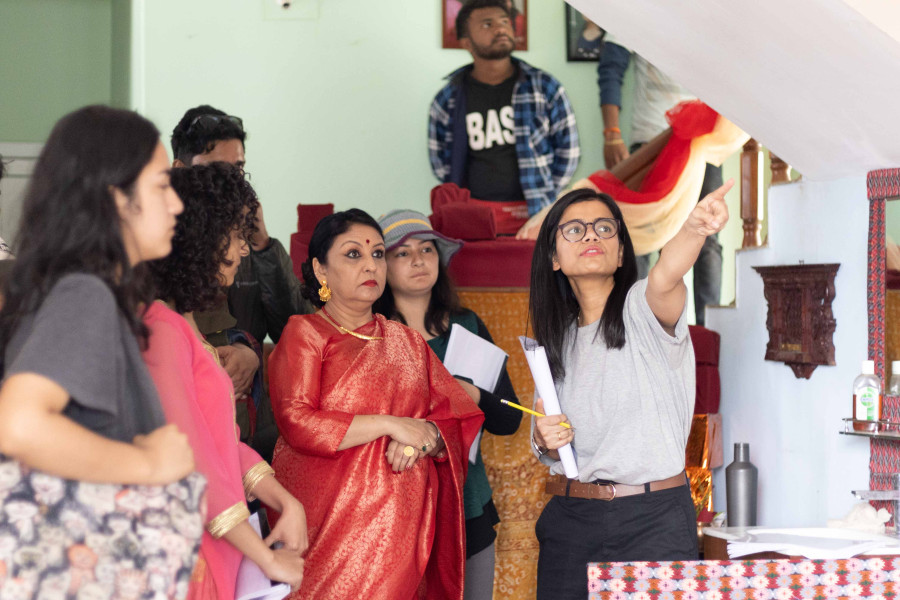
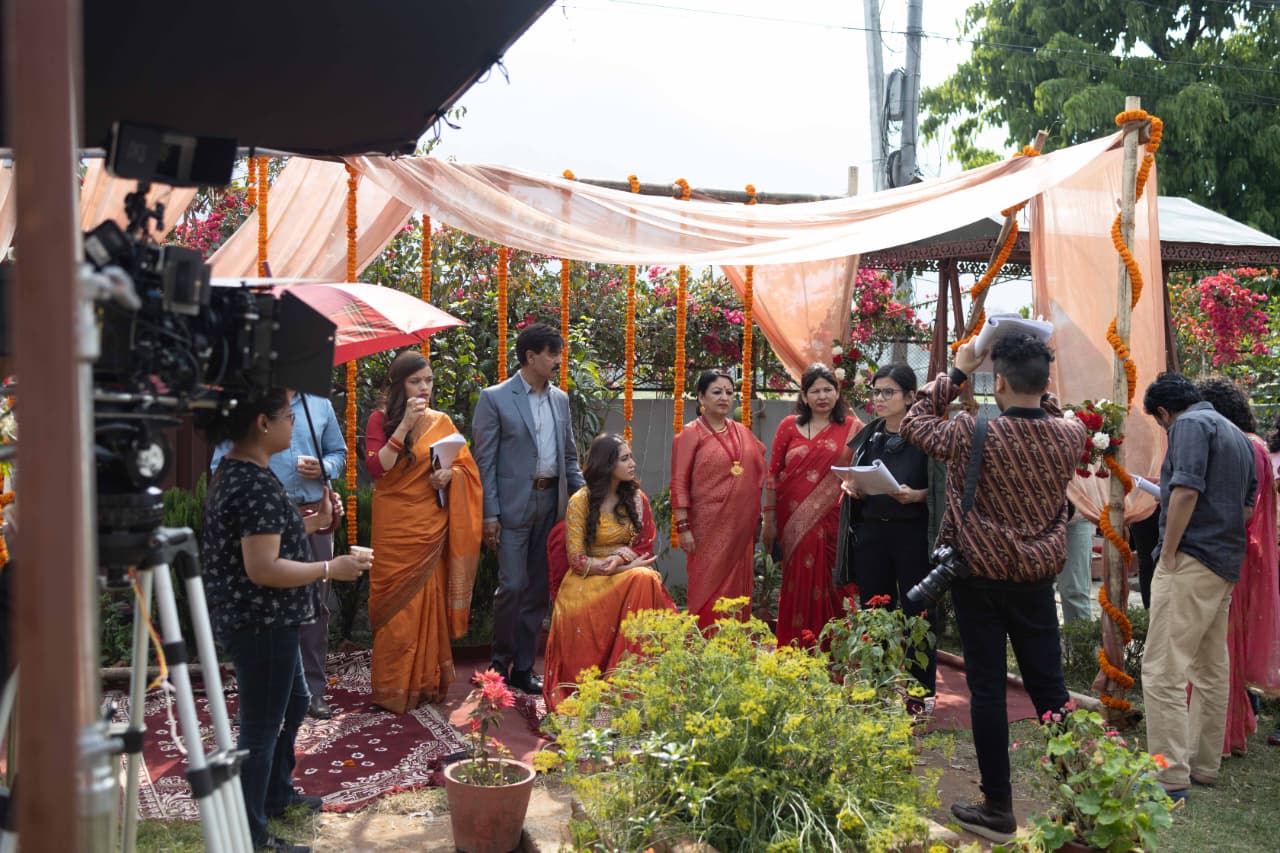
Gauthali Entertainment questions how women are written in Nepali cinema, focusing instead on layered, imperfect and real characters. Gauthali Entertainment co-founder Sahara Sharma (right), during the shoot of the upcoming movie, ‘Ek Mutthi Badal’. Photos: Courtesy of Ek Mutthi Badal
It takes a village to make a film. For Gauthali Entertainment, that village is shaped by feminist intent, sustained by allies and led by women, on and off the screen.
The making of the television film ‘Chasing Rainbows’ in 2013 marked a sharp turn in the trajectory of Sahara Sharma and Abhimanyu Dixit’s relationship, from friends to creative partners. “We do not like each other,” says Sharma while Dixit laughs, “But we surely love us.”
Out of that dynamic grew a female-led feminist production company, Gauthali Entertainment, working at the intersection of filmmaking, activism and education. Based in Kathmandu, Gauthali carries feminism as a way of working, advocating, and creating, rather than limiting it to just a slogan or, as Dixit explains, ‘a cool acquaintance’.
‘Chasing Rainbows’ has received multiple awards in various film festivals, including the Kathmandu International Mountain Film Festival in 2013 and the Toronto Nepali Film Festival. The company has also created short films, web series and documentaries, including ‘Nirnaya’ (2020), ‘Gauthali Ka Katha Haru’ (2017 to 2018) and ‘Maya Bhanne Cheez Estai Ho’ (2018 to 2019).
Nepali cinema has long centred women in its films. But their inner worlds, perspectives, contradictions and choices are still rarely explored.
Positioned in Nepal’s largely male-dominated film industry, Gauthali foregrounds voice, collaboration and flexibility. They let the narration flow and ripple rather than forcing a message into the work. While they do pay keen attention to making the stories central to femininity, the process in itself is not rigid. “The whole point of feminism for us is choice,” says Sharma, “and it comes naturally to us as an identity.”
Even within this predominantly male-centric field, they recall that introducing themselves as a feminist filmmaking company has often met with more enthusiasm than resistance.
Internationally, they say, their introduction as a feminist filmmaking company is considered neither a medal nor a setback. It is considered simply a quality that exists alongside work.
While structural barriers persist, their day-to-day interactions tell a different story. “When it comes to people, it naturally gets filtered out,” adds Dixit. “They, as an audience, are aware of what we are trying to do, and hence react nicely to our work.”
The ease of collaborating, however, does not determine which stories dominate the screen. Nepali cinema has long centred women in its films. But their inner worlds, perspectives, contradictions and choices are still rarely explored.
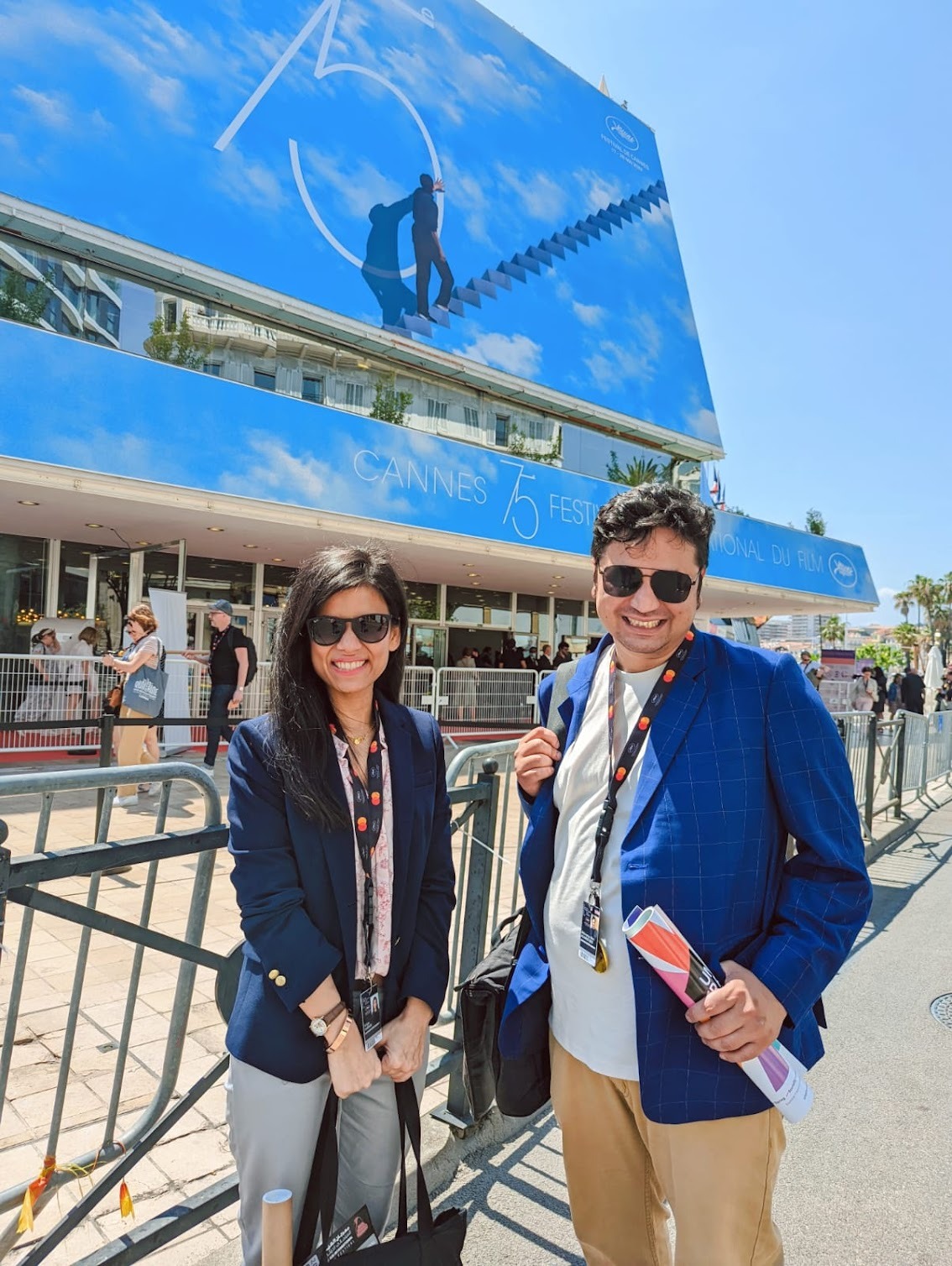
Founders, Sahara Sharma and Abhimanyu Dixit, at the 75th Cannes Film Festival, 2022.
In Nepali cinema, female characters brought to the centre often conform to patriarchal beliefs. The representation assures a triumph, yet the portrayal still, somehow, feels uncomfortable.
“A lot of these women are written by men, and often their roles seem to be adjusted within the societal patriarchal system,” shares Dixit. “It becomes difficult to find the depth and honesty.”
However, they believe men are not entirely incapable of writing female characters if they present simple and crude honesty. Sharma adds, “I can see how these stories are inherently written with a saviour complex.” For her, the problem lies in intention. When a story is written to ‘save’ others, it risks flattening the very experience it seeks to represent.
This discomfort shapes the way Gauthali approaches its characters. Rather than keeping women as symbols or solutions, their films allow them to exist with full complexity: messy, contradictory, and unburdened by the need to represent anything beyond themselves. With this depth and brevity, they reflect a wider, more honest picture of the society.
However, telling stories that carry this nuance comes with its own challenges. In an industry that often rewards familiarity, such narratives can be at risk. “The market for this storytelling, I believe, has not been made at all,” explains Dixit.
While writing these scripts, intersectionality remains central to the vision, too. For Sharma, this means constantly pushing beyond her own perspectives and imagining lives shaped by different geographies, classes and circumstances.
“Every time I write, I check myself, my beliefs, and look back on everything,” says Sharma. “And not just with self, I also get people involved; checking with my friends and family with their perspectives,” she explains.
This process of questioning is also informed by reading. Engaging with a wide range of texts allows their storytelling to deepen, adding layers to their approach to feminist narratives. “There is so much to read and to understand,” Sharma adds.
In many ways, this evolving process also reflects what they value as filmmakers. Having been on multiple international platforms, they simply strive for a cinema they can look back on and be assured they did a commendable job. Their measures of success remain inward and personal to each team member. Money and virality, for them, remain as secondary concerns. Their independence is both a strength and a rare privilege in Nepal’s film landscape.
For them, the primary focus remains on honing skills they can take pride in rather than on the assurance of virality. “There is no film that can be guaranteed in Nepal,” says Sharma. “At least we know that the things we are putting out in the market are good quality products,” she adds.
This intent has largely culminated in their feature film ‘Ek Mutthi Badal’, also known as ‘My Share of Sky’, releasing on May 15. Developed over several years, the film carries forward its belief in allowing a story to grow organically.
With Sharma and Dixit’s friendship at the core of this collaboration, they bring a production team powered by female professionals and feminist ideology, questioning, evolving and marking a significant turn in Nepal’s cinematic landscape. “Gauthali has been a feminist film company, even before feminism was cool,” says Dixit.




 12.65°C Kathmandu