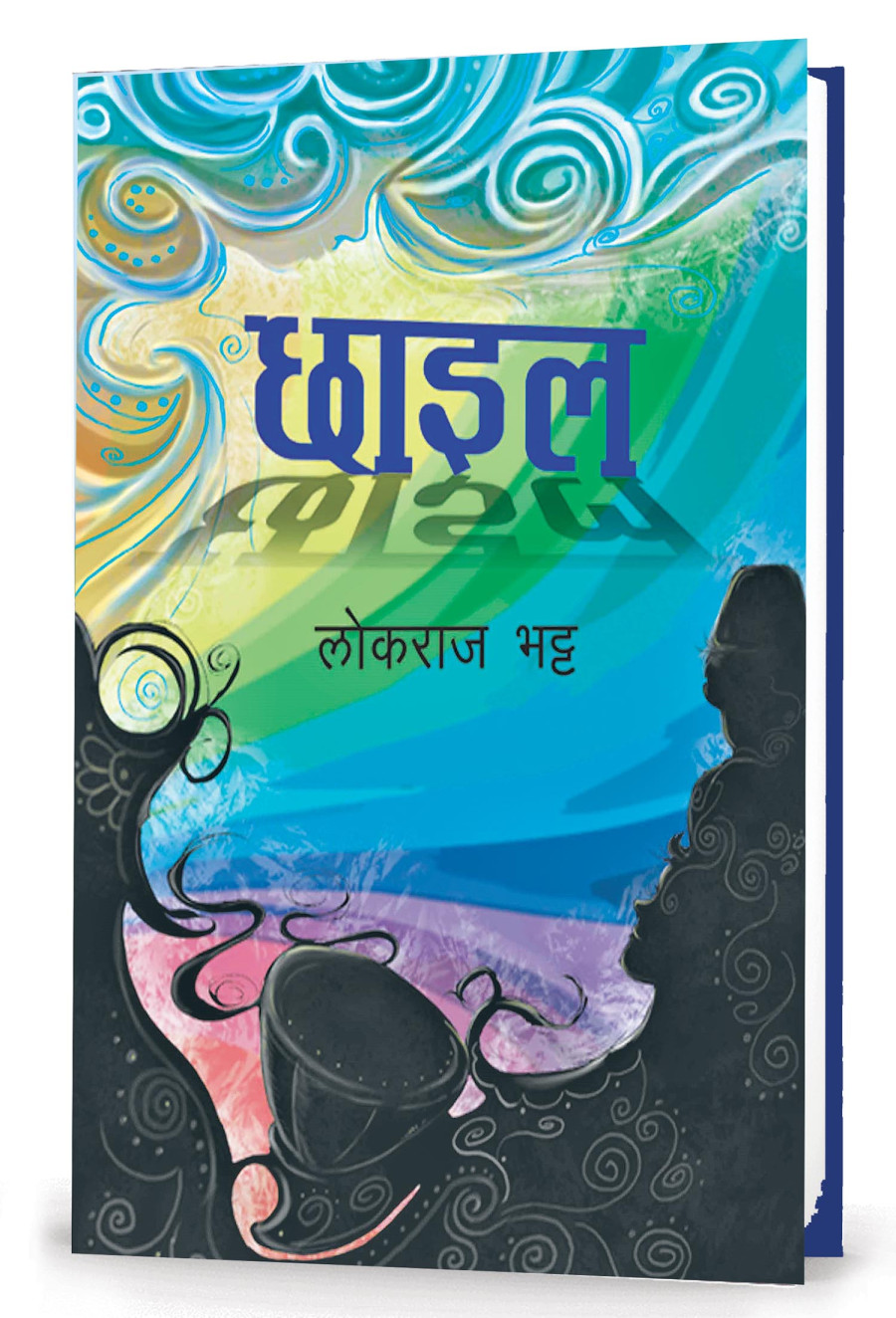
‘Chhail’, which translates to ‘shadow’ in the Doteli language, portrays social issues prevalent in Nepal’s far-western society through the lens of a young boy. As the title suggests, it explores overlooked yet crucial realities of our society.
Written by Lokraj Bhatta, who hails from Doti himself, his debut book ‘Chhail’ captures the mundanity of village life.
It starts with the main character, Jituraj Sharma, telling a story about his family. His father was a dedicated mason and an idol-like figure. He was always busy constructing houses for people in the village.
Jituraj thinks to himself, “Our home is the kind where the roofs leak while it is raining; it has become too small to fit the guests and is only enough for us to hide our heads. Why did dad never think of making it bigger?” questioning his father.
This single question embodies a concept the book repeatedly portrays: poverty. Often, poverty is just added as an element to evoke sympathy, but here it becomes a lived reality that shapes Jituraj’s thoughts, questions, and understanding of his family. Its effects are clearly shown to hinder the characters’ lives. In a broader sense, the setting in Doti lacks proper roads for transportation, and some homes do not even have electricity.
In one instance, when Jituraj’s father travels to the city to buy a radio, he and his sister are thrilled for their family to have any device of that sort for the first time. But their joy turns to dismay as their father returns home, short on money to afford it.
Jituraj is an inquisitive child who asks questions about the experiences he encounters daily. Through each question, he reveals a part of the society and cultures, unbeknownst to a child.
Not knowing what dreams or aspirations even mean, when asked what he wants to do in life, he says, “bus conductor.” The main character’s naive, curious and mischievous nature dives into complex child psychology.
The book follows Jituraj, whose childhood is marked by ups and downs in his academic and familial life. Then he moves to different cities throughout his adulthood. He navigates his place in Kathmandu, struggling to feel a sense of belonging in the bustling city.
He not only struggles with his career but also faces a personal dilemma when his romantic interest, Sumitra, leaves to pursue higher studies.
The book has a distinct feature: well-written characters who carry symbolic meaning. Like Jituraj’s elder sister, who is academically sound and never fails to rank number one in her class. After completing her SEE, she wishes to pursue higher education. But her parents chose a different fate: to marry her off.
One of the most meticulously written relationships is the father-son bond between the main character and his father. In a time when media, especially movies, have constantly represented toxic fatherhood and masculinity, the book constitutes a loving and encouraging bond between Jitu and his father.
In ‘Chhail’, Bhatta does not depict an idyllic village; caste discrimination, abuse, and social superstitions like Chhaugoth are included, adding realism to the story. Rather than just fiction, they are parts of the bitter reality in many rural parts of Nepal.
Much of the book also revolves around the period during and after the Maoist insurgency. Bhatta portrays this sensitive political chapter through Jituraj’s personal lens, showing what ordinary citizens had to endure—often forced to comply with the Maoists’ demands under threat of violence. There is also a lingering sense of fear, especially among children, with schooling at times halted.
However, the dialogue can feel unclear at times. Bhatta uses Doteli, the region’s local language, for conversations, which may confuse some Nepali readers and occasionally lead to misinterpretation. Even so, this choice adds authenticity and helps the story resonate more strongly with its setting.
With characters likeLahure Baje, humming to songs and giving advice in a poetic manner, Bhatta’s writing is rhythmic at times. This gives the book layered depth, inviting readers to form a personal connection with it.
With Sudurpashchim’s rich cultural background, community spirit, and the psychological impact of migration, the book offers a personal journey through Jituraj’s life. What keeps the book engaging is its constant sense of “what will happen next.” While it does not rely on dramatic scenes or climactic moments, the unpredictability of everyday life holds the narrative together.




 20.62°C Kathmandu