



 28.12°C Kathmandu

Tue, May 26, 2026
Culture & Lifestyle
At Dining Room, a menu shaped by global kitchens
Led by chef Ajay Kumar Pudasaini, the restaurant offers flavours shaped by his years working in kitchens in Mumbai, Singapore and Abu Dhabi.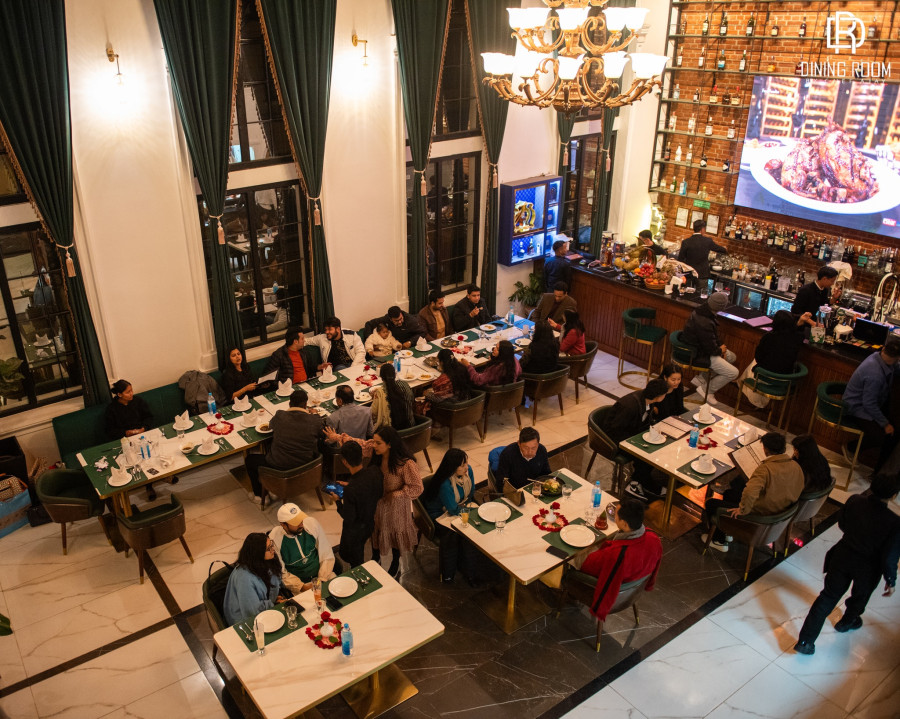
bookmark![]()
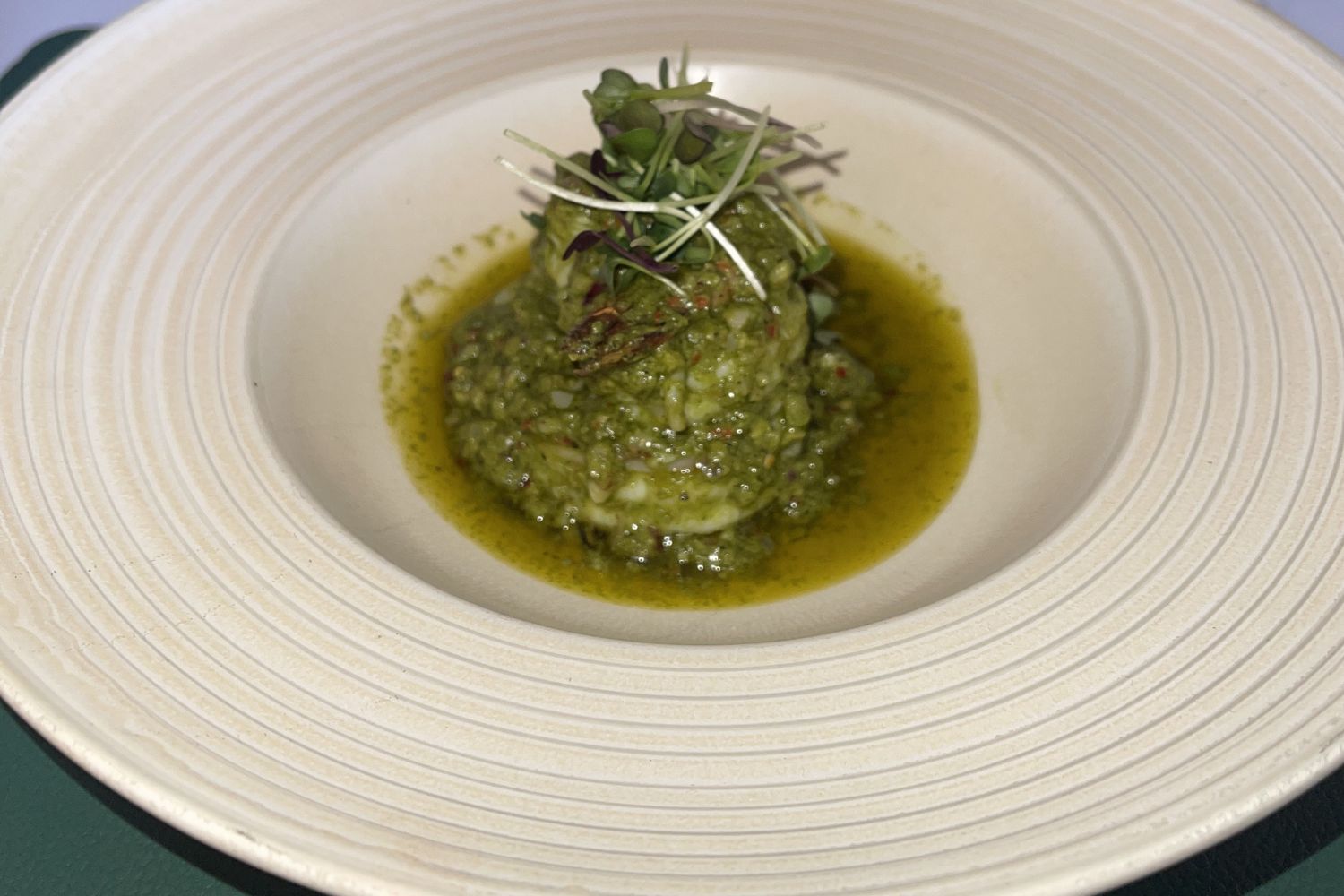
A la Crevette ![]()
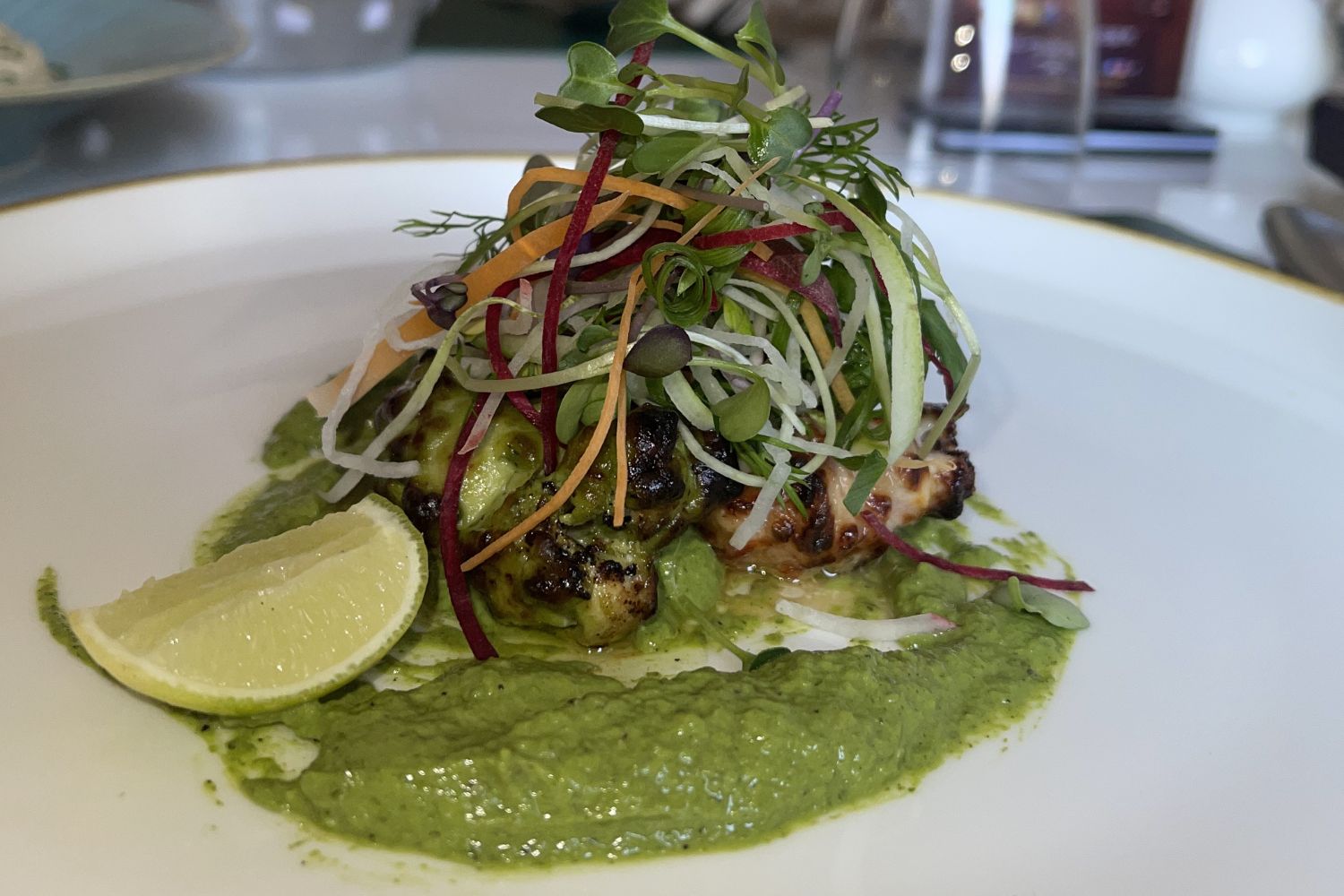
Tandoori Chicken ![]()
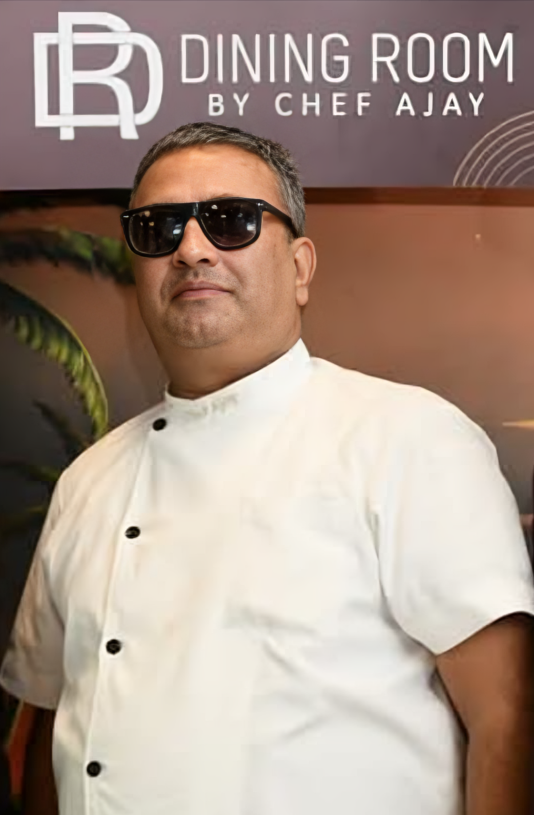
Chef Ajay Kumar Pudasaini
Skanda Swar
Published at : March 6, 2026
Updated at : March 6, 2026 08:45
Kathmandu
Dining Room by Chef Ajay in Baluwatar is the result of decades of experience, persistence, and commitment to the craft. Behind the restaurant is Ajay Kumar Pudasaini, a chef whose journey has taken him from the kitchens of Mumbai to fine-dining establishments in Singapore and Abu Dhabi, before ultimately coming back to Kathmandu to build something of his own.
Born and raised in Danchhi, Kathmandu, Pudasaini grew up in a family where food was both a profession and a passion. His father worked as a chef at Hotel Annapurna before opening his own restaurant, Ghar-E-Kabab. Watching his father cook planted an early seed. “Seeing his passion, I was always interested in cooking,” Pudasaini recalls. “My father was very supportive. He’s the one who sent me to Mumbai to get my training.”
In the early 1990s, becoming a chef in Nepal was far from glamorous. The profession lacked social recognition, and many did not consider it a serious long-term career. “Still, I wanted to pursue it,” he says. Determined, he left for Mumbai in 1992 as a trainee chef.
By 1994, he secured a permanent position at an Indian restaurant and spent four years working in various kitchen stations, including the tandoor and curry sections. Those years were developmental. They taught him how to use spices, control heat levels, properly time each component of a dish, and maintain consistency. After leaving Mumbai, Pudasaini moved to Bangalore, where he worked for the Shanti Sagar Group, an established restaurant chain. This experience was important because it exposed him to the structured systems used to operate a large-scale kitchen.
Following about a year in Bangalore, he returned to Nepal for a short time before moving to Singapore and working at Hotel Imperial for about eighteen months. The dining scene in Singapore introduced him to fusion cuisine and the high standards of service provided by five-star hotels. The presentation of the food became more refined, the plating more deliberate, and the guest experience more complete.
However, the most transformative period of his career occurred in Abu Dhabi. Pudasaini worked there for almost nine years. During that time, a senior chef encouraged him to make the transition from Indian techniques to classical French cooking. “French cooking is delicate,” he says. “We use fresh lamb and seafood. It is entirely different.”
French kitchens demand attention to detail in every aspect of the process. Due to this, sauce work, reductions, temperature control and plating aesthetics have become central to Pudasaini’s craft. One memorable experience he remembers was preparing a nine-course French gala dinner for VIP guests. The event required meticulous coordination. “I learned a lot about plating, food tasting, and presentation,” he shares.
Through these experiences, Pudasaini developed a clear philosophy: good food must achieve balance. Precision and consistency became non-negotiable standards.
When he returned to Nepal in 2010, the transition was not easy. At the time, premium seafood was not yet a thing in Kathmandu. He chose to work with lobster, scallops, red snapper, white snapper, tuna, and jumbo prawns—things you wouldn’t typically find people eating in Nepal. Most of the seafood was imported directly from Thailand.
He went on to work at Tamarind Restro & Bar, where he designed menus and implemented kitchen systems. Also, over time, he consulted for many restaurants in Kathmandu, which included menu engineering and operational setup. What he did added value to an industry seeking growth and improvement. He later joined Bajeko Sekuwa as a corporate chef, a change from fine dining to a more local concept.
The idea to start his own restaurant originated from a conversation with close friends. “They suggested, why not do a joint venture?” he recalls, smiling. Sixteen months later, that idea became reality.
Dining Room by Chef Ajay is a personal space, crafted to blend Indian cuisine with French elegance. “Dining Room is very refined,” he explains. The interior combines European sophistication with a hint of Nepali warmth. The ambience is both elegant and cosy, suitable for formal dinners or casual gatherings.
Pudasaini is a hands-on person who spends his days in the kitchen from 10 am until late in the evening. He works with a loyal team that has been with him for nearly ten years.
The kitchen offers a selection of gravies and sauces developed through research and development. For Pudasaini, R&D is essential: “Without R&D, you won’t extract the true flavours from your food, nor fully understand what’s happening in your kitchen.”
Signature dishes reflect his global experience. The A La Crevette features sauteed prawns cooked with basil and garlic, tender and aromatic, served with light, crisp naan. The Truffle Chicken combines sauteed chicken, mushrooms, onions, and garlic with creamy sauce infused with imported Belgian truffle paste. The butter chicken and biryani have quickly become favourites, offering richness without overwhelming spice.
Even classic tandoori chicken tikka is elevated by careful moisture control and plating. Presentation matters deeply to Pudasaini, influenced by his French training.
Seafood remains a highlight. The restaurant now imports red snapper, white snapper, tiger prawns, and jumbo prawns directly from Sri Lanka. These offerings have attracted a diverse clientele, including Nepali diners, Indian visitors, and European guests.
Looking ahead, Dining Room plans to introduce a breakfast menu centred on healthy, organic Nepali ingredients. Rather than following the typical continental format, Pudasaini hopes to create something distinctive and locally inspired, starting from March 7.
Despite the restaurant’s steady growth, he remains cautious about expansion. While another branch may open in the future, franchising is not part of the plan. “If we expand, we will do it ourselves and run it ourselves,” he says firmly.




Most Read from Culture & Lifestyle

What the prime minister’s asset disclosure tells us about Nepal’s quietly growing influencer economy

‘Garibako Chameli’: The song Balen once sang for the poor now s(t)ings back at him

Shah’s outfit flip sparks social media buzz amid political scrutiny

The Nepali racer chasing adrenaline in Thailand’s Gymkhana circuit
A different kind of party is spreading in Kathmandu—quiet, sober and at dawn
Editor's Picks
Nepal keeps protesting over Lipulekh. India and China keep ignoring it
Overexploited for years, the Chure hills are weakening, and water stress is rising across the Tarai

As machines listen, human conversations fade

Why Sanskrit is not dead after all
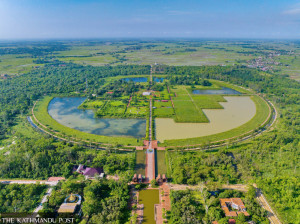
Lumbini master plan remains unfinished after 48 years
E-PAPER | May 26, 2026

×