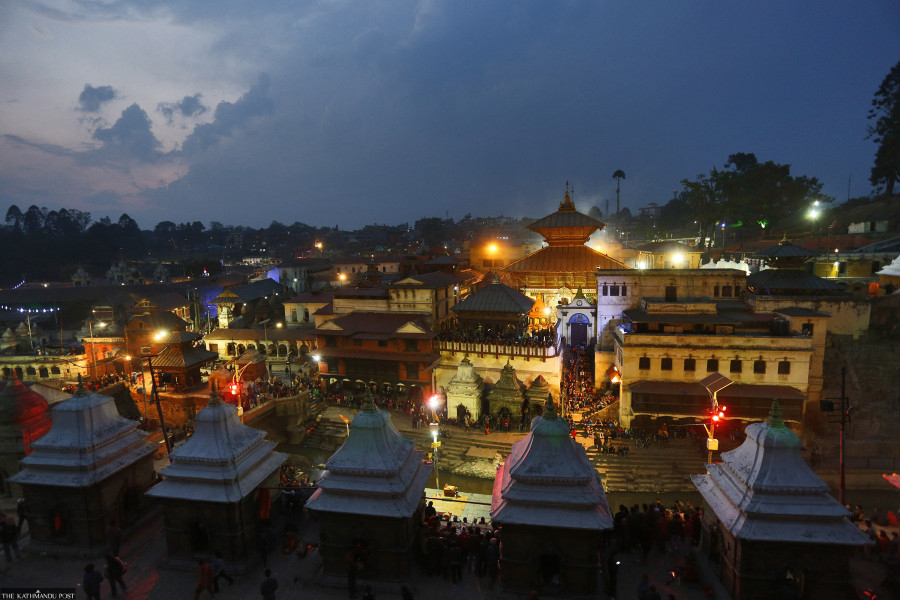
Mahashivaratri, known as the ‘Great night of Lord Shiva’, is a significant Hindu festival dedicated to Shiva, one of the principal deities in Hinduism. Devotees observe the night by staying awake, lighting oil lamps, praying, worshipping, and meditating, especially in the Pashupatinath temple area, as a mark of reverence for Lord Shiva.
On this sacred occasion, Shiva temples nationwide are filled with worshippers. Thousands of Hindu pilgrims, including ascetics known as sadhus, travel from Nepal, India, and other parts of the world to pay homage to Pashupatinath. This revered temple, dedicated to Lord Shiva, is one of the most significant Hindu temples recognised as a UNESCO World Heritage Site.
The name Pashupatinath originates from Sanskrit, combining Pashu (living beings), Pati (master), and Nath (god), signifying Shiva as the supreme lord of all living beings.
According to legend, there was once a vast forest called Shlesmantak Van, within which lay Mirgashthali, a grazing land for deer. Domesticated cattle also roamed this grassland, including a sacred cow named Kamadhenu, owned by a cowherd (gwala).
Kamadhenu, once known for providing abundant milk, mysteriously stopped giving milk at home. Puzzled by this sudden change, the cowherd followed her one day. To his astonishment, he saw the cow reach a particular spot and begin to release milk on the ground by herself.
Bewildered, he decided to dig the spot to uncover the mystery. As soon as he did, a powerful flame erupted from the ground, instantly consuming him. Later, recognising the divine significance of the site, people built a temple dedicated to Lord Shiva. Today, that sacred place is known as the Pashupatinath temple.
Orthodox Hindus claim that Hinduism is the oldest religion in the world. The trinity of principal Hindu gods is as follows: Brahma, the creator of the universe; Vishnu, the preserver; and Shiva, the destroyer and re-creator.
Lord Shiva is accompanied by his consort, Parvati, and together they have two sons: Ganesh and Kumar (Kartikeya). Shiva is often depicted with four arms, each holding a symbolic object: one hand is raised in a blessing posture, the second holds a trident (trishul), his most powerful weapon to destroy evil; the third carries a damaru (a small drum associated with his cosmic dance), and the fourth holds a kamandalu (a pot containing holy water).
The abode of Shiva and his family is Mount Kailash. Nearby lies Mansarovar Lake, a sacred water body where pilgrims take holy dips, believing it washes away sins and impurities. Shiva’s vehicle (vahana) is Nandi, a sacred bull.
Lord Shiva is often associated with asceticism and renunciation. He smears his body with ashes from cremation grounds and wears a tiger skin as his attire. He is also known to consume marijuana (bhang) as part of his meditative and spiritual practices. Symbolically, Shiva is represented by the Shiva Lingam, which signifies the cosmic union of masculine and feminine energies.
Nataraj is the famous dancing manifestation of Lord Shiva, revered as the supreme master of dance among all gods and goddesses. In Hindu traditions, especially during musical and dance performances or religious festivals, Nepali people first worship and pray to Nataraj, seeking success in their ceremonies.
Lord Nataraj possesses unparalleled power, artistry, and dance skills, unmatched by any other deity. On special occasions, particularly on the night of Mahashivaratri, he performs the cosmic Tandava dance, symbolising creation, destruction, and the eternal cycle of the universe.
Along the banks of the Bagmati River, Nepal’s sacred Hindu river, lie cremation platforms or ghats designated for different castes of the Nepali people. Both Hindus and Buddhists in Nepal have followed the tradition of cremating their dead since ancient times.
The Pashupatinath Temple is built in the classic Nepali pagoda style. It features a double-tiered, gold-plated roof with a gilded spire at the top. Believed to be around 2,000 years old, the temple is a testament to Nepal’s rich cultural and religious heritage. Hindus and Buddhists visit Pashupatinath Temple for prayer, a long-standing tradition that strengthens religious harmony among the people.
Thousands of Hindu pilgrims, including ascetics known as sadhus, travel from various parts of the world to pay homage to Pashupatinath. Post File Photo
On the day of Mahashivaratri, a mother wakes up before dawn and heads to Pashupatinath Temple with her children for a special prayer. After arriving near the temple by taxi, they walk along the banks of the Bagmati River. Many pilgrims immerse themselves in the holy water, believing it washes away sins. Inspired by this tradition, the mother also wishes to take a holy dip.
After redressing, the mother leads the children to a nearby sacred fire, where they sit for warmth. The fire is known to provide comfort and healing.
They then pray to Lord Shiva, offering various items the mother had prepared the day before. She also donates money to Hindu priests and sadhus (holy men), who bless them with wishes for good health, prosperity, and longevity. Through these acts of devotion, they earn punya (spiritual merit), which, according to Hindu belief, can ultimately help them attain a place in heaven after death.
Suddenly, they are swept toward the grounds of the electric crematorium by the swelling crowd of Hindu devotees. There, a sorrowful sight unfolds before them—rows of coffins, each holding the remains of those who had been working abroad, now returned home for their final rites.
Among the mourners, women wail in anguish, grieving the loss of their loved ones whose bodies arrived by flight the day before. Overwhelmed by their sorrow, the mother finds it unbearable. Tears well up in her eyes, and she, too, begins to cry. The children have a puzzled look in their eyes.
Limited job opportunities push many Nepali to seek work abroad. However, it's time to rethink our approach. With the proper support—affordable capital and lower bank interest rates—our skilled workforce could return and help industrialise the country.
On this auspicious occasion of Mahashivaratri, let us pray for a prosperous Nepal driven by opportunity and growth.




 24.79°C Kathmandu