



 16.12°C Kathmandu

Wed, Apr 29, 2026
Culture & Lifestyle
Pandemic romance knows no bounds
Physical dating is out of the question right now, but apps like Tinder, Grindr and Bumble are hives of activity.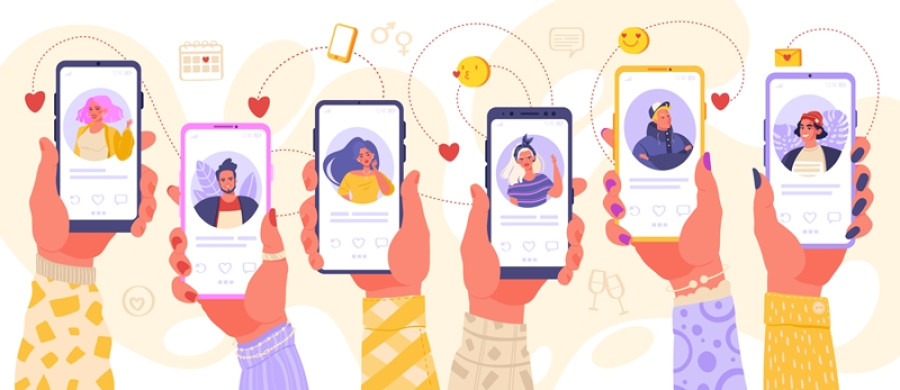
bookmark
Ankit Khadgi
Published at : April 14, 2020
Updated at : April 14, 2020 08:56
Kathmandu
Sagarika Tiwari is not new to dating apps. The excitement of meeting new people and perhaps finding someone to date has frequently led Tiwari to dating apps like Tinder. But when the government announced the lockdown, the traditional rules of dating became hard to abide by, with all public spaces closed and social distancing enforced.
But this didn’t stop 21-year-old Tiwari from using dating apps; instead, she says, she is finding them to have become more meaningful than before, as most of her Tinder matches are showing more interest in meaningful conversation. “Since people know we can’t meet physically, as we have to strictly follow social distancing, those I have swiped right for are more interested in knowing me as a person,” says Tiwari.
Tiwari is like many urban millennials or those of Generation Z, who are seeking romance and emotional intimacy on dating platforms, but given the Covid-19 pandemic limiting people’s movement, many are approaching online dating differently.
While online dating platforms have been around for some time—Tinder boasts 57 million active users worldwide—more people are using it now more actively than before, according to Tinder. Other location-based dating apps, such as Bumble, in which female users are the only ones allowed to message male matches first, and Grindr (the first of the location-based dating apps), an online dating platform for queer people, have also seen a boom in the number of active users.
So, what makes the online dating experience so appealing, even when real-life dates are out of the question? According to Narayani Devkota, sociology lecturer at Saraswoti Multiple Campus, one reason many are using the apps could be to get comfort or emotional support during this time of crisis, as many are going through the same experiences. “Through virtual space, people can also get psychological and emotional support from others, which can help them to combat problems we are facing now,” says Devkota.
Tiwari agrees that using dating apps has helped her find comfort, especially with talking to new people and making connections to them. “I am finding new friends to talk with which is making me feel less lonely and saving me from boredom.”
Another Tinder user, Simran Gorkhali, shares similar experiences. “I am currently using Tinder so I can explore and know more people. The experience is great as I have had many meaningful conversations with different people,” says the 23-year-old, who has been using dating apps for a while.
Data also shows more people are chatting for longer, and there has been a spike in the number of daily messages and lengths of conversations, compared to before the global lockdowns.
However, for Grindr user Abhinav (who asked to be identified by his first name only), dating apps are now a medium of expression. He says he can communicate his feelings with others, as they can easily understand him. “Since I use Grindr, I can openly express myself and share my problems with others; more than I can with my heterosexual friends, as they can’t easily relate to me. Being on Grindr has helped me to stay calm and composed, as I can talk with another person who can understand my problems without any discomfort,” says Abhinav.
As a third of the world is living under lockdown, which has forced them from not meeting physically, to make things easy for their users many dating apps are providing free services to its users, which in the past they had to pay for.
Tinder has allowed users to try the “Passport feature”, through which they can talk with Tinder users of any country by simply changing their location. Likewise, Bumble has seen a spike in its users who are using its voice chat and video call features, a shift from the culture of only seeing photos of the matches through their profile. Similarly, Grindr has also made premium features for free for its users, such as being able to see more profiles.
These newly free features are not only the result of the pandemic, as the coronavirus has equally resulted in transforming the platforms and its users impressions of the traditional ground rules of dating.
“I have been able to talk with more and more queer people as more profiles are being shown,” says Abhinav. “Not only it has been helping me connect with more people and make new friends, but it has also motivated me in some way, seeing more queer people out there who are comfortable with their sexuality. It has created a pleasant experience for me, being able to explore and understand my own sexuality,” says Abhinav.
Although face-to-face conversation and real meetings are always considered more impactful in seeking romantic and emotional intimacy, in times when meeting someone physically is not possible, dating apps can be an alternative solution, says sociology lecturer Devkota. “Fulfilling emotional and romantic needs may be achieved through distance. As the connection and intimacy between two persons is assured through their likes, thoughts, and feelings, the virtual space easily allows people to share and reciprocate affinity for each other, making the experience as meaningful as a physical one,” says Devkota.
Dating apps have been wonderful during the pandemic, according to Abhinav, given people seem to have more time for deep and meaningful conversations.
“The pre-coronavirus time was filled with users who wanted to only have flings,” he says. “But now more people are showing interest in forming bonds and relationships, beyond physical intimacy, which is really moving”.
Ankit Khadgi
Khadgi is a queer journalist currently based in Chicago.





Most Read from Culture & Lifestyle


.jpg&w=300&height=200)
Editor's Picks

They built lives on land that was never theirs. Now they have nothing

“Let the ice wall melt”: No safe way up Everest yet
Cycling was once central to daily life. Now it’s done mostly for fun

No place to play for Kathmandu kids
These Karnali women once relied on family support. Now they own businesses
E-PAPER | April 29, 2026

×