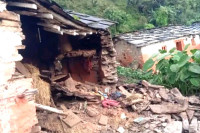
With every monsoon downpour, terror grips the residents of Malagaun in ward 1 of Alital Rural Municipality in Dadeldhura. Four years after a devastating landslide left the settlement unsafe for habitation, 24 displaced families remain trapped in a desperate wait for permanent resettlement.
Even though the National Disaster Risk Reduction and Management Authority (NDRRMA) determined years ago that the entire settlement needed urgent relocation, the official rehabilitation process has stalled, forcing victims to endure harsh living conditions beneath fragile, decaying tents.
The crisis began in 2022 when a landslide triggered by torrential rains destabilised the hillside, leaving cracks across Malagaun and endangered every home. Authorities declared the village unsafe and asked the villagers to evacuate.
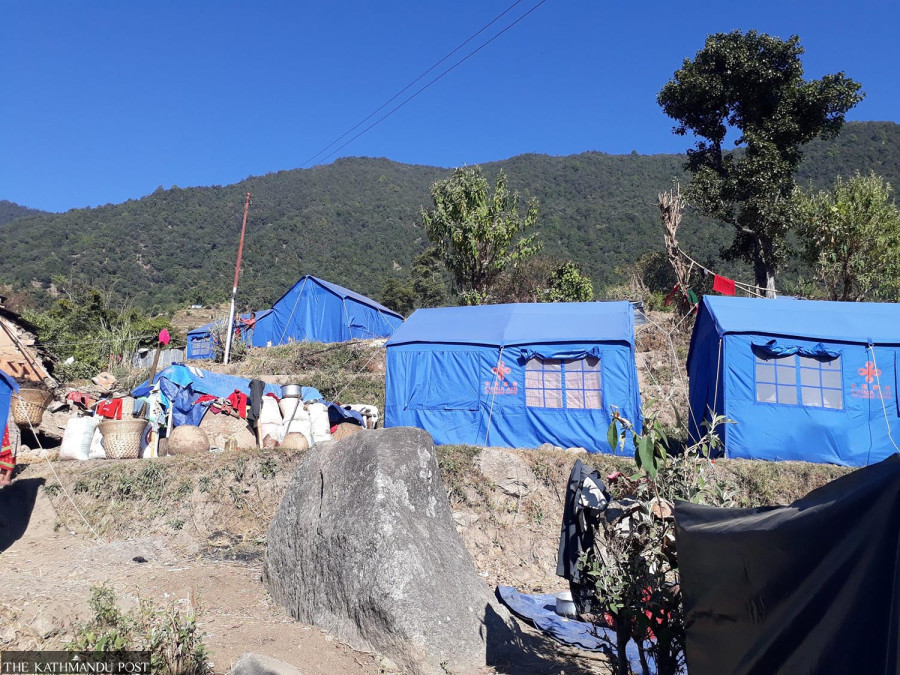
Since then, the 24 affected households have lived under temporary tents across a local stream in an area known as Basti. What was intended to be a brief temporary refuge has dragged into a four-year ordeal.
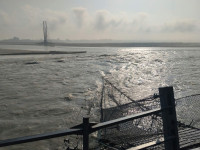
Daily life for these displaced families is a painful balancing act. Every morning, adults cross the stream to return to their ruined village and nearby fields to farm. As dusk falls, they return to the tents to sleep. During heavy rains, however, they are trapped inside the shelters day and night, exposed to the constant threat of falling rocks and fresh landslides.
"The government made grand promises of swift rehabilitation, but after four years, nothing has materialised," said Dan Bahadur Auji, a displaced victim. "The tents provided initially are now worn out and leak when it rains. We must cross a swollen stream every time we need supplies or go to work. When the rains intensify, the stream swells, completely cutting us off. We have no piped drinking water, no jobs, and are running out of money for basic food supplies."
The geographical barrier compounds their hardship. Crossing the stream between the temporary camp and the old village becomes extremely hazardous during monsoon peaks. Villagers carry heavy loads of daily supplies on their backs and must haul sick family members across the raging waters to reach health centres.
Sunita Auji, another displaced person living in a single tent with her six family members, expressed her grievances. "We have been waiting for a safe home since the day the landslide took ours. But we are still stuck in these tents. The plastic sheets are torn, rocks fall from the slopes above, and every rainfall brings severe fear. We have to carry small children on our backs to cross the stream. The peril increases every day it rains."
Immediately following the 2022 disaster, municipal authorities alongside non-governmental organisations distributed emergency relief, food rations, and temporary tents. While these interventions provided immediate relief, the failure to implement long-term structural solutions has left the community stranded in chronic deprivation. Basic infrastructure such as clean drinking water, proper sanitation facilities, electricity, and basic healthcare remain inadequate.
The people’s representatives cite regulatory blockages for the delay in providing sustained aid. Yagya Bahadur Deuba, ward 1 chair of the rural municipality, explained that his local unit previously allocated between Rs100,000 and Rs200,000 annually to support the displaced families with basic relief and food supplies. However, strict financial oversight brought an end to this assistance.
"The latest report from the Office of the Auditor General listed those expenditures as unsettled accounts," said Deuwa. "Because of these audit objections, we were forced to stop allocating rural municipality funds directly for food relief. We continue to distribute temporary tents and relief supplies when available. On a positive note, technical testing for the proposed relocation site at Basti has been completed, confirming it is safe for human habitation.” According to him, the NDRRMA has sent official correspondence to move forward, and we expect formal rehabilitation at Basti to begin soon.
According to Tek Rana, Alital’s sub-engineer, the NDRRMA instructions require precise administrative procedures. "The rural municipality must enter detailed profiles of all affected households into the central system and forward them through the District Administration Office," said Rana. "Process delays have occurred because of extensive geological surveys, budget arrangements, and the sheer volume of landslide-affected settlements requiring relocation across the region."
Dadeldhura’s Chief District Officer and head of the District Disaster Management Committee, Amar Bahadur Oli, confirmed that the official assessment report reached his office on July 14. "The report recommends advancing rehabilitation under Section 13 of the Disaster Affected Private Housing Reconstruction and Rehabilitation Grant Guidelines, 2024," said Oli. "We are coordinating closely with the local unit to execute the plan."
According to rural municipality records, Malagaun is not an isolated crisis. Other nearby settlements—including Balaucha, Obha, Dhupkheda, Khinnebhadi, Koirali, and Ghoga—face severe landslide risks and require immediate relocation, highlighting a growing disaster management challenge across Dadeldhura district.




 13.13°C Kathmandu