RSP leadership appointments delayed as Lamichhane and Shah divide positions
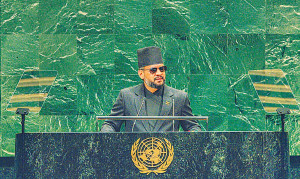
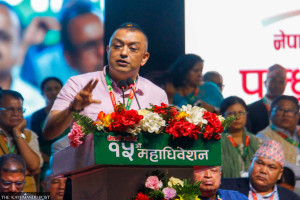
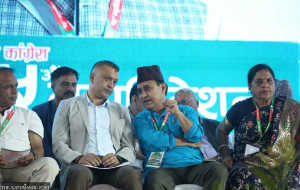
Negotiations over factional quotas, gender representation and key executive positions have delayed the appointment of remaining central committee members and 12 office bearers.RSP leaders Rabi Lamichhane and Balendra Shah at the first general convention in Chitwan. Post file photo
More than a week after the ruling Rastriya Swatantra Party (RSP) elected its new leadership, the party is yet to complete its central committee and executive body, with internal consultations continuing over 51 nominated central members and 12 key office-bearer positions.
Rabi Lamichhane, who was elected unopposed as party chair at the RSP’s first general convention in Chitwan, took the oath of office in Bharatpur on June 26. After returning to Kathmandu, he formally assumed his responsibility by administering the oath to newly elected central committee members and office bearers at the party’s central office in Ghantighar, Banasthali, on July 1.
Despite completing the party leadership election, the RSP has yet to constitute its full organisational structure as required by its statute.
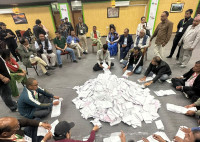
The party’s Central Election Commission declared the results of the convention on June 26, electing Lamichhane along with 99 central committee members. However, under the party statute, the central committee comprises 158 members: 150 elected and nominated central members, seven provincial chairpersons serving as ex-officio members and the party chair.
As a result, 51 central committee members remain to be nominated by the party chair.
Similarly, the party has yet to complete its executive leadership. Of the 19 office-bearer positions, including one senior leader, only seven have been filled through election. The remaining 12 posts will be filled through nomination by the party chair and endorsed by the central committee.
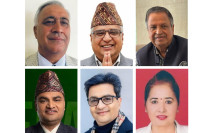
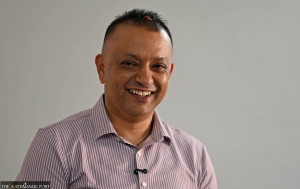
The convention elected Lamichhane as party chair, Swarnim Wagle and Sobita Gautam as vice-chairpersons, Bipin Acharya as general secretary, and Asim Shah, Nisha Dangi and Hari Dhakal as joint general secretaries.
The vacant positions include a senior leader, one vice-chairperson, one general secretary, two joint general secretaries, one spokesperson, three joint spokespersons, one treasurer and two joint treasurers.
There has been an understanding at the Chitwan convention to nominate Prime Minister Balendra Shah as a senior leader. However, Lamichhane has yet to finalise appointments to the remaining executive posts.
General secretary Bipin Acharya said the nominations would be taken up at the next meeting of the central committee, adding that consultations are ongoing.
“The chairman is actively holding discussions on the nominations. The process will not take long. He will consult party leaders before taking the final decision,” Acharya said.
“He is consulting leaders and other concerned individuals to ensure that the right people are nominated. We expect the next central committee meeting to make concrete decisions.”
According to the party statute, nominations made by the party chair must be endorsed by the central committee.
Joint general secretary Asim Shah said Lamichhane would finalise both the central committee nominations and office-bearer appointments in close consultation with Prime Minister Balendra Shah.
“The party chair and the senior leader will sit together to finalise the 51 nominated central committee members and the remaining office bearers,” Shah said. “The elected central committee has achieved 51 percent representation of women. There is broad agreement that this level should be maintained. At the same time, we must ensure inclusiveness. Balancing these priorities requires careful discussion, and the two leaders are working to ensure that the party’s nominated leadership reflects both inclusiveness and merit.”
Shah said Lamichhane and the prime minister had already held preliminary discussions after the Chitwan convention and reached an understanding in principle on the nomination process.
“We have reached an agreement in principle on the nomination of central committee members. There is a clear understanding on the kind of individuals we want to bring into the party leadership,” he said.
“The appointment of office bearers is also not a contentious issue. The two leaders will sit together and finalise the remaining positions soon. Just as they jointly decided candidate selection during the House of Representatives election, they will also jointly settle the nominations to the central committee and executive positions.”
However, discussions are still underway over the distribution of the nominated positions between different groups within the party.
According to senior RSP leaders, Prime Minister Shah’s camp seeks to recommend at least half of the 51 nominated central committee members.
“The senior leader’s camp has sought a significant share of the nominated positions,” said a senior leader who has worked closely with Shah. “Once the party chair determines how many seats will be allocated to that side, formal recommendations will be submitted. So far, no names have been forwarded because the number of seats has yet to be finalised.”
Party leaders say there is already a broad understanding that the nominated vice-chairperson will come from Shah’s camp, although no final decision has been taken on the candidate.
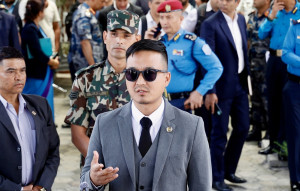
Sunil Lamsal, the minister for physical infrastructure, was initially considered the frontrunner for the post. In recent days, however, Home Minister Sudan Gurung has also emerged as a strong contender.
According to senior party leaders, the debate centres on whether to nominate Lamsal because of his seniority and long involvement in the party or Gurung, who is regarded as an influential figure among younger supporters, represents indigenous nationalities and has played an important role in maintaining coordination between Lamichhane and Shah.
The nomination for general secretary also remains undecided.
Bhoop Dev Shah previously served as the RSP general secretary from Shah’s camp. However, party leaders say discussions are going on about assigning him a different responsibility, potentially making way for a new face in the role.
Senior leaders say the delay is due to efforts to balance multiple considerations, including gender representation, geographical and social inclusion, factional representation and the induction of experienced as well as emerging leaders.
Although consultations have taken longer than expected, party leaders insist that there is no serious dispute over the nominations and that the remaining appointments will be completed once Lamichhane and Prime Minister Shah conclude their discussions.
The appointments are expected to shape not only the composition of the party’s central committee but also the balance of power within the RSP leadership as the party moves to strengthen its organisation following the first general convention.




 23.26°C Kathmandu