



 19.73°C Kathmandu

Mon, Oct 5, 2026
Opinion
Parliament without elections
Can stability be sought by bypassing the popular mandate in the name of political consensus?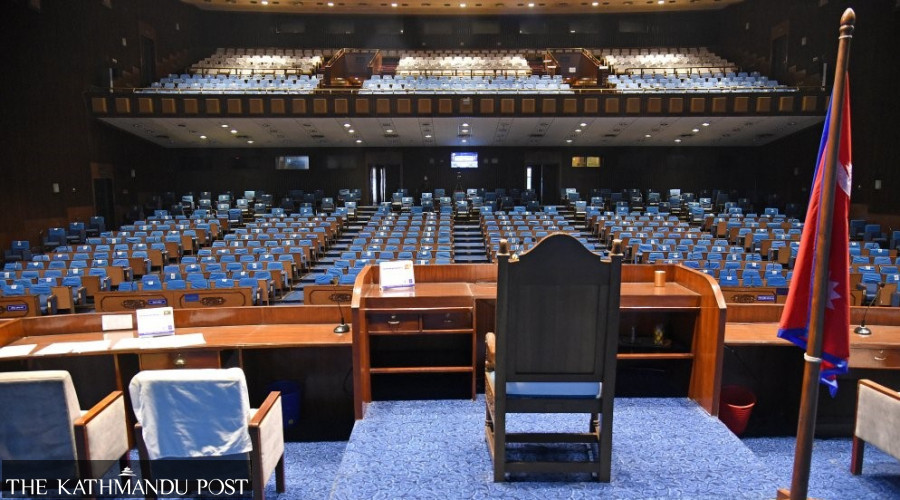
bookmark
Manish Shrestha
Published at : December 26, 2025
Updated at : December 26, 2025 12:39
The essence of democracy lies in popular mandate. Restoring the previous House of Representatives without seeking a fresh mandate from the people is not merely a legal or technical matter; it is a question directly linked to the democratic character of the state, political stability, and its long-term future. If the old parliament is reinstated through an agreement between the CPN-UML and the Nepali Congress, bypassing elections, the impacts are likely to be structural rather than superficial.
First, the space for political expression and dissent may shrink. There is a growing risk of a trend where citizens, activists, or protesters who criticise the ruling powers are labelled ‘anti-national’. This would inflict severe damage on the freedom of thought, which is considered a fundamental pillar of democracy. Second, there is a risk of corruption flourishing institutionally. When direct public participation is removed from the process of restoring power, accountability weakens. The direct impact of this could be seen across all state organs—administration, courts, police, and regulatory bodies—all of which risk falling under heavy political influence. Third, a situation may arise where "access" prevails over "merit" within the state apparatus. If political recommendations become the decisive factor for positions ranging from Ambassadors to Chief District Officers, and from Secretaries to high-ranking officials in security agencies, the erosion of institutional capacity becomes inevitable.
In this context, if bodies like the Commission for the Investigation of Abuse of Authority (CIAA) and the Central Investigation Bureau (CIB) are weakened, large-scale financial irregularities may go unpunished. Consequently, bribery could become normalised in government offices, the burden of which will be borne directly by the common citizen. From an economic perspective, such political practices are likely to make the country even more dependent on foreign aid and loans. Irregularities in public contracts under the guise of development, haphazard privatisation, and capital flight will further weaken the economy. As the confidence of international financial institutions wanes, cuts in loans and assistance may occur, ultimately manifesting as inflation and a cost-of-living crisis.
The most serious social impact is the despair and exodus of the youth. Once faith in opportunity, justice, and the future is lost, young people will no longer wish to remain in the country. History has shown that youth disillusionment is the seed of long-term instability. Ultimately, these circumstances could trigger a cycle of urban protests, state-citizen conflict, and political suppression. If excessive force is used to quell movements, human casualties will rise, and in that shadow, foreign intervention may intensify. The country could reach a grave constitutional turning point—where options such as fresh general elections, debates on the restoration of the monarchy, or a direct role for the military may surface.
Therefore, the question is simple: Can stability be sought by bypassing the popular mandate in the name of political consensus? In the long run, the only alternative to democracy is democracy itself. Stability built by evading elections is not sustainable; rather, it only increases the risk of pushing the state toward an even deeper crisis.
Manish Shrestha
Shrestha is a student.

Editor's Picks

What triggered the Rasuwa flood? Scientists piece together a complex chain of events

The floods keep coming. Nepal keeps starting over

In a settlement destroyed by the Bhotekoshi flood, a disabled couple offer strangers the little they have

Nepal working on detailed assessment as Bhotekoshi flood reconstruction could cost up to $5 billion

Rabindra Dhant gave Nepal a reason to smile. Now his camp wants real action behind the praise
E-PAPER | October 05, 2026

×