



 21.12°C Kathmandu

Tue, May 5, 2026
Opinion
Meat the future
Scientists are currently attempting to replace conventional meat with a lab-grown variety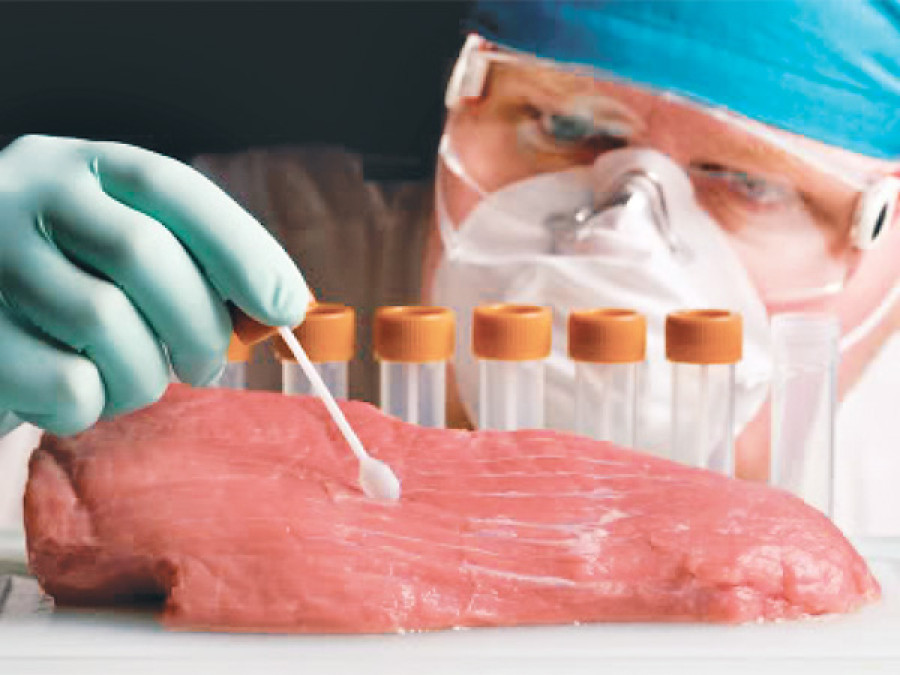
bookmark
Maneka Sanjay Gandhi
Published at : June 14, 2015
Updated at : June 14, 2015 08:33
Imagine a future in which you can eat yourself. Enormous steaks, kababs and biryani containing pieces of your own flesh, all without cutting yourself up or even worrying about cannibalism.
This future is almost upon us. In a 1931 essay called ‘Fifty Years Hence’, Winston Churchill wrote, “We shall escape the absurdity of growing a whole chicken in order to eat the breast or wing, by growing these parts separately under a suitable medium.” The technology for doing so has already been invented. Like the information technology revolution that crept along on the backs of a few 20-year-old nerds and then bloomed in the mid-1990s, this one is quietly on the move on the backs of equally far-seeing and brilliant young people in their 20s.
Let me introduce you to some of them. Years later, they will be as famous as Bill Gates and Steve Jobs, that I guarantee. Either that or the world will have ended. The way we grow food is the single biggest reason for climate change, hunger, lack of water and disease. Livestock uses 70 percent of all agricultural land and accounts for 18 percent of greenhouse gas emissions and eight percent of human water usage. Meat production is extremely inefficient. We feed a cow 11 kilograms of food to get one kilogram of beef. Cows, buffaloes and goats eat up the forest. Beef is raised on food humans could eat (soy, corn) rather than food humans can’t eat (grass). Meat production is expected to more than double by 2050. The only way we can change this and save ourselves is to alter the way we eat.
Meat in a Petri dish
Here are the people who will do it. Isha Datar, 27, is a Canadian of Indian origin who holds a Masters in Biotechnology from the University of Toronto. In 2010, she published a paper on advances in tissue engineering that could be applied to cultured meat. Her work has contributed to the development of Canada’s first in vitro meat lab at the University of Alberta. She is the director of New Harvest, a Washington-based company that seeks to provide omnivores with meat in a more humane and eco-friendly way: by growing animal cells in a lab to produce in vitro meat and milk. Datar helps 80 scientists and volunteers connect with like-minded peers to collaborate and secure funds for their research. So far, she has helped raise thousands of dollars in grants for different initiatives.
She speaks across the world about the responsible use of science to contribute to food security. By producing these products this way, food production can be less resource intensive, more environmentally friendly, less prone to contamination, and more humane.
“The way I see it, the meat on my plate is just a collection of tissues, and there are two ways of getting tissues,” she says. “One is to grow a whole organism and the other is to grow just a part from the smallest living thing: cells. The second option doesn’t require an animal to suffer and produce waste.”
Producing cultured meat begins by taking a number of cells from a farm animal and ‘proliferating’ them in a nutrient-rich medium. Cells are capable of multiplying so many times in a culture that, in theory, a single-cell could be used to create enough meat to feed the global population for a year. After the cells multiply, they are soaked with nutrients and mechanically stretched to increase their size and protein content. The resulting cells can then be harvested, seasoned, cooked and consumed as boneless, processed meat, such as sausage, hamburger or chicken nuggets. Scientists say that lab-grown meat could produce up to 96 percent less greenhouse gas emissions than conventional meat.
Cultured beef
Is it really possible to grow a hamburger in a petri dish? Absolutely. Tissue engineering is currently used primarily for medical purposes—growing skin, veins, ears—but it can also be employed to grow animal muscle.
Last year, Mark Post, from Maastricht University in the Netherlands, produced the world’s first lab-grown burger by taking stem cells from a cow and growing them in a culture medium. Isha’s company sent him $50,000 to help with the research. Today, Post, a New Harvest board member, is leading a team of 20 researchers on a two-year quest to create a better lab-grown man-made meat hamburger, an effort that is being funded by Sergey Brin, co-founder of Google. Depending on the finance, he should have it in supermarkets in 20 years. This year, New Harvest is planning to showcase cell-cultured meat at the World’s Fair in Milan.
Why did Sergey Brin decide to invest in this project? He shares concerns about sustainability, is extremely interested in seeing radical new ideas followed and tested to see if they have any merit, especially those that could have a massive positive effect on mankind.
Leather in labs
Modern Meadow, a company in New York under New Harvest’s umbrella, is developing in vitro meat by using a tissue engineering technique called ‘biofabrication’, to grow leather from skin cells in a lab. The company is also developing biofabricated meat, fish and poultry from muscle cells. The cells the company stores and uses, to ‘brew’ leather and meat, are obtained through small biopsies that don’t hurt, injure or kill animals, says Chief Executive Andras Forgacs. Horizons Ventures, the Hong Kong-based firm of billionaire investor Li Ka-shing has invested over $10 million in this company, which is growing meat and leather in the lab. The company aims to help fashion designers and makers of leather goods meet the increasing global demand for their wares without taking a toll on animals and the environment. Biofab leather can be used to make consumer goods like apparel, shoes, luggage and sporting goods.
Currently, it takes Modern Meadow about one and half months to make a square-foot leather sample that’s fully finished. That compares to two to three years to obtain, care for and feed an animal. The company is now worth $60 million dollars.
To join the animal welfare movement contact [email protected], www.peopleforanimalsindia.org
Maneka Sanjay Gandhi
To join the animal welfare movement contact [email protected], www.peopleforanimalsindia.org





Editor's Picks

They built lives on land that was never theirs. Now they have nothing
“Let the ice wall melt”: No safe way up Everest yet

Cycling was once central to daily life. Now it’s done mostly for fun

No place to play for Kathmandu kids

These Karnali women once relied on family support. Now they own businesses
E-PAPER | May 05, 2026

×