Bhutanese refugee scam victims awarded Rs 153.8 million, but 53 complainants get no compensation
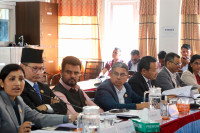
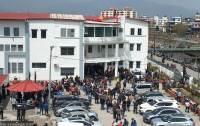
The Kathmandu District Court’s full verdict, issued recently, details how a network duped aspiring migrants with promises of US resettlement. File Photo
On February 5, 2021, Tejina Lamsal of Tulsipur in Dang went to her neighbour Gajendra Budhathoki’s house with Rs500,000 cash. Budhathoki had promised to arrange documents and send her to the United States. The process, he told her, would cost Rs4.5 million. Lamsal handed over an advance payment.
Lamsal was subsequently asked to travel to Sauraha in Chitwan for an interview. When she arrived, Budhathoki was waiting outside while two people dressed as government employees sat inside. A vehicle bearing a government registration number was parked outside. Lamsal was photographed, asked to fill in a form and fingerprinted. She was entered on a fake refugee list under the fictional name Sharada Chaulagain.
According to her police complaint, she realised only then that the arrangement was intended to make her appear to be a Bhutanese refugee eligible for resettlement in the United States.
On June 9 and October 3 the following year, Lamsal paid Budhathoki another Rs1 million and Rs2.5 million in cash, respectively. She was later directed to Birat Medical College in Morang for a medical examination and met Santosh Sharma. After further demands, she paid another Rs500,000 on December 17.
Lamsal said she continued paying because Budhathoki and others assured her that the process was progressing and that he knew influential people in the government.
But the promised departure never came. Realising that she had been deceived through forged documents, Lamsal approached the police, reporting that she had been cheated through a network involving Keshav Prasad Dulal and Sanu Bhandari, among others.
Her experience illustrates how an organised network exploited people’s hopes of moving to the United States, collecting millions of rupees by promising to register Nepalis as Bhutanese refugees eligible for third country resettlement.
The scandal became one of Nepal’s most controversial criminal cases, reaching into the political leadership and senior bureaucracy. Investigators pursued charges of fraud, forgery, organised crime and offences against the state. The Kathmandu District Court’s detailed judgment, based on forged documents, digital communications and victims’ testimony, lays out how the scheme operated and how the money was collected.
The court ordered Sandesh Sharma to repay Lamsal Rs2 million. Although she initially claimed to have lost Rs4.5 million, she did not appear to give testimony in court, so the amount recognised as recoverable was limited to the Rs2 million established in her complaint.
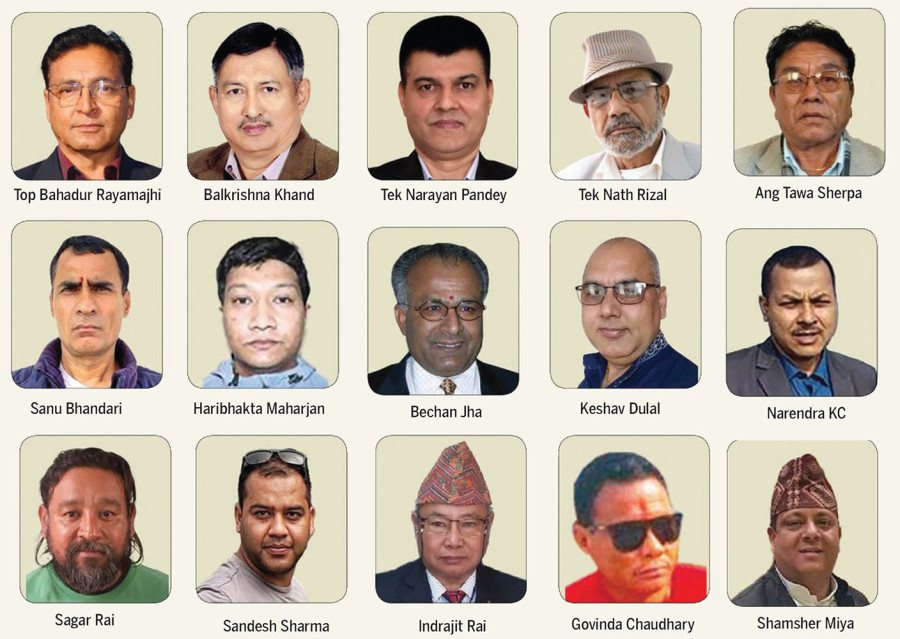
Lamsal is among 59 people whom the court has ordered eight defendants to compensate, with the total recovery fixed at Rs153.797 million. In its full text judgment, the bench of Judge Tej Bahadur Khadka ordered former deputy prime minister Top Bahadur Rayamajhi and seven others to return the money. On July 14, the court had imposed prison terms and fines, including four years in jail and a Rs40,000 fine for Rayamajhi and other principal defendants. The full text, which was made public recently, makes clear that repayment to victims is an additional obligation.
The judgment also exposes two major gaps—53 of the 112 people who filed police complaints will receive no compensation, and the court has not established who forged the government documents at the heart of the scam.
Who must repay how much?
Sandesh Sharma from Dang carries the largest financial liability. The court ordered him to return Rs74.7 million to 38 people, most of them young residents of Dang who paid money hoping to be sent to the United States as refugees.
Next are the alleged masterminds, Keshav Prasad Dulal and Sanu Bhandari. Sanu must repay Rs26 million and Dulal Rs15.8 million.
CPN-UML leader Rayamajhi has been ordered to repay Rs4 million. Premraj Panthi, one of the complainants, told the court that he had collected Rs57.8 million from about 50 acquaintances and handed it to the network. He said Rs21.2 million had already been returned, leaving Rs36.6 million outstanding.
The court divided the remaining liability among three parties. Rayamajhi must pay Rs4 million; Indrajit Rai, security adviser to then home minister Ram Bahadur Thapa, Rs15 million; and Dulal and Bhandari the remaining Rs17.6 million. The government had also prosecuted Rayamajhi’s son Sandeep but the court acquitted him.
The court ordered Sagar Rai of Morang, an associate of Dulal and Bhandari, to repay Rs12.9 million. Congress leader and Constituent Assembly member Angtawa Sherpa must return Rs2.7 million to six people, while Govinda Kumar Chaudhary, another associate of the network, must repay Rs2.5 million.
Former home minister and Congress leader Bal Krishna Khand, former home secretary Tek Narayan Pandey and Bhutanese refugee leader Teknath Rizal have no repayment liability under the judgment.
However, the absence of a repayment order does not mean all three were acquitted of criminal wrongdoing. The court found Khand guilty as an accomplice in fraud, offences against the state and organised crime, and sentenced him to two years in prison and a Rs20,000 fine. Pandey was convicted of the same three offences and sentenced to four years in prison and a Rs40,000 fine. Rizal was convicted of forgery and as an accomplice in the other three offences. He received two years in prison and a Rs20,000 fine.
Police complaints had identified 112 people as victims, and investigators and government prosecutors presented their claims to the court. But the court rejected 53 claims, meaning those complainants will receive no compensation. Forty-three of them had neither submitted statements describing the incident nor appeared in court to testify.
Budhathoki had filed a complaint claiming that 61 people, including himself, had been cheated. The court established recoverable losses for only 23 of them.
The judgment also shows that some people who collected money from prospective migrants were themselves deceived. Ram Sharan KC of Tokha in Kathmandu collected money from 34 people and deposited it into Sanu Bhandari’s accounts. He also mortgaged property and handed Rs15 million in cash to Dulal. The court acquitted KC, finding that he too had been cheated by Dulal and Bhandari. It transferred the repayment liability for the amount claimed against KC to the two men.
The court found KC’s role comparable to those of Panthi, Ram Kumar Regmi, Budhathoki, and Bhesh Raj Sharma Lamsal, who collected money from others before handing it to the racket.
Documents were forged, but who did it?
Understanding the fraud requires examining Nepal’s third country resettlement programme for Bhutanese refugees. Launched in 2007, the programme helped more than 100,000 refugees move to eight countries, including the United States. The UN refugee agency, UNHCR, ended the programme in December 2016, while the World Food Programme stopped its assistance in January 2019. With around 6,500 refugees remaining in camps in Jhapa and Morang, the Cabinet directed the Home Ministry to prepare a policy and action plan for their future.
On June 13, 2019, then home minister Ram Bahadur Thapa formed a three-member task force led by joint secretary Bal Krishna Panthi. Its responsibilities included long-term management of the remaining refugees and compiling records of those who had missed registration.
The task force submitted its report on October 18, 2019. It recommended registering only 429 people whose cases had been examined by a joint team of UNHCR and the refugee coordination unit. It found no evidence that 581 families who claimed to have missed registration for various reasons were genuine refugees and recommended against accepting further applications.
The racket manipulated this report. Two additional schedules, 9(a) and 9(b), were inserted into a forged version, making 875 people from those 581 families appear eligible for registration. Victims were instructed to fill in forms using fictitious names matching the altered list and were given false identities. Tejina Lamsal’s registration as Sharada Chaulagain was one example.
The task force’s coordinator Panthi told the court that the report he submitted contained nine annexes, but a forged version had ten. The annex formats and fonts differed, he said, and the wording on the page recommending an end to late registration had also been changed. The report preserved in the Cabinet’s records was his original document, whereas the version kept at the Home Ministry was the forged one.
The central question remains unanswered. Although the court established that an official report had been forged, it said the evidence did not clarify who was involved in the forgery.
Only three defendants—Dulal, Bhandari and Rixal—were convicted of forgery. Rayamajhi, Khand, Pandey, Indrajit Rai, and other government officials were acquitted of that charge. Yet the three convicted men had no direct links to the government machinery that held the report, raising questions about how they could have accessed and altered an official document without assistance from a ministry insider.
The court said prosecutors had failed to establish when, where and how Pandey, the home secretary,took the report out of the ministry and forged it. Nevertheless, it convicted him of fraud, organised crime, and offences against the state for his role in the wider scheme. In Khand’s case, the judgment says a forensic examination of his mobile phone found no evidence linking him directly to the forgery, although he was convicted as an accomplice in the other offences.
The Nepal Police launched an investigation in May 2022 and, in several phases, filed cases against 31 people on August 13, 2024, seeking to recover around Rs290 million. Seven of them—Ram Sharan KC, Tanka Kumar Gurung, Sandeep Rayamajhi, Laxmi Maharjan, Keshav Tuladhar, Ashish Budhathoki, and Pratik Thapa—were acquitted.
The cases against eight others who remain at large—Ashok Pokharel, Dhiren Rai, Deepa Humagain, Niraj Rai, Rajesh Aryal, Mohanraj Rai, Binita Sawaden Limbu, and Sunil Budhathoki—have been kept in abeyance until they are arrested. As this is a district court ruling, an appeal before the High Court remains possible.




 19.22°C Kathmandu