For some Nepali migrants, even death does not bring them home
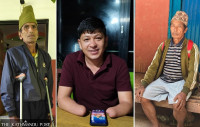
For families who can’t afford the airfare, the choice is a foreign grave or years of waiting. Tulsi Ramrai, 72, looks at an old photo of his son-in-law, Santosh Rai, who died in a Phnom Penh hospital in May and whose body has remained in its morgue since. Dipesh Darshandhari/TKP
For four months, Tulsi Ramrai has walked the same circuit through Singha Durbar, Nepal’s central secretariat in Kathmandu — Foreign Affairs, Labour, Finance, and back again. He is trying to bring home the body of his son-in-law, Santosh Rai, who died in a Phnom Penh hospital in May and has been lying in its morgue since.
The obstacle is not paperwork. It is $7,335 — what Nepal’s embassy in Thailand calculated it would cost to fly the body home. Santosh had travelled to Cambodia on a visit visa, which put him outside every state mechanism that might have paid it. Tulsi, who left his village in Rautahat and has been back only once since, has spent those four months being told by one ministry to try the next.
“On the first day, it was difficult even to get inside Singha Durbar,” the 72-year-old told Kantipur. “I requested the security personnel at the gate to let me in. They told me I could enter only if my name had been sent from the Ministry of Foreign Affairs. I did not know anyone inside.”
At a typing centre near the southern gate in Babarmahal, he paid to send an “emergency” email to the Prime Minister's Office. Nothing came back.
Tulsi has been sent from one government office to another because no single institution has taken responsibility for bringing Santosh home. Nepal has built a vast migration economy, but no single system reliably ensures that those who die abroad can be brought home.
Nepal sends hundreds of thousands of its citizens abroad to work every year. In the past year alone, nearly 792,000 Nepalis obtained labour approvals for foreign employment — almost two-thirds of them bound for Gulf countries, with more than 88,000 headed to Europe. That figure doesn't include those who leave on visit or student visas. Over the past five years, more than 6.16 million Nepalis have travelled abroad, according to the Department of Immigration.
The money they send back has become one of the country's central economic facts. Annual remittances, under Rs100 billion in the early 2000s, crossed half a trillion by 2014 and reached a record Rs1.4 trillion in 2024. Last fiscal year, they rose again by 37.1 percent, to Rs 2.32 trillion — more than the government's entire national budget of Rs 2.12 trillion for the current fiscal year. More than a third of Nepali households received remittances in 2023, an average of Rs 185,852 each. The World Bank’s most recent Nepal Development Update calls remittances “a critical stabiliser” for the country, and puts them at 26 percent of GDP in 2024.
But when one of these migrant workers dies abroad, responsibility for bringing the body home is far less clear.
Kharimaya Ghale of Dordi Rural Municipality-5 in Lamjung, holds a portrait of her son, Lekhman Ghale, who died in Iraq. Aash Gurung/TKP
An examination of dozens of cases by Kantipur showed it depends almost entirely on luck — the visa category they travelled on, the country they died in, whether the employer or insurance scheme will pay, repatriation costs, and whether their community there can crowdfund the cost of sending them home.
Santosh, who was 42, had retired from the Nepali Army and travelled to Cambodia on a visit visa in August 2025 to work as a security guard. He later quit the job and was staying at a hotel, with a return flight to Nepal booked for two days later, when he fell seriously ill. He was admitted to Calmette Hospital in Phnom Penh at 8:45 p.m. on May 12 and died two days later, at 2 p.m. His death certificate lists brain death from a hemorrhagic stroke.
His wife, Junu, filed for repatriation with the Consular Department the day his death was confirmed. The embassy in Bangkok, which also covers Cambodia, was notified, and the local Non-Resident Nepali association got involved. Then the case stalled over money.
“Santosh came to Cambodia on a visit visa. The embassy has no budget line for the rescue of stranded citizens and workers,” said Motibahadur Shrish, deputy chief of the Nepali embassy in Thailand. “We wrote to the Consular Department about exactly this issue.”
The Embassy of Nepal in Thailand priced full repatriation at $7,335, or roughly Rs 1.12 million: $5,800 for air cargo transport of the body, $90 for the death certificate, $80 for consular authentication, and $1,365 in hospital treatment costs. The hospital waived its usual $50-a-day fee for storing the body.
Tulsi was sent from the Consular Department to Foreign Affairs, to Labour, to the Foreign Employment Board — which told him it doesn’t cover people who travelled on visit visas, as Santosh had. “My son-in-law's body is lying on foreign soil. It's as if he has no one in that country. All of us feel half-dead,” he said. “If we could afford that much money, why would he have had to go abroad in the first place? Once no one would take responsibility, I even thought about holding the funeral in Cambodia. But my heart wouldn't accept it. We have our own culture. The farewell must happen on our own soil.”
He had arrived in Kathmandu on May 10, the day the family learned Santosh had fallen seriously ill, and has been back to Rautahat only once since. For a few days early on, he stayed in a relative's room — they slept on the floor and gave him the bed, he said, until it felt like too much to ask. Now he stays at Sapana Lodge in Ratopul, paying 200 rupees a night for a room he usually shares with four to seven other people.
“I never imagined I would have to go through such hardship just to bring my son-in-law's body home,” he said. “We even tried to sell land that was in my son-in-law's name to raise the money. That did not work either. I was also unable to recover money that others owed me.”
In another case, there was no ledger of ministries at all. There was one phone call, and then complete silence afterwards.
On July 17, at around 2 pm, Kharimaya Ghale received a call from Erbil, the capital of Iraq's Kurdistan region. It had been arranged the day before by Binod Shrestha, president of the Non-Resident Nepali Association in Iraq, so that she could watch the burial of her only child, 38-year-old Lekhman Ghale, at a cemetery in Goyar. At their home in Pachok, Dordi Rural Municipality-5, in Lamjung district, Kharimaya gathered around the call with Lekhman's wife, Ganga, their two sons — 8-year-old Bidhan and 6-year-old Seyon — and other relatives.
The video showed a grave roughly five feet deep. Lekhman's coffin arrived by hearse and was taken directly to the graveside. Around 25 to 30 Nepalis were present. One by one, they placed khadas near the coffin, offered flowers, and lit lamps, then each threw in a shovelful of soil until the burial was complete. The family watched the entire ceremony over the call.
Lekhman had gone to Iraq two years earlier. He died on March 28 while undergoing treatment. Kharimaya spent nearly four months trying to arrange his repatriation — approaching the local ward office and political leaders, and travelling to Kathmandu once — before the effort fell apart. Bringing him home would have cost the family roughly Rs900,000 rupees, or about $6,080.
“There was no one there who could bring my son’s body home. Everyone said they could not do it. They said they would lose their jobs and would not be allowed to return to Iraq. The agent who had sent him to Iraq also switched off his mobile phone,” Kharimaya said. “My daughter-in-law and I could not go to ten different places. They said a small amount of money would not be enough. I wanted to bring him home. I wanted to bid him farewell according to our religion. After his final rites were performed there, we carried out the rituals according to our customs here in Lamjung.”
Santosh Rai, who was 42, had retired from the Nepali Army and travelled to Cambodia on a visit visa in August 2025 to work as a security guard. Dipesh Darshandhari/TKP
More than seven Nepali bodies are known to have been buried in Goyar alone because families couldn't afford to bring them home. Depending on where in Iraq a death occurs, repatriation costs between Rs500,000 and 900,000. Iraq's Kurdistan administration has set aside a burial ground specifically for Nepali and Indian workers. “If it's one or two people, the community can usually manage to raise the money,” Shrestha said. “Once the numbers grow, it becomes impossible. Where is a bereaved family supposed to find that kind of money?”
On the 26th of December, Nepal's cabinet decided to allow labour approvals for Nepalis working in Iraq who return home on leave and want to resume their jobs there — but so far only for workers employed by companies, not domestic workers. The Department of Foreign Employment has granted approvals to 203 people, including seven women, under the arrangement. The Non-Resident Nepali Association estimates roughly 30,000 Nepalis currently work in Iraq, about 80 percent of them women employed as domestic workers, who remain ineligible for the approval and, as a result, often cannot risk returning to Nepal even briefly for fear of losing their jobs.
The pattern repeats across every country Nepalis migrate to for work. In Croatia, the community crowdfunded €5,700 of the € 7,500 euros needed to repatriate a worker killed by a vehicle — still 1,800 euros short at last count. Two more Nepali workers died in a separate accident there in the same period. In Portugal, communities raised roughly € 4,100 apiece for two more repatriations.
“Middle-class families take out loans to send their children to Europe. Then they have to take out loans again to try to bring the body home,” said Bambahadur GC, president of the Nepali community association there. “That is pain on top of pain.”
In Spain, two Nepali workers were cremated locally rather than repatriated, for lack of a clear legal requirement that employers cover the cost. In Japan, 75 Nepali students died in a single year, according to the country's Nepali chargé d'affaires — most without their bodies ever returning home.
An ambassador who has handled several such cases in Europe said employers generally cover repatriation costs only when a worker dies on the job itself — not in a rented room, on the road, or in a hospital. Even for workers with valid labour permits, Nepal's Foreign Employment Board caps its own contribution at Rs1 million, about $6,750; anything above that is left to community fundraising.
Two mechanisms currently exist. The first is the Foreign Employment Board’s welfare fund: since 2008, workers pay a small fee when obtaining a labour permit, which entitles them to coverage for repatriation, disability treatment, and family relief. Last year it paid out to the families of 1,262 workers who died abroad.
The other was ordered into existence in 2023 and never built. That year, a cabinet-level meeting chaired by the prime minister decided to create a relief and rescue fund at Nepali missions abroad, funded by a share of consular fees, meant to cover exactly the people the welfare fund doesn't — visit-visa holders, workers with lapsed permits, anyone outside the existing system. The Ministry of Foreign Affairs was given a month to draft the operating rules. It never happened.
“We reported the situation on the ground. We raised it again and again with the relevant authorities,” one ambassador said. “You can't just tie our hands and feet, sit in Singha Durbar, and only ask the embassy why nothing has happened. That directive was never sent to us. Without the resources, we've had to act as if we don't see the problem.”
It isn't the first time Nepal's courts have flagged the gap. In 2017, six years before that cabinet decision, the Supreme Court ordered the government to establish "a well-resourced rapid rescue mechanism" for citizens stranded abroad, on a petition brought by advocate Somprasad Luitel. "This is a highly sensitive issue," Luitel said. "The government must take full responsibility for Nepalis abroad. The government is not effectively implementing its own policies and laws."
Nepal's Auditor General has separately flagged government spending as unlawful, including roughly Rs7.94 million — about $53,600 — spent on two electric cars, in the same fiscal environment in which families were falling a few thousand euros short of bringing their dead home.
Other countries that send high volumes of migrant workers have policies in place. Bangladesh has run a national Wage Earners' Welfare Fund since 2018, financed by a mandatory worker fee and a surcharge on consular services, and administered through embassy labour sections. India's Indian Community Welfare Fund draws on government budget, consular fees, and voluntary community contributions together, so it isn't solely reliant on either migrants or the state. Nepal has had neither functioning at the mission level.
A third track now exists on paper. Pitambar Ghimire, spokesperson for the Ministry of Youth, Labour and Employment, said the Foreign Employment Act itself would need to be amended before rescue and welfare benefits could reach Nepalis who went abroad without labour approval. “The Ministry of Labour has prepared a draft amendment to the Foreign Employment Act. The draft includes a provision to establish a fund that would provide rescue and welfare support to all Nepali citizens,” he said, financed through voluntary contributions from workers who go abroad without approval, contributions from individuals and organisations, and government allocations. The amendment has not yet passed.
Separately, a new procedure for repatriating bodies has been in effect since August 20, according to Lok Bahadur Poudel Chhetri, spokesperson for the Ministry of Foreign Affairs — the “Procedure for the Operation of the Budget Allocated for the Rescue, Relief and Repatriation of Nepali Citizens Stranded Abroad, 2026,” governing Rs150 million, about $1 million, allocated to the ministry this fiscal year. “The Ministry of Foreign Affairs will provide up to a maximum of Rs1 million only when it is not possible for the employer, the Foreign Employment Board, insurance schemes, the Non-Resident Nepali Association in the concerned country, or the Nepali community there to arrange the required funds, and when the deceased person's family or relatives are financially unable to bear the cost,” Chhetri said. The procedure explicitly excludes workers who had labour approval before leaving, government officials on official duty, and anyone travelling for family visits, tourism, business, or recreation.
Asked about the separate, mission-level emergency fund the 2023 cabinet decision had ordered, Chhetri confirmed it still hasn't moved forward. “The proposal to establish a fund at embassies — financed through additional fees collected from consular services as well as contributions from the Nepali community and other entities — remains under discussion,” he said.
Weeks before the new August procedure took effect, member of the House of Representatives Ashika Tamang raised the gap in the chamber: “The budget exists, but there's no procedure. What kind of rule of law is this? Either the government should declare outright that anyone who dies stranded abroad is no longer considered a citizen of this country — or it should bring the body back immediately.”
In late August, Tulsi was told the body would be repatriated within two weeks. Of the total cost, the Ministry of Foreign Affairs has agreed to cover Rs1 million and the family will contribute the remaining Rs125,000 , which Tulsi says he has already deposited into the ministry's designated account.
A former soldier himself, Tulsi hopes his son-in-law— also once in the military — can be cremated with the honours the Army provides to retired personnel.
“My daughter would be able to see him one last time,” he said. “My heart would find peace.”
Hom Karki is a reporter with two decades experience covering migrant workers issues and the Nepali diaspora. He was previously based in the Gulf for Kantipur Daily.




 18.34°C Kathmandu