Floods-hit local units seek urgent supplies, power and infrastructure repairs
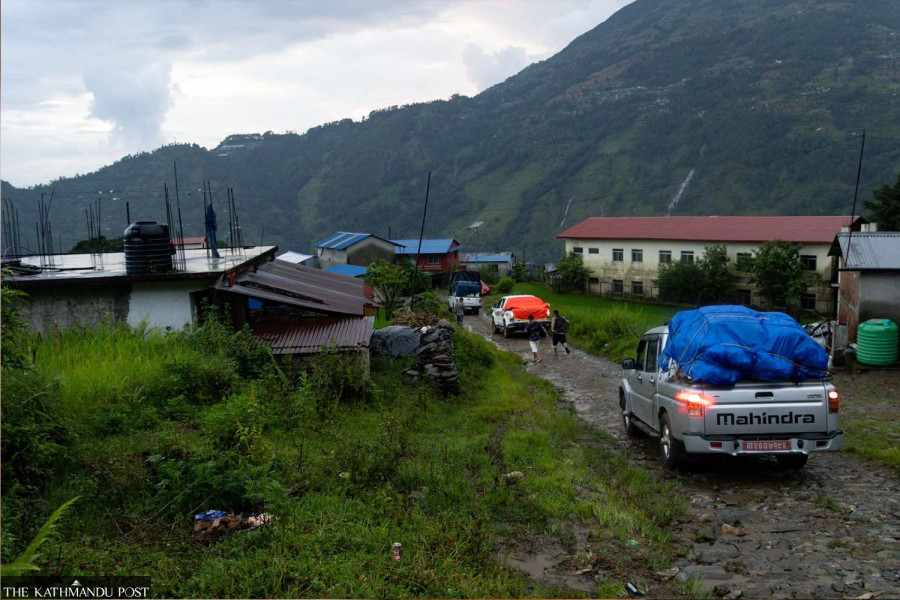
Bridges and roads washed away, communications disrupted, officials appeal for food, fuel, medicines, transport. Pick-up trucks laden with relief materials head to Dhunche, district headquarters of Rasuwa, through an alternative route on Monday after the main road was washed away by last week’s floods. Post Photo
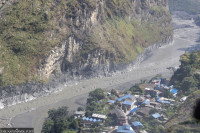
Kaisang Nurpu Tamang, the chairperson of Gosaikunda Rural Municipality in Rasuwa, is confronting the disaster on a deeply personal level. Seven of his relatives remain missing following last Wednesday’s devastating floods in the Bhotekoshi river. To make matters worse, the rural municipality’s vice-chair Pratima Tamang and two ward chairs are also unaccounted for.
Balancing personal grief with public duty, Kaisang finds himself navigating his own loss and the mounting frustration of displaced residents.
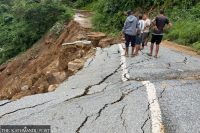
“I am trying to serve our people while carrying this overwhelming grief,” said Kaisang. “Our local unit is the worst affected. Roads have been severed, power grids destroyed, and mobile networks are down. Relief supplies are arriving in woefully inadequate quantities.”
Fifteen local units affected by the Bhotekoshi flooding require vastly different emergency support. The local bodies in Rasuwa—specifically Gosainkunda, Uttargaya, and Ama Chhodingmo—have appealed to central authorities for food, essential medicines, solar panels, storage batteries, and power generators. In Kalika, officials have prioritised medical supplies and all-terrain ambulances, while local bodies in Nuwakot, Dhading, Gorkha, and Tanahun have urged provincial and federal authorities to restore vital transport links.
Gosainkunda, Ama Chhodingmo, Uttargaya wait for food, medicine, solar panels
Wards 1, 2, 3, and 5 of Gosainkunda Rural Municipality are hardest hit by the floods. Kaisang estimated that more than 1,000 local residents are out of contact. With land routes to Kathmandu severed, basic commodities are running out.
“No fresh provisions have reached us from outside,” said Kaisang. “We urgently need rice, cooking oil, lentils, and cooking gas. With the power grid down, solar panels are essential to restore lighting and keep emergency communication equipment running.”
Suresh Bhattarai, chief administrative officer of Gosainkunda, said nearly 5,000 residents across the rural municipality require assistance. “The entire population has been affected either directly or indirectly,” said Bhattarai. Some displaced victims have been airlifted to temporary shelters, including the Yellow Gumba in Kathmandu.
In neighbouring Uttargaya Rural Municipality, wards 1, 2, 3, 4, and 5 suffered heavy damage. Vice-chair Chameli Gurung reported that more than half of the rural municipality’s population of 8,500 has been affected, and over 600 people remain unaccounted for.
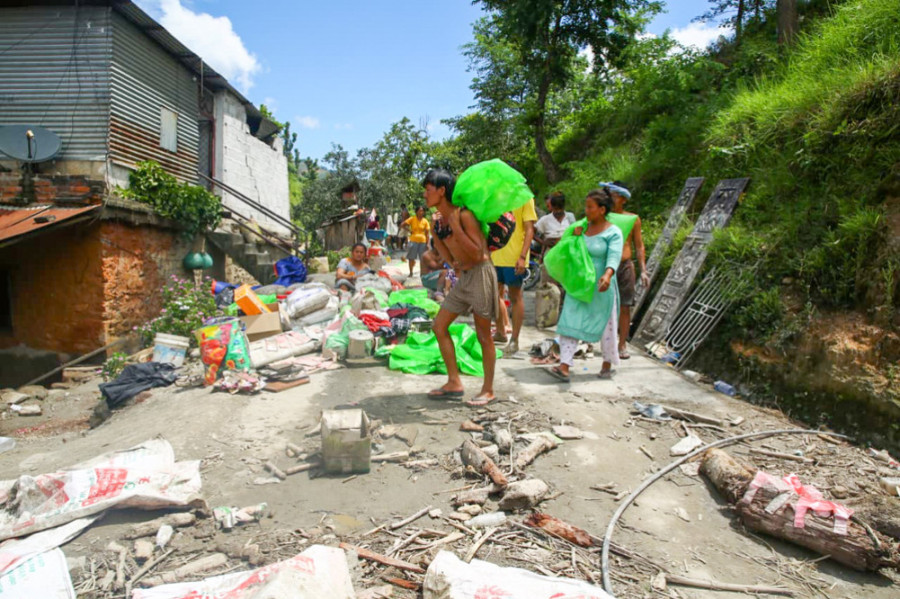
Flood-affected residents in areas along the Trishuli river move to safer locations following the flooding. Rescue and relief efforts are underway in the affected areas. Photo: Nepal Photo Library
“Basic food shipments are slowly arriving, but around 700 displaced families urgently need warm clothing,” said Gurung. “Because power lines are down, we need solar units, batteries, and essential medicines. The displaced are deeply traumatised, making professional psychosocial counseling critical.”
Jayaram Upreti, Uttargaya’s chief administrative officer, said wards 1, 2, and 3 across the Trishuli river remain completely cut off. “Bridges over the Trishuli have been swept away, and communication is down,” said Upreti. “If we can transport solar panels and batteries across, coordinating local aid distribution will become much easier.”
According to Upreti, 42 displaced students housed at Holding Centre No 2, alongside victims taking shelter at Bhadaure Basic School in ward 1, face severe shortages of food, clothing, and medicine. “Communities in remote areas have received no relief at all,” he stressed.
Aama Chhodingmo Rural Municipality remains entirely cut off by road. Chairperson Buchung Tamang said that while military helicopters dropped limited packages, supplies are rapidly dwindling.
“Our local unit is effectively under a blockade,” said Buchung. “Staples like lentils, rice, salt, and oil are virtually exhausted. We need solar panels and generators immediately. We don’t know where government aid is being directed, but our requests for power equipment continue to go unanswered.”
Kalika needs medicines, ambulances
In Kalika Rural Municipality, ward 1 was completely overwhelmed by floodwaters. Municipal spokesman Sandeep Poudel confirmed that over 300 individuals are displaced, emphasising that field medical care is now the top priority.
“We urgently require four-wheel-drive ambulances capable of navigating damaged dirt roads, and essential medicines,” said Poudel. “Because regional transport is paralysed, patients from neighboring local units are arriving at our local hospital for care.”
Bidur requires a Bailey bridge
In Nuwakot, wards 1, 4, 5, 9, and 10 of Bidur Municipality suffered total devastation. Serving as the primary staging hub for search and rescue operations led by the Nepali Army, Bidur has received adequate food supplies due to its proximity to Kathmandu.
However, Bidur Municipality Deputy Mayor Prabha Bogati says restoring connectivity remains the main challenge. “Bridges across the Trishuli river were completely destroyed,” said Bogati. “To bring daily life back to normal, the government must install temporary Bailey bridges immediately. Furthermore, we must plan permanent resettlement for families whose homesteads were washed away.”
According to municipal records, 538 private homes and three educational institutions, including Tribhuvan Trishuli Secondary School, were destroyed in Bidur. Additionally, 311 individuals—including nine teachers and school staff—remain missing across the municipality.
The municipality is providing meals, drinking water, medical care, and counseling at 12 holding facilities.
Belkotgadhi short on cooking gas
In Belkotgadhi Municipality, Vice-chair Shiva Prasad Dahal said 135 households in wards 7 and 8 face severe shortages of cooking gas.
Similarly, Tarekeshwar Rural Municipality Vice-chair Hari Prasad Rijal stated that 50 displaced families urgently need food and clothing, warning that ongoing riverbank erosion by the Trishuli river poses a continuing threat.
Meanwhile, officials in Kispang Rural Municipality said they were managing relief efforts for affected households in ward 5 through local resources.
In Dhading, flood damage was reported across Galchhi, Gajuri, Benighat Rorang, and Siddhalek rural municipalities. In Gorkha, Gandaki Rural Municipality reported severe damage in wards 1, 2, 6, 7, and 8, while Devghat and Aabu Khaireni rural municipalities in Tanahun experienced similar destruction.
Local authorities across Dhading, Gorkha, and Tanahun have requested federal and provincial assistance to clear landslide debris, construct alternative bypass routes, and implement sanitation measures along river corridors to prevent disease outbreaks.




 23.99°C Kathmandu