Real estate revenue hits three-year high as buyers rush before tax hike
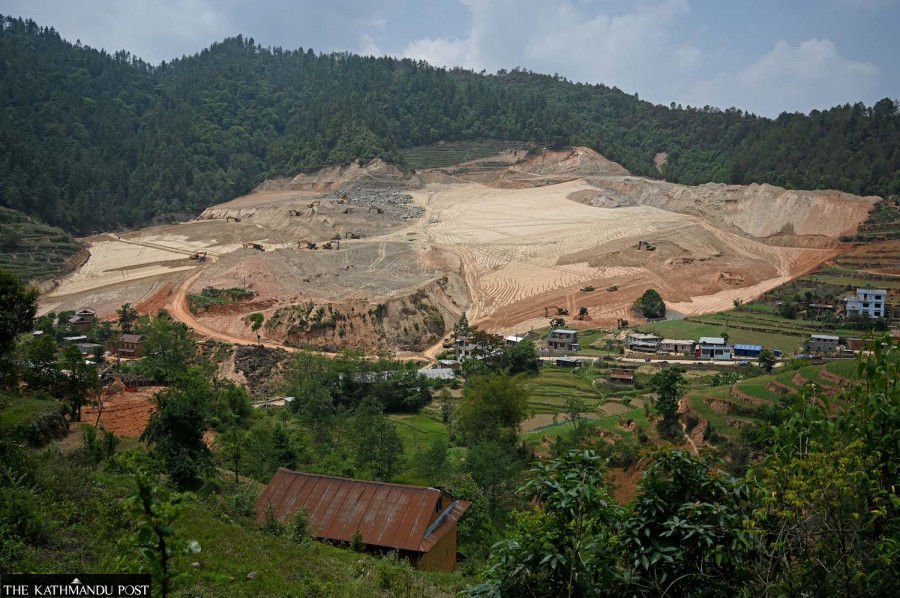
Revenue climbed to Rs60.74 billion in 2025-26 as buyers rushed to complete deals before higher capital gains tax rates and renewed land subdivision restrictions took effect. Post file photo
Nepal collected Rs60.74 billion in revenue from real estate transactions in the fiscal year 2025-26, the highest amount recorded in three years, as buyers and sellers rushed to complete deals before a tax increase and renewed restrictions on land subdivision came into effect.
According to the Department of Land Management and Archives, revenue from real estate transactions reached the figure in the fiscal year that ended in mid-July. The collection was significantly higher than the Rs42.42 billion recorded in 2023-24 and the Rs41.16 billion collected in 2022-23.
Monthly data show that revenue peaked in mid-June to mid-July at Rs11.95 billion, the highest monthly collection of the fiscal year. The lowest monthly collection was recorded in mid-October to mid-November, when the government collected Rs2.75 billion.
Revenues hovered between Rs2.75 billion and Rs3.28 billion through the autumn, before seeing a slight bump to over Rs5 billion in the winter months. The revenue collection trend then improved towards the end of the fiscal year, hovering between Rs5.24 billion and Rs6.26 billion during the spring before surging to Rs11.95 billion in the final month.
The sharp rise in the final month was accompanied by a jump in real estate activity.
The department recorded 70,480 new property purchase and sale deeds in mid-June to mid-July, compared with 54,724 in the previous month and 58,886 in mid-April to mid-May. Overall, 193,028 real estate-related transactions were recorded during the month.
Real estate businesses said the increase was driven mainly by concerns over higher capital gains tax and renewed restrictions on land subdivision from the start of the new fiscal year.
The government, through the budget for 2026-27, increased the capital gains tax on real estate sales. The tax on profits from the sale of properties held for five years or more has been raised to 7.5 percent from 5 percent, while profits from properties held for less than five years now face a 10 percent tax, up from 7.5 percent.
The new tax rates came into effect from July 17.
Bhesh Raj Lohani, former president of the Nepal Land and Housing Developers’ Federation, said many people accelerated transactions before the tax increase and the return of land subdivision restrictions.
“Transactions increased significantly in the final month because people wanted to avoid the higher capital gains tax and complete deals before land subdivision restrictions were restored,” Lohani said.
Nepal has also been struggling to complete land classification required under the Land Use Regulations.
As of the last week of June, only 340 of the country’s 753 local governments had completed land classification in categories including agricultural, residential and industrial areas. The remaining 413 local governments had not completed the process.
Land subdivision has been halted in these local governments.
The government had earlier amended the Land Use Regulations 2022 for the third time, temporarily allowing land subdivision in municipalities that had not completed land classification. However, local governments that failed to complete the classification process within the extended deadline have again faced restrictions since July 17.
Under the current system, land subdivision can only take place after local governments complete land classification. Despite repeated extensions and regulatory changes, many municipalities have yet to complete the process.
Lohani said the possibility of renewed restrictions also pushed people to complete transactions before the deadline.
“Since land subdivision has again been stopped in municipalities without classification, many people rushed to complete real estate transactions,” he said.
He added that lower bank interest rates had also contributed to a gradual recovery in the real estate market, as investors began moving money from bank deposits into land and housing.
“Interest rates have declined. People have started investing instead of keeping money in banks,” Lohani said. “However, real estate transactions are likely to decline in July and August, which are traditionally the off-season.”
Along with transactions, land subdivision activity also increased sharply in the final month of the fiscal year.
The department recorded 212,779 land subdivision cases in mid-June to mid-July, compared with 143,857 in the previous month. New land subdivision cases increased from 62,457 in the previous month to 93,906 during the same period.
After restrictions were restored, subdivision cases fell to 42,563 in the first month of the new fiscal year.
Meanwhile, the department issued a notice on Monday mandating that all real estate transactions over Rs30 million in metropolitan and sub-metropolitan cities be conducted exclusively through licensed real estate companies.




 14.58°C Kathmandu