Task force submits sweeping amendment proposals, but consensus elusive
Government panel submits 500-page paper on governance, elections, judiciary and federalism, but major parties question its legitimacy.President Ram Baran Yadav unveiled the statute in 2015. Post File Photo
A government task force formed to prepare a discussion paper on constitutional amendments has submitted a report despite the withdrawal of several major political parties from the process. The report has compiled suggestions to amend 245 of Nepal’s constitution’s 308 articles, covering issues ranging from the electoral system and judiciary to governance structure and federalism.
The proposals include major changes to the country’s political system, including introducing a directly elected executive president, reforming the electoral system, restructuring the judiciary, reducing the number of elected representatives and reviewing the federal structure. Some submissions also called for abolishing federalism altogether.
There are proposals related to the constitution’s basic structure, citizenship provisions, fundamental rights, secularism, state policies, federalism and the electoral system. However, the task force said it did not propose changes to Nepal’s sovereignty, territorial integrity or the principle that sovereign power rests with citizens.
The proposals are part of a 500-page discussion paper submitted to Prime Minister Balendra Shah on Thursday by the task force. The panel, however, has not recommended any specific amendment package, saying its role was limited to compiling suggestions and presenting them as a basis for further discussion.
Despite the wide range of issues covered, constitutional experts and political parties have questioned whether the report can serve as a credible foundation for reform. They argue that constitutional amendments require broad political ownership because Nepal’s current constitution was built on a major political compromise among parties.
Critics say the government failed to turn the amendment debate into a broad-based national exercise involving all major political forces and lost a rare opportunity to create a shared document that could have helped build consensus.
They warned that without wider political ownership, the constitutional amendment debate could become even more uncertain.
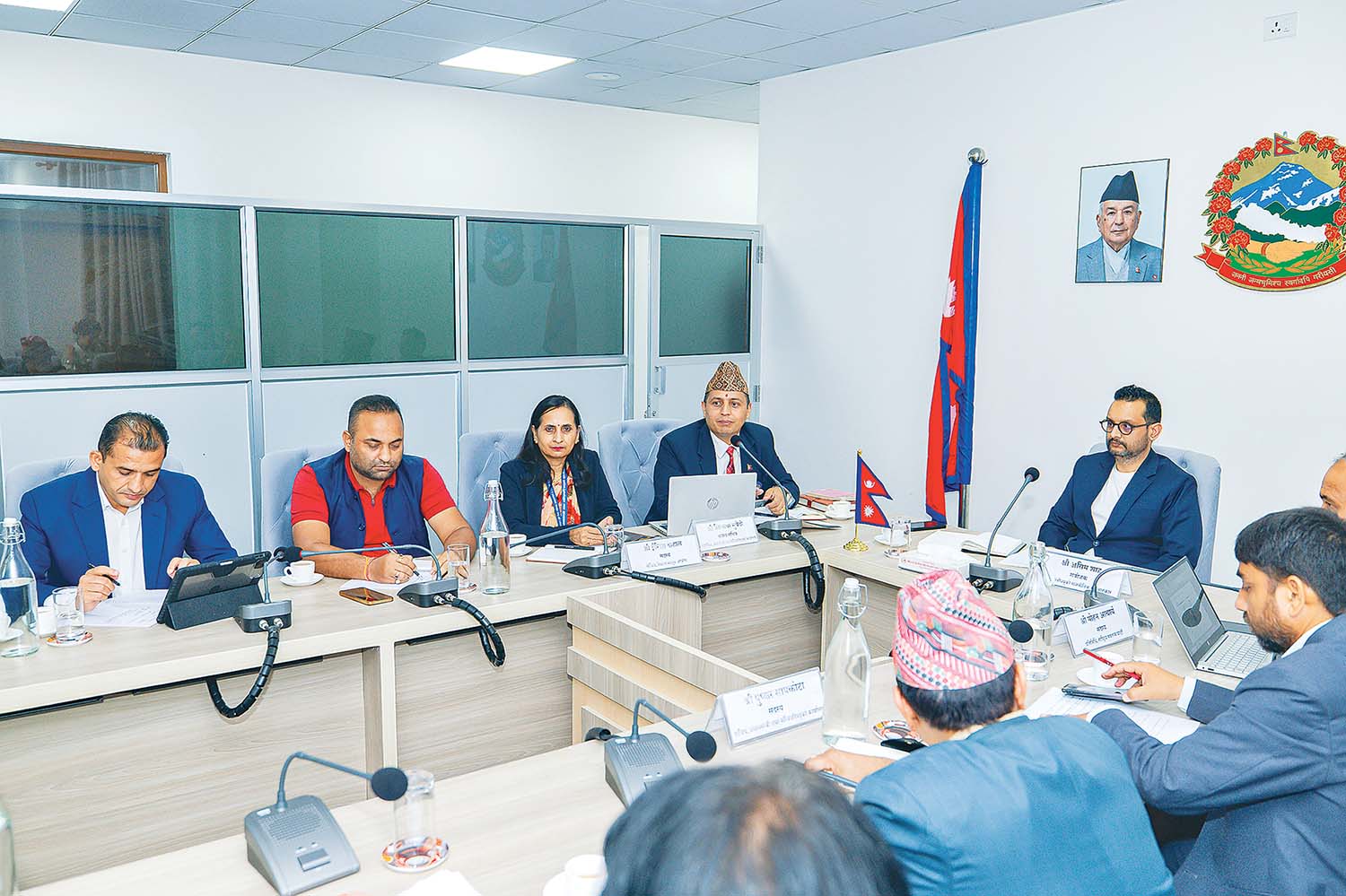
The task force, headed by the prime minister’s political adviser Asim Shah, was given 100 days to complete the report, but submitted it several days beyond the deadline.
Report presents suggestions, not recommendations
The task force collected views from political parties, constitutional bodies, legal experts, former judges, civil society groups and citizens before preparing the report.
It sought written feedback from over 150 institutions, including constitutional bodies. It received 44,613 suggestions, including 19,239 through emails and 25,374 through WhatsApp, according to Shah. Suggestions were also collected through telephone calls and other electronic platforms.
Task force coordinator Shah said the panel was only assigned to prepare a discussion paper and did not have the mandate to formulate its own position on constitutional amendments.
“We have not taken any position. Our role was not to create a position,” Shah said. “We consulted political party leaders, legal experts, former judges and others, and included the suggestions they provided.”
The task force said suggestions were received for amendments to 245 constitutional articles. It noted, however, that some proposals could be addressed through changes to existing laws rather than constitutional amendments.
“Some suggestions required constitutional amendments, while others could be addressed through legal reforms,” Shah said. “When we classified the suggestions, they fell into around 20 broad groups.”
Shah said the task force has not proposed changes to the basic structure of the constitution.
The report includes summaries of the views of political parties and task force members on issues such as secularism, citizenship provisions, fundamental rights, citizens’ duties, state policies, federalism and the electoral system.
It also incorporates suggestions related to the roles and powers of the president, vice-president and chairperson of the National Assembly.
“We have not stated that this particular arrangement should be adopted,” Shah said. “This is only a discussion paper containing the suggestions received.”
He said the government would keep the document as a reference and create an environment for further public consultation.
The report suggests that the government could form a separate constitutional amendment commission or committee after reaching an agreement among all political parties represented in Parliament.
“The Cabinet instructed us only to prepare a discussion paper, and we have fulfilled that responsibility,” Shah said.
He said there was no reason to suspect that the process was intended to weaken the constitution.
“The report does not attack the constitution,” he said.
Shah said suggestions for restructuring provincial governments had also been included because they emerged during consultations. If a constitutional amendment commission is formed in the future, the report could serve as reference for the commission.
“The government will study the report and make it public. The prime minister and party leaders will consult other political parties,” Shah said. “The process will move forward through the highest possible political consensus.”
He said the document had opened the door for dialogue by providing a basis for discussions between the prime minister, party leaders and other political forces.
54 proposals across eight areas
During its consultations, the task force prepared 54 proposals under eight broad categories.
The proposals included seven issues related to the system of governance, eight related to the electoral system, two on federalism, eight on provincial structures, three on local governments, 11 on the judiciary, six on constitutional bodies and nine under other miscellaneous issues.
Among the proposals were granting voting rights to Nepalis living abroad, reviewing judicial appointments at all levels of courts and introducing a directly elected executive president.
The task force consulted former justices, constitutional experts, former attorneys general, former presidents and other stakeholders based on these proposals.
The task force was formed on March 30 with Shah as coordinator. Members included Mohan Lal Acharya from the Rastriya Swatantra Party, Bhishma Raj Adhikari from the CPN-UML, Dev Prasad Gurung from the Nepali Communist Party, Dhurba Raj Rai from the Shram Sanskriti Party and Gyan Bahadur Shahi from the Rastriya Prajatantra Party. The Loktantrik Samajbadi Party, Janata Samajbadi Party and Rastriya Janamorcha also had their representatives.
Pushkar Sapkota, law secretary at the Office of the Prime Minister and Council of Ministers and Indira Dahal, secretary at the Nepal Law Commission, were also members of the task force.
Document is only a discussion paper: PM
During a meeting with Rastriya Prajatantra Party Chairman Rajendra Lingden and other leaders, Prime Minister Balendra Shah said that the report was only a discussion document and did not mark the beginning of the amendment process.
During their meeting, RPP leaders raised issues they have long campaigned for, including restoring the monarchy, declaring Nepal a Hindu state and abolishing federalism.
Responding to their concerns, Shah said the task force had only prepared a report and that further discussions and agreement among political parties would determine the way forward.
“The current exercise is only to prepare a discussion paper on constitutional amendments. The task force has consulted stakeholders from all sectors. The constitutional amendment process itself is not starting immediately,” Shah told RPP leaders.
The task force’s report suggests the government could form a separate constitutional amendment committee in agreement with all parties. File Photo: RSS
Experts question credibility of process
Constitutional experts have warned that it would be premature to celebrate the report, saying constitutional amendment is an inherently challenging process and that the task force’s legitimacy was weakened after several political parties withdrew from it.
They said the report could still provide a foundation for future reforms if the government manages to build a wider consensus among political parties.
Senior advocate Tikaram Bhattarai said the process became controversial from the beginning, reducing its acceptance among stakeholders.
“First, the issue became controversial at the very beginning, which was not a good development. Then, when representatives of participating parties withdrew from the task force, its relevance effectively ended,” Bhattarai said.
“A report submitted by a task force whose relevance has already been lost does not carry much meaning or importance.”
Bhattarai argued that the government’s approach had created more uncertainty around constitutional reform.
“Constitutional amendment should have been a matter of national consensus. The task force lost that opportunity,” he said. “What happens next depends on how the government moves forward.”
Constitutional expert Bhimarjun Acharya said the government still has a possible path forward using the task force report as a reference, but it must treat constitutional amendment as a serious national issue and take steps to include all political parties and stakeholders.
“Constitutional amendment should ideally have shared ownership. If that is not possible, it needs ownership from the majority,” Acharya said. “The task force had an opportunity to create that consensus. But the way it was formed did not appear to take into account the sensitivity of the constitutional amendment process.”
Acharya said all parties represented in the federal parliament are key stakeholders because they represent different sections of Nepali society and cannot be excluded from the process.
“The way political parties withdrew from the task force meant the country lost an unprecedented opportunity,” he said. “The report can still be treated as a starting point and taken forward by involving all parties. Otherwise, there is a risk that Nepal could end up losing the current constitution without having a clear alternative in place.”
Congress, UML and NCP reject government-led process
The NCP, CPN-UML, Janata Samajbadi Party, Rastriya Janamorcha and Loktantrik Samajbadi Party, which had initially joined the government task force, later withdrew from it. The Nepali Congress had opposed the formation of the government task force from the outset, arguing that constitutional amendment should not be driven by the executive alone.
These parties accused the task force, formed under the leadership of PM Shah’s chief political adviser Asim Shah, of attempting to weaken the constitution rather than strengthen it.
On most major constitutional issues, the Nepali Congress and CPN-UML have maintained similar positions. Both parties support the core features of the constitution, including a federal democratic republican system, a parliamentary government led by a prime minister elected by Parliament, and the mixed electoral system.
The NCP, Janata Samajbadi Party Nepal and Janamat Party have supported a directly elected head of state and a fully proportional electoral system. At the same time, all major parties that participated in drafting the 2015 constitution remain united in supporting federal democratic republicanism, secularism, inclusion and social justice.
The parties involved in drafting the constitution argue that any amendment must be based on its original political foundation and should not alter its fundamental principles.
They had proposed that, given the sensitivity of constitutional reform, a commission led by sitting or former Supreme Court justices, or a parliamentary committee, should be formed to prepare recommendations.
The parties had objected that the government task force moved beyond its mandate and appeared to be heading towards rewriting the constitution rather than making targeted amendments. They accused it of attempting to interfere with the fundamental political compromises that shaped the constitution.
Congress pushes its own amendment framework
After deciding not to participate in the government task force, the Nepali Congress in April announced its own ‘constitutional amendment study and suggestion committee’ under the leadership of party vice president Pushpa Bhusal.
The committee consulted legal experts, civil society representatives, affected communities and other stakeholders before preparing its preliminary findings. Based on those findings, Congress President Gagan Thapa on Thursday presented the party’s official position on constitutional reform.
Bhusal said Congress was now preparing to engage with other political parties and civil society groups using the document as a basis for building a common position on constitutional amendments.
Presenting the party’s position, Thapa said Nepal’s key achievements under the constitution, including a pluralistic federal democratic republic, secularism, proportional inclusive representation and fundamental rights, must not be compromised.
Congress rejected proposals to introduce a directly elected president or prime minister, saying the current parliamentary system should remain.
On electoral reform, the party said the mixed electoral system should continue but could be improved. It proposed maintaining proportional and inclusive representation in the House of Representatives while making the selection process for candidates under the proportional system more democratic.
Thapa argued that the House could become more inclusive by reducing the number of electoral constituencies and replacing the current system, in which party leadership largely selects proportional candidates, with a mechanism that allows greater participation from citizens.
On federalism, Congress said the existing seven-province structure should remain unchanged. However, it proposed revising constitutional schedules to clarify the division of powers between federal, provincial and local governments.
UML questions purpose of government task force
Mahesh Bartaula, a UML member of the party’s constitutional amendment team, said constitutional amendment cannot happen simply because the government wants it and questioned the significance of the report prepared by the government task force.
“We participated in discussions with the government task force, but we withdrew after it became unclear why the constitution needed to be amended and what the roadmap was,” Bartaula said. “The constitution is the country’s fundamental law, but the government did not have a concrete plan. The report, therefore, has little meaning.”
He accused the government of trying to dismantle the constitution rather than amend it.
“The government’s lack of support for federalism is evident from its attempt to make local elections non-party-based,” he said. “It appears to be trying to rewrite the constitution, which is unacceptable.”
Amendment requires national consensus: NCP
Dev Gurung, a member of the NCP’s constitutional amendment recommendation team, said his party withdrew because the government task force failed to provide a clear framework for reform.
“The task force could not present such a framework. Constitutional amendment cannot happen through discussions with this task force alone,” Gurung said. “Our party is preparing a separate position on constitutional reform.”
He said constitutional amendment cannot be achieved even if the government wants it, because it requires national consensus.
Gurung accused the government of failing to seek broad agreement among political parties before starting the process.
Upendra Yadav, chair of Janata Samajbadi Party Nepal, said constitutional amendment should focus on improving the federal republican system, inclusion, proportional representation and the electoral system.
He accused the government of pursuing constitutional reform without first building national consensus.
Chandan Singh, general secretary of Janamat Party, said constitutional amendment would only gain legitimacy if it were based on an agreement among all political parties.
“An amendment based on an all-party consensus could succeed. It cannot happen simply because the government wants it,” Singh said.




 14.4°C Kathmandu