RSP’s women leaders on what it took to reach a majority
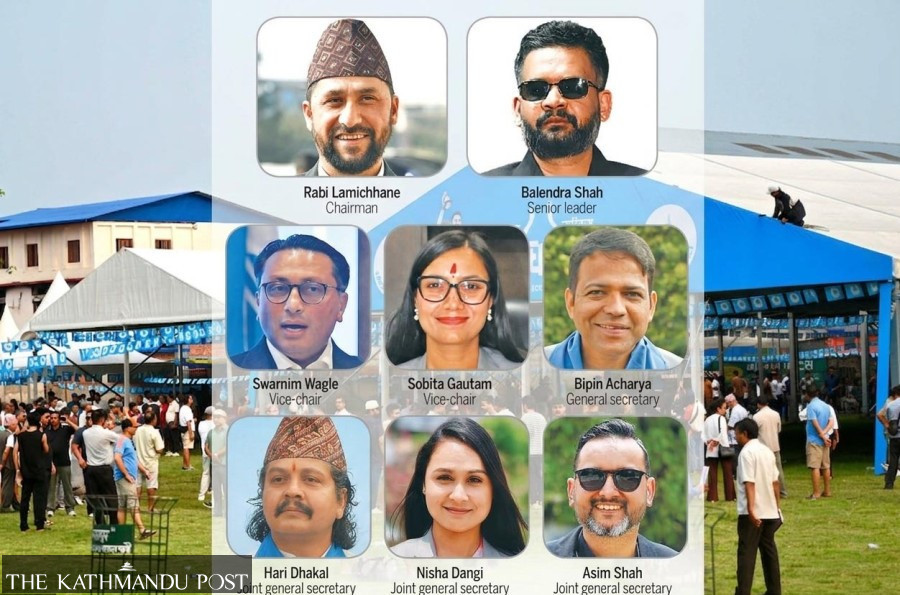
Fifty-one of 99 elected seats now held by women — but the party's own leaders say the harder battle is for power at the top, not just numbers. RSP currently has only two women in top office-bearer roles—Joint General Secretary Nisha Dangi and Vice-President Sobita Gautam—reached only after the party wrote specific quotas into its statute. Post File Photo
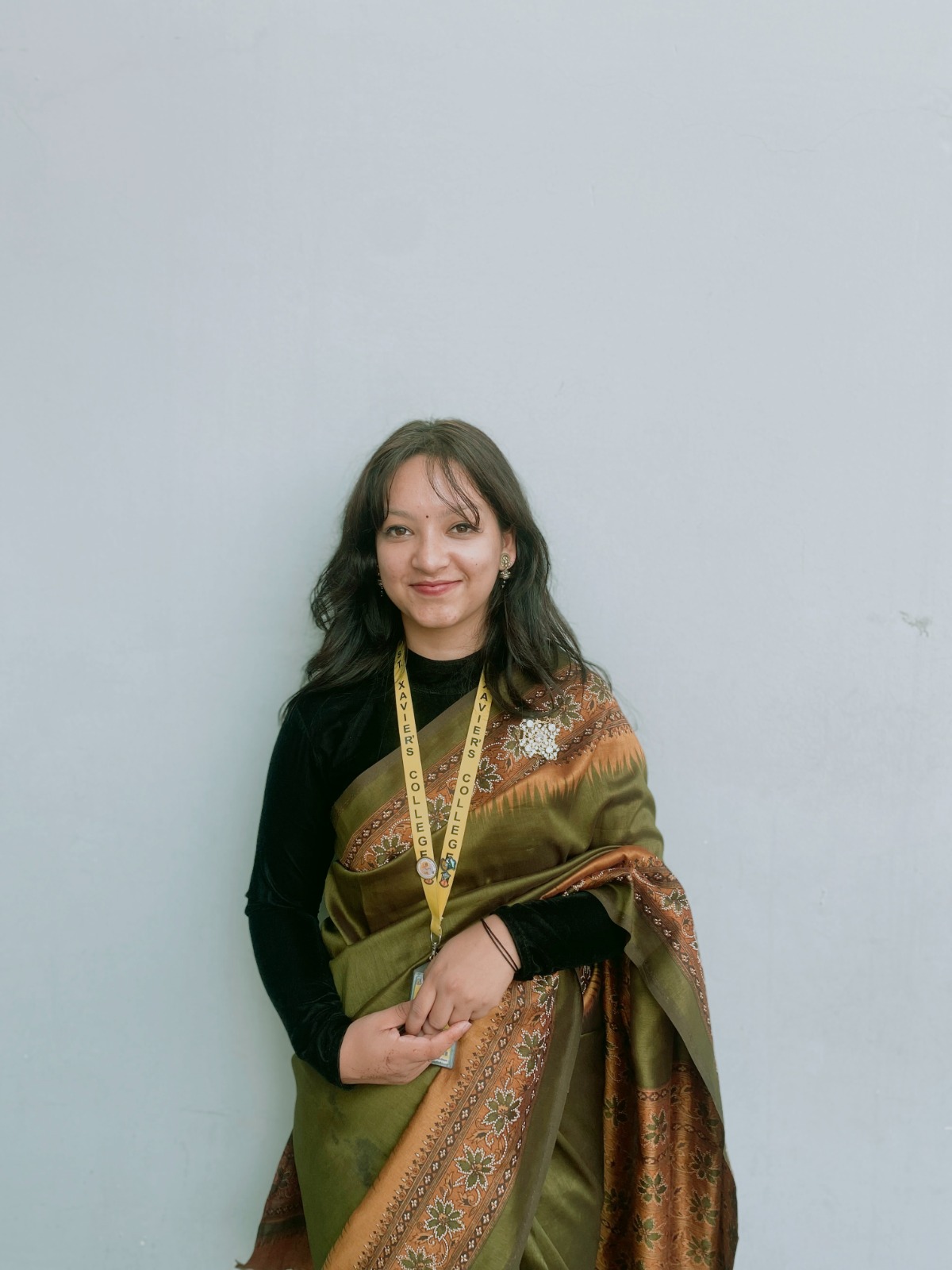
When the Rastriya Swatantra Party’s organisers walked on stage at an internal orientation, Anushka Shrestha counted them without meaning to. Roughly seventy men. Two women. “That made me feel woke,” she says now, sitting in the party that has brought nearly 51 percent of women into its Central Committee. Even with the best intentions in the room, she says, allies would say things like, “Let’s not think of gender now. Let’s just bring the best up.” “That’s exactly what equity isn’t,” she says. “Equity is about pulling things up so that they are equitable.”
Women’s formal participation in Nepali politics dates to 1951, but for decades, it carried no binding requirement. A 1990 quota mandating just 5 percent of each party’s candidates be women, and even that produced just 6 percent representation in the House of Representatives across three elections through 1999, according to a 2024 study by the Democracy Resource Centre Nepal (DRCN). The real shift came in 1997, when an ordinance requiring one woman per ward changed that at the local level, pushing representation from under 1 percent to over 36,000 elected women almost overnight.
The Interim Constitution of 2007 extended a one-third mandate to national politics for the first time; the 2015 Constitution locked that into federal and provincial legislatures and raised it to 40 percent locally. The Political Party Act of 2016 further pushed the requirement inward, mandating for the first time that political parties themselves keep 33 percent women in their own internal committees, a floor that RSP had already cleared, sitting at 36 percent as of last year, the highest of any party studied. That history is the gap this milestone claims to have closed. Fifty out of RSP’s 99 elected Central Committee members are women, a first for any political party in Nepal’s history.
Nisha Dangi was never supposed to run. She was one of RSP’s founding 500 citizens, helping draft the party’s introductory literature before it was even registered, but as a journalist, she believed in staying on the sidelines. She stepped in during the 2022 election only to help select candidates for three months. Her job was building the party’s proportional representation list. That’s when the problem found her.
“I literally couldn’t find women,” she says. She had the data: women with master’s degrees, qualified, capable, but they weren’t coming forward. As the deadline closed in, she stopped looking for someone else to fill the gap. “I thought to myself, ‘If someone like me says they won’t join, how will anyone else?’” That question ended her three-month plan. She is now RSP’s Joint General Secretary.
But she’s clear that the Central Committee number outruns the numbers above it. RSP currently has only two women in top office-bearer roles—herself and Vice-President Sobita Gautam—reached only after the party wrote specific quotas into its statute. “We may have 51 percent in the Central Committee, but in the highest leadership, it’s still lacking.” What bothers her more is a pattern she sees everywhere, RSP included, though to a lesser extent: women get questioned before they’re even given the job. “You shouldn’t start with a question mark.”
Toshima Karki was a practising general surgeon when she made a decision that confounded most people who knew her: she entered politics. She had the degree, the hospital, the equipment. What she kept seeing was patients who had the disease but not the money. “The system itself needed a wholesome operation,” she says. She left surgery for RSP as one of its founders, served as Minister of State for Health and Population, and is now on the Central Committee. She is also the person most directly responsible for the statute provision that mandates at least 33 percent women among the party’s office-bearers, not just its members.
“I was very vocal in the Central Committee about ensuring 33 percent women’s participation among the office-bearers,” she says. The party president and the committee endorsed it. It is now in the statute.
As a surgeon, she reaches for a clinical frame when asked whether the 51 percent figure represents real progress. Vital signs, she says, are not the same as overall health. “This is not the ultimate achievement. It is a big responsibility we are now carrying on our shoulders.” She is clear about what her seat means to her. “I’m not here just to be included, but so that I can include others.”
If Nisha’s and Toshima’s stories started in 2022, Samikchya Baskota’s started a decade earlier in the Bibeksheel Sajha years, the “alternative politics” experiments that preceded RSP. She is now on the RSP Central Committee and is also the chairperson of the Law, Justice and Human Rights Committee. She’s blunt that this milestone didn’t begin with RSP and shouldn’t be credited only to it, as the women’s wings of older parties pushed for the 33 percent constitutional provision that made everything after it possible.
She points to how it worked in Bibeksheel Sajha: provincial coordinator slots were deliberately kept for women, there was a push for female representation beyond the quota and open category, and at the first general convention of Bibeksheel in 2023, the top four office-bearer positions were all held by women. She says, “Promoting female leadership has been a deliberate choice, despite it being driven sometimes by necessity and sometimes by a conscious push.” She flags what the 51 percent figure hides: it’s completely urban. “In rural areas, we still have to request women to participate just to fill the numbers.”
When asked whether she feels included as a voice or a face, she doesn’t hesitate. “I never aimed for viral-ism, but for vital-ism,” she says. Popularity opens a bigger forum, but representation has to be a voice first.
Anushka Shrestha’s route to RSP has nothing to do with party-building. Seven years in banking, then a regional manager role at an Australian public university—as far from politics as a résumé gets. What pulled her in was the Gen Z-led unrest of September 8, watched from Baneshwor as a small business owner already advising Kathmandu’s then-mayor, Balendra Shah. When RSP asked her to be “part of the solution,” her first reaction wasn’t confidence. “Am I going to be able to do what this role needs to be done?”
She’s aware of how her own inclusion could be read: a member of an indigenous nationality group, a woman, a convenient box to check. Her answer to that is numbers, not sentiment. There are, she points out, thousands of women more famous than she is who would have made flashier hires if tokenism were the point.
She says representation only means something when it changes the room’s balance of power, not just its guest list. Trailblazers, she adds, carry a larger responsibility, as what they do will be read as representative. “If a man makes a mistake, it’s just a mistake. If a woman makes one, she carries it for the entire gender.”
To parties still counting women in single digits, her message is plain. “Don’t be scared to lift women up,” she says. Women have always been part of the work behind every political party, she points out. It’s just the credit that has lagged. “It’s about time we look at things with a fresh perspective and create an equitable environment
Aarya Chand is a reporter at The Kathmandu Post covering social issues. Before moving to the social beat, Chand was an intern covering culture and lifestyle for the Post.




 15.03°C Kathmandu