After losing their homes, displaced families lose what little they had left
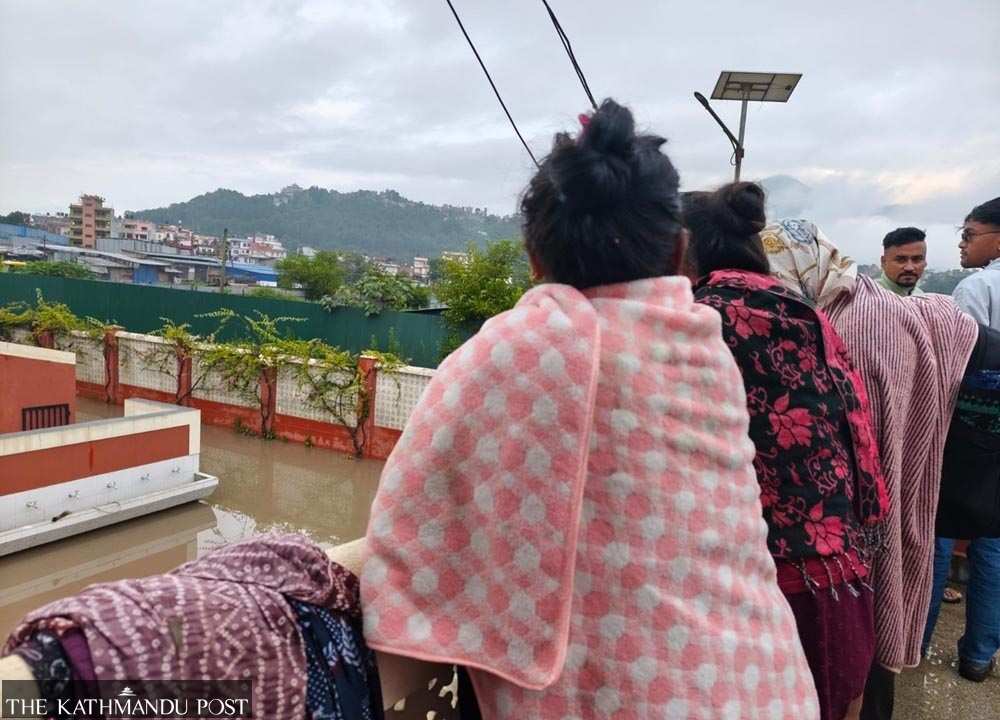
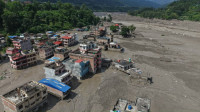
Overnight flooding inundated the Radha Soami Satsang Beas holding centre in Kirtipur, washing away clothes, medicines, schoolbooks and other essentials that families had managed to save after the April evictions.
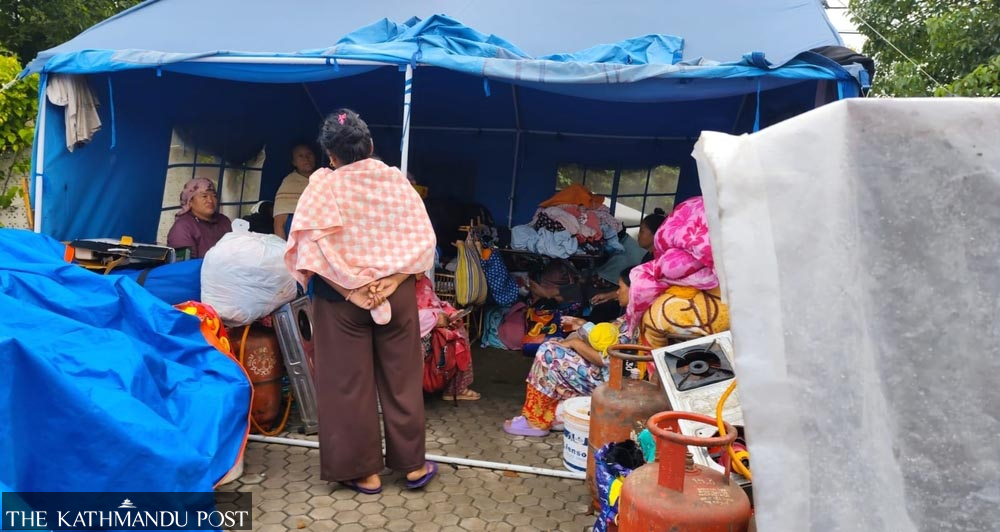
It was 5 am. Outside the Radha Soami Satsang Beas holding centre in Kirtipur, families displaced by eviction sat awake after a sleepless night, surrounded by the few belongings they had managed to save from the floodwaters that submerged the shelter overnight.
Near the gate, piles of soaked clothes, mattresses and household items lay scattered. Some people stared silently at what remained of their possessions, while others wrung water from drenched clothing.
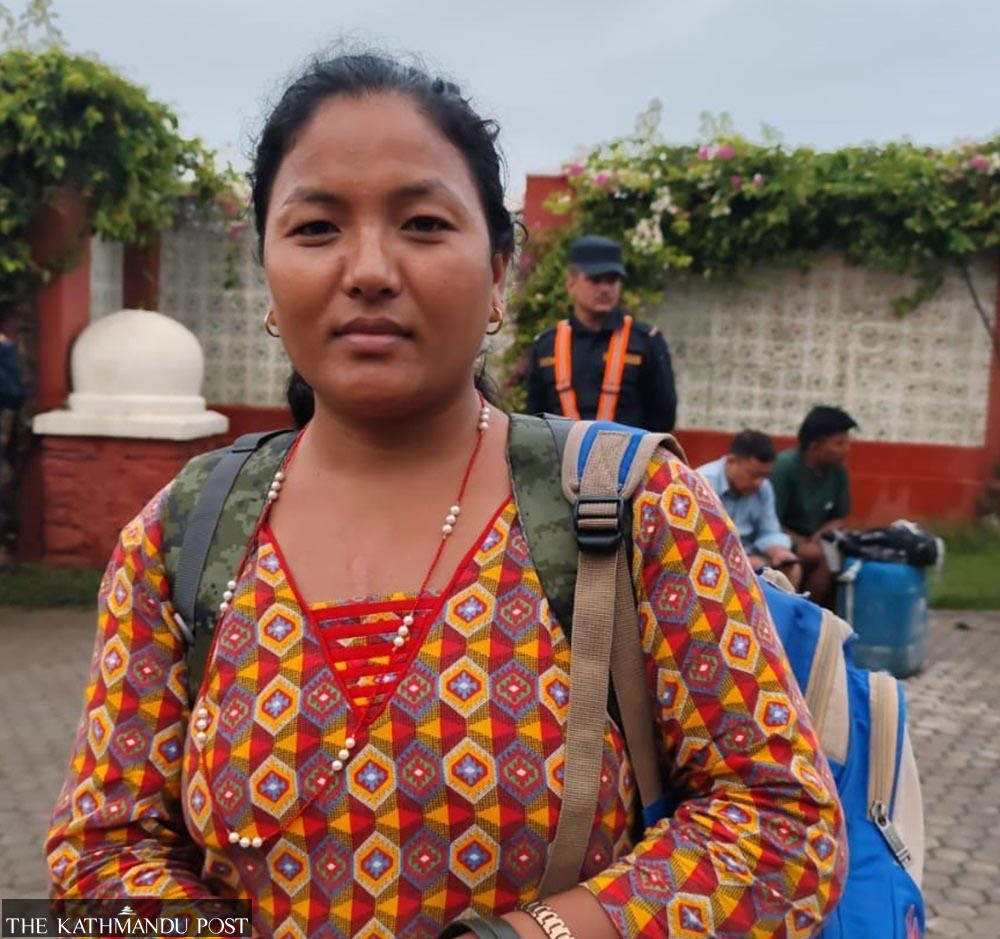
Gayatri Shrestha stood with two bags slung over her shoulders, holding her four-year-old daughter's hand, who rubbed her sleepy eyes while standing barefoot on the cold concrete.
“She couldn’t save anything,” Gayatri said, looking at her daughter. “Her shoes, clothes, books, notebooks, everything went underwater.”
Relentless rain that began on Friday evening swelled the Bagmati river. At around 12:30 am, panic erupted inside the holding centre.
“We were fast asleep when people started shouting,” Gayatri recalled. “By the time we woke up, the water was already rising. We grabbed two bags and a few documents and ran outside.”
Her children were terrified.
“The only clothes my daughter still has are the underwear and shirt she was wearing,” she said. “I don't even know what I'll dress her in now.”
What pains her most, however, is not the loss of clothing.
“I left behind the medical records from the heart surgery I had 12 years ago, along with my medicines,” she said.
The holding centre became home to dozens of families after the government demolished informal settlements in Thapathali and Shantinagar on April 25. Since then, displaced residents had been living in tents erected inside the compound.
“They told us they were bringing us here to protect us from floods,” said Kamali Uraun, leaning against a wall after another sleepless night. “But the flooding here turned out to be even worse than where we were living.”
Security personnel arrived at around 2 am after floodwaters entered the compound. By morning, rescue workers and displaced residents were navigating the submerged camp in inflatable boats, trying to recover whatever they could.
Standing on higher ground, 51-year-old Kamala Rai called out to the rescuers.
“My medicines are still inside. Can you check if they're there? Otherwise, I'll come myself.”
The reply came back quickly. “The medicines won't be usable anymore.”
Kamala fell silent.
“I take medicine every day for high blood pressure, thyroid and cholesterol,” she said softly. “I'm supposed to take them in the morning. Now I don't even have drinking water.”
She sat, staring blankly, on the roof of a nearby building overlooking the flooded shelter. Beside her, another woman, who had been trying unsuccessfully to sleep against a wall, interrupted.
“We don't even have water to drink,” she said. “Someone could at least bring a few jars of water.”
Kamala has depended on medication for the past three years. Since moving into the holding centre, she says she has also been diagnosed with diabetes.
“I had just bought those medicines a few days ago,” she said. “Now, where am I supposed to find the money to buy them again?”
As she spoke, her eyes drifted back towards the flooded camp, where a pair of YouTubers waded knee-deep through the water filming content. The sight angered her.
“Go ahead, drown,” she shouted. “We drowned because we had no choice. You can drown because you want to.”
Nearby, 30-year-old Upama Magar recalled the night's terrifying moments.
“As soon as I realised what was happening, I woke everyone up,” she said. “At first, the water only reached our ankles. Within minutes, it was above our knees.”
The children were their biggest concern.
“We got the children out first,” she said. “Only after that did we try to save whatever belongings we could.”
By then, it was too late. “The police only arrived after everything had already gone under,” she said. She has no idea when she and her family will sleep in a proper bed again.
“Once the water goes down, we'll return,” she said. “We'll shovel out the mud, wash the clothes and dry them if the sun comes out. Whatever is beyond saving, we'll leave behind.”
For fifth-grader Rijan Lama, the flood washed away something he had been excited about only weeks earlier. Two months ago, he had received new school books and a new uniform.
Now they are gone. “I had already finished my homework,” he said quietly. “I was going to hand it in to my teacher.”
“I was asleep. I couldn't save anything. I just ran.” His voice broke as he spoke. “I feel terrible.”
Standing beside the flooded camp, Manoj Mahato tried to laugh at his family's misfortune.
“After the government demolished our settlement, we only had a few belongings left,” he said. “Now even those are gone.”
Then he smiled bitterly. “People go looking for water. Water came looking for us. Strange, isn't it?”
He appealed to the authorities to at least provide displaced families with bedding and blankets.
Nearby, Girbanika Thapa, who had phoned journalists at around 1 am to report that floodwaters had entered the shelter, sat cradling her 10-month-old son.
“The children haven't slept,” she said. “They keep crying. We don't even have a place to lay them down. I don't know how to comfort them.”
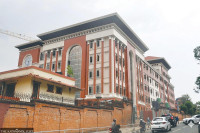
Pundevi Paswan had managed to send her children to Smriti Bhawan, a nearby building where rescued families were being sheltered.
“They're still crying,” she said. “Their clothes are wet, and they couldn't sleep there either.”
According to the National Disaster Risk Reduction and Management Authority, 54 of the 154 people staying at the holding centre have been evacuated to Smriti Bhawan inside the Tribhuvan University premises.
“The relevant agencies are now coordinating the distribution of food, drinking water and other essential supplies,” the authority said.
For many families, the flood has become the second disaster in just over two months. First, they lost their homes to eviction. Now they have lost what little they had managed to save.




 14.78°C Kathmandu