Coordination committees to be formed at three levels to prevent gender-based violence
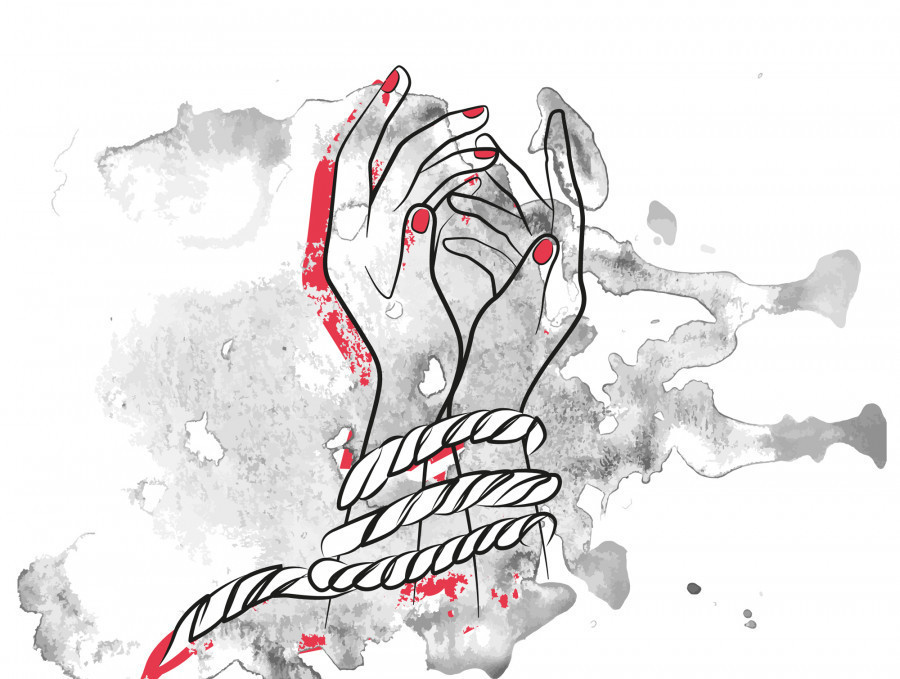
Experts say the success of the initiative will depend on clear implementation arrangements rather than the creation of another institutional structure. Shutterstock
The government has introduced a new mechanism to strengthen response to gender-based violence by establishing coordination committees at the federal, provincial and local levels. The move aims to improve cooperation among agencies responsible for prevention, survivor support and justice delivery.
The Ministry of Women, Children, Gender and Sexual Minorities and Social Security has brought into force the ‘Gender-Based Violence Prevention Coordination Committee Formation and Operation Procedure 2026’, which sets out the framework for institutional coordination across all three tiers of government.
The ministry says the new guidelines are intended to ensure effective prevention of gender-based violence, guarantee quality services for victims and strengthen collaboration among government bodies and service providers.
According to the procedure, the committees will work in rescue coordination, protection, medical treatment, psychosocial counselling, legal assistance and rehabilitation for victims. They will also facilitate information-sharing among federal, provincial and local authorities. They are also expected to strengthen cooperation between One-Stop Crisis Management Centres, Nepal Police, government attorneys, health institutions, local governments and organisations providing support services.
The ministry said the procedure was prepared in accordance with section 65 (4) of the Financial Procedures and Fiscal Responsibility Act 2018, with the objective of making policies, programmes, monitoring and intergovernmental cooperation on gender-based violence more effective.
At the federal level, the committee will be chaired by the ministry's secretary, while equivalent bodies will be formed under the leadership of the relevant authorities in provincial and local governments. Representatives from security agencies, government offices and other stakeholders will serve as members according to need.
Besides coordinating services for victims, the committees will collect and analyse data on gender-based violence, facilitate awareness campaigns, monitor and evaluate programmes, recommend policy improvements and prepare progress reports.
Abha Shrestha Karna, chief of the ministry’s Women Empowerment Division, said reducing gender-based violence requires the collective efforts of all concerned institutions rather than the ministry alone.
“Gender-based violence cannot be reduced by a single ministry or a single institution,” said Karna. “Development partners, civil society organisations and government agencies all have important roles. The new procedure is intended to institutionalise that cooperation and establish effective coordination among the three levels of government.”
She said coordination committees have already been formed at the federal level and in Lumbini and Koshi provinces, while the remaining provinces and local governments are in the process of establishing similar bodies.
According to Karna, implementation of the procedure will make cooperation among agencies smoother, clarify institutional responsibilities and reduce duplication of similar programmes. She also expressed confidence that clearer coordination would help maximise available resources and allow programmes to be delivered more effectively at lower costs in line with government priorities.
However, experts say the success of the initiative will depend on clear implementation arrangements rather than the creation of another institutional structure.
Kamala Parajuli, chair of the National Women Commission, said the concept of forming coordination committees under the federal system is positive but warned that uncertainty over institutional responsibilities could weaken implementation.
“The procedure has been prepared at the central level, but local governments are responsible for implementation,” said Parajuli. “If the roles of federal, provincial and local committees are not clearly defined, confusion could arise during implementation.”
She also argued that Nepal needs a dedicated coordination mechanism at the district level to ensure effective implementation of programmes and funds related to gender-based violence.
According to Parajuli, the abolition of district-level Women and Children Office following federal restructuring has created an institutional gap that may complicate coordination among agencies handling violence cases, access to justice and survivor empowerment programmes.
“The objectives of the new procedure can only be achieved effectively if there is a well-functioning coordination mechanism at the district level,” she said.
Women’s rights activist Sunita Mainali also welcomed the government's initiative but questioned whether creating additional committees alone would produce meaningful results.
She noted that provincial and local governments had previously established several committees to address violence against women, arguing that their performance should first be reviewed before new structures are introduced.
“The government's decision to establish coordination committees at all three levels is positive,” said Mainali. “But equal attention must be paid to how these committees will function, how decisions will be implemented and how adequate financial resources will be ensured.”




 19.38°C Kathmandu