



 19.57°C Kathmandu

Thu, Oct 22, 2026
National
Gundruk turns into a business lifeline for women in Hetauda
Women in Ghale Gaun have tripled commercial production of the traditional fermented food in three years, but demand from markets at home and abroad continues to outstrip supply.
bookmark![]()
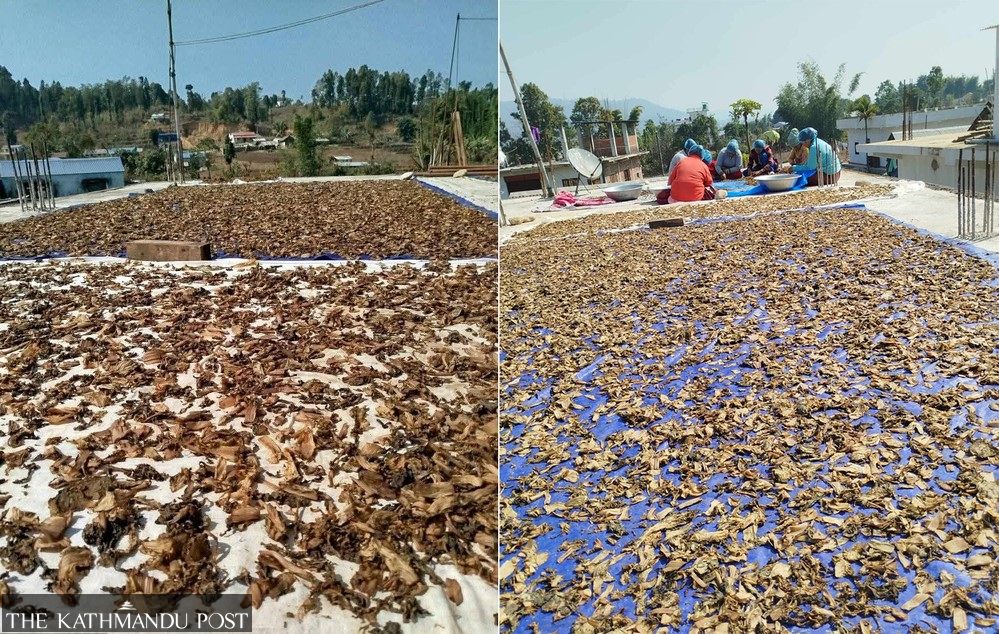
For the women involved, the enterprise represents more than the commercialisation of a traditional food. It has given them a source of income and greater control over household finances. Pratap Bista/TKP ![]()
The women see growing demand for organic and chemical-free food as another opportunity. Their product also benefits from the nutritional value associated with fermented leafy greens. Pratap Bista/TKP
Pratap Bista
Published at : August 18, 2026
Updated at : August 18, 2026 19:13
Hetauda
For generations, women in Ghale Gaun, a settlement in Hetauda-12, made gundruk as a way to preserve mustard greens for the winter. The greens were wilted, fermented in earthen pots and sun-dried before being stored for months.
The fermented greens were a staple in rural Nepali kitchens, but rarely seen as a source of income. That is changing.
Gundruk has gradually become the signature product of Ghale Gaun, giving the area a new identity as ‘Gundruk village’. Women who once spent most of their time on unpaid household and farm work now run a growing enterprise that covers everything from cultivating mustard greens to fermentation, packaging and marketing.
The transformation began three years ago when women, most of them from the Gurung and Tamang communities, organised themselves through the Kanchanjunga Agriculture Cooperative Micro-Entrepreneur Industry. They began cultivating mustard greens collectively for commercial gundruk production.
Their product later received organic certification from the government’s Department of Food Technology and Quality Control, helping boost consumer confidence and demand.
The increase in sales has been rapid. The cooperative sold 500 kilogrammes of gundruk in its first year, 1,000 kilogrammes in the second and 1,500 kilogrammes last year.
Even that amount was not enough.
“Our production has not been able to keep pace with demand,” said Chinimaya Gurung, chairperson of the cooperative. “Last year, we produced and sold 1,500 kilogrammes, but that was still far below what buyers were asking for.”
The cooperative’s storage facilities currently have no stock left. Every packet has been sold, while orders continue to come in from domestic and international markets.
For the women involved, the enterprise represents more than the commercialisation of a traditional food. It has given them a source of income and greater control over household finances.
“In the past, we depended on our husbands’ agricultural income to run our families and meet household expenses,” Gurung said. “Before we started producing and selling gundruk commercially, these women had no independent income. Having to depend on others for every expense was difficult.”
The idea of turning a food traditionally prepared for household consumption into a commercial product was initially unfamiliar to the women.
Some had worried about their families’ financial future and their children’s prospects, but they had little idea about what kind of enterprise they could establish in the village. They had the skills and access to mustard greens, but lacked business knowledge, capital and a clear plan.
The intervention of Green Foundation Nepal helped change that.
“We never believed that we could become successful entrepreneurs by selling gundruk,” said Pabitra Syangtan, a cooperative member. “Green Foundation Nepal helped us see the potential in a skill we already had.”
Hetauda Sub-Metropolitan City also provided support that helped the women turn the idea into a commercial operation, she said.
The women now manage a business built around a product that was once associated mainly with rural households and winter food shortages. Their work has also changed the economic role of women within the community.
Yet the cooperative faces a challenge that many small producers would welcome: demand is growing faster than its capacity to produce.
Increasing production will require more mustard greens, greater processing capacity and stronger distribution networks. For now, however, the women of Ghale Gaun are confronting the problem with a product that has been part of Nepali kitchens for generations.
What began as a method of preserving vegetables for the winter has become a means of earning income throughout the year. For the women of Ghale Gaun, gundruk is no longer simply a traditional food. It is their business.
The comprehensive training, initial grants and ongoing business support provided by Hetauda Sub-Metropolitan City changed how the women of Ghale Gaun viewed their own economic prospects. With new skills and confidence, they formally registered the Kanchanjunga Agriculture Cooperative Micro-Entrepreneur Industry, creating the institutional foundation for their business.
The women leased 15 katthas, about 0.5 hectares, of farmland at an annual rent of Rs1,500 per kattha and began growing mustard greens for gundruk production. But growing the crop proved easier than finding a market for the finished product.
“In our first year, the mustard harvest was very good, but we could not find a market,” said cooperative chair Gurung. “We did not have the required certification from the Department of Food Technology and Quality Control, so we could not sell our gundruk through supermarkets.”
Hundreds of thousands of rupees worth of gundruk accumulated in the cooperative’s storehouses, leaving the women worried that their investment could be lost.
The situation changed after Hetauda Sub-Metropolitan City helped the cooperative navigate the certification process. Once the women obtained the required government approval, demand rose sharply.
“Consumer trust increased as soon as we received the certification,” Gurung said. “The gundruk we had stored sold quickly. Traders and wholesalers started contacting us directly and orders began coming in.”
The women’s biggest concern has since changed from finding buyers to producing enough to meet demand.
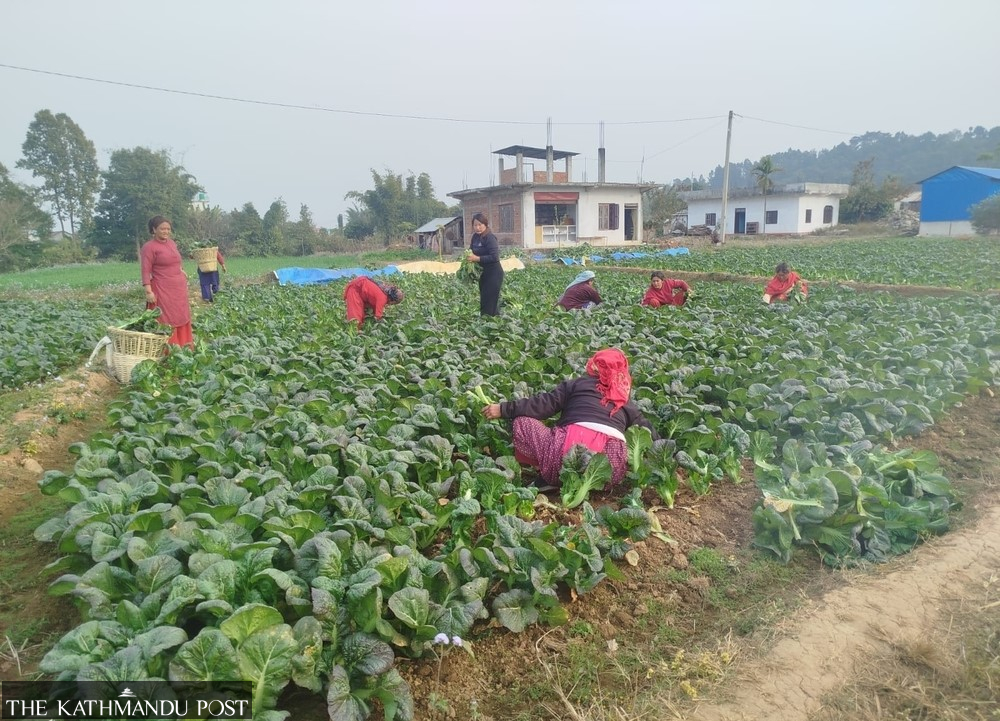
The cooperative, which began with 11 women, now has 26 members. It currently cultivates mustard greens on 30 katthas of land and plans to expand to 50 katthas. The group hopes to create direct employment for more than 50 local women. Twenty women are currently employed by the enterprise.
The gundruk is sold in Makwanpur, Sindhuli, Bharatpur and Kathmandu. The cooperative has also received interest from Kathmandu-based exporters who plan to begin shipping the product to the United Kingdom next year, where it could find a market among Nepalis living abroad as well as consumers interested in traditional fermented foods.
As the business has expanded, the women have also found a way to reduce waste. Broken pieces and fine particles left over from gundruk production are processed into achar, a traditional Nepali pickle, with technical assistance from another non-governmental organisation.
The cooperative produced around 300 kilogrammes of the pickle this year, selling it for Rs1,000 per kilogramme and generating about Rs300,000 in revenue from the product. Its organic gundruk sells for Rs800 per kilogramme.
The women see growing demand for organic and chemical-free food as another opportunity. Their product also benefits from the nutritional value associated with fermented leafy greens.
Dr Hari Bahadur Khadka of Hetauda Hospital said gundruk contains dietary fibre, iron and calcium and can support digestion and gut health.
The cooperative’s success, however, has been measured in more than sales and production figures.
Women who once had little independent income now earn from an enterprise they collectively own and manage. Their greater financial independence has also increased their participation in household and community decisions.
“The commercial production of gundruk has changed not only the identity of our village but also the confidence and independence of our women,” said Lalit Ghalan, chief of the District Coordination Committee in Makwanpur and a resident of the ward.
Ghalan said the cooperative’s success shows how much can change when rural women get the support and opportunity to turn their skills into a business.
The cooperative began with a relatively modest investment: about Rs100,000 from Hetauda Sub-Metropolitan City and Rs80,000 contributed by its members. Three years later, a product once prepared mainly for household consumption has become a growing rural enterprise with ambitions beyond Nepal.
For the women of Ghale Gaun, the transformation is as much about control over their economic lives as it is about gundruk. A traditional food once made to help families survive the winter has become a means of creating jobs, building confidence and opening a path to markets far beyond their village.
Pratap Bista
Pratap Bista is the Bagmati Province Bureau Chief for Kantipur Publications.



Most Read from National

Flood sweeps away houses, bridges in Gorkha

What to know about the US trial over Mamta Kafle’s disappearance

Torrent of black mud and rocks engulfs settlements along Budhigandaki

From blankets to handmade dolls, two foreign women bring comfort to flood survivors

Budhi Gandaki flood washes away three bridges in Gorkha
Editor's Picks




E-PAPER | October 22, 2026

×