How Nepal’s electrical accident compensation system leaves survivors paying the price
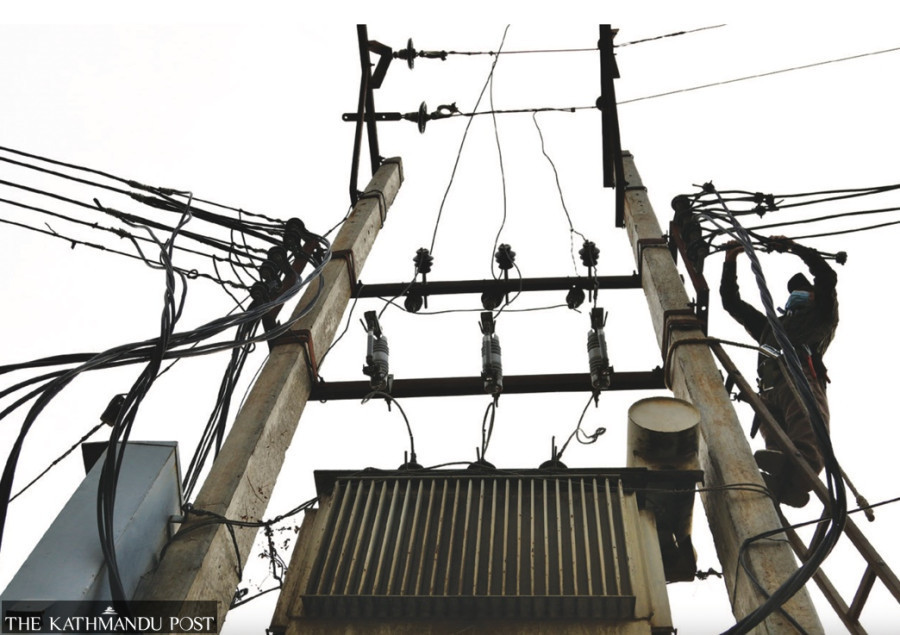
For survivors of severe electrocution, the Nepal Electricity Authority’s one-time compensation closes a case, but the financial and physical trauma continues for decades. Post file photo
On a Saturday afternoon in April, 2014, Sabita Thapa was watching television at her family’s home in Gothatar, Kathmandu, when the electricity began flickering. She was 11 years old then, old enough to remember the television advertisement playing before the accident, but too young to understand how a few seconds near an exposed high-voltage line would alter the rest of her life.
Outside, workers were replacing metal water pipes near the house with plastic ones. Thapa remembers three bare overhead wires running close to the family’s rooftop, which had no protective railing.
According to the Nepal Electricity Authority, Thapa was on the roof when a steel pipe came into contact with the 11-kilovolt power line. The electric shock threw her down. Workers at a nearby house saw her convulsing and shouted that someone had fallen from the roof. Her mother heard the cries and ran.
“The pipe crushed half of my body,” Thapa recalled. “My mother pulled me back.”
Doctors later told the family that she had touched the live wire for about two seconds. It was enough to leave her fighting for her life. By the time she reached Bir Hospital, she was drifting in and out of consciousness. She remembers seeing her mother beside her. She also remembers—or thinks she remembers—seeing her father on a motorcycle following the ambulance through the window. “I don’t know if it was true or if it was my imagination,” she said.
Both of her arms had to be amputated. She spent nearly six months in the hospital, much of it under heavy medication. She remembers little beyond a blur of pain, morphine, and confusion.
“I thought it was a dream,” she said. “A long, painful, never-ending dream.”
No one, she says, really explained to her what had happened. She was only a child. Her parents were focused on whether she would even survive, while her uncle handled the paperwork with government offices. The first time the reality of the accident truly struck her was when she returned home and saw herself in the mirror.
“I was scared of myself,” she said. “It was not me at all.”
Twelve years later, Thapa is now in college studying psychology. She makes jewellery, attends therapy, and says she wants to work and support herself. But the accident that took place when she was a child still shapes nearly every part of her life. Her family still lives in a rented home. Her mother sells vegetables, and her father drives for ride-hailing platforms such as Pathao and inDrive. They have no savings, Thapa said, and no long-term security.
“I don’t expect my parents to look after me for the rest of my life,” she said. “I will work on my own. I just want my parents to be taken care of. I want them to be safe. I want them to be able to retire.”
The one-time compensation the family received from the NEA was decided within months of the accident, long before the full cost of surviving it became clear. Today, their medical expenses have exceeded Rs5 million—more than thirteen times the Rs375,000 the authority ultimately paid.
Thapa’s case has become a window into a much larger question: whether Nepal’s electrical accident compensation system, built around one-time payments, reflects the lifelong financial and physical consequences of surviving an electrocution.
For Thapa, the accident did not end when the paperwork did. After leaving the hospital, she had to relearn life without both hands, teaching herself to cook, clean, and care for herself. “I saw my parents struggling,” she said. “I learned things in such a rush because I felt I needed to help them.”
Before the accident, Thapa says, she was a “jolly” child. Afterwards, she gradually withdrew as people reacted differently to her disability. “I still don’t have a lot of friends,” she said. “I have a few people that I trust.” For years, she avoided mirrors. “I am still trying to love myself,” she said.
Her parents often tell her to let go, but Thapa says letting go is not simple when the injuries are not just physical.
Mental health professional Sayuja Ranjitkar said such trauma from severe childhood electrical injuries can leave lasting psychological effects, particularly because they occur during adolescence. Survivors may experience post-traumatic stress disorder, anxiety, and social withdrawal long after the physical injuries heal.
About a year ago, Thapa returned to the NEA to obtain the documents related to her case. One official whose signature appeared on the files denied ever seeing her, Thapa said, while another questioned why she had come. “I was very emotional,” she said. “I only wanted my documents.”
As she pieced together the paperwork, she became convinced the accident could have been prevented. She says the wires were too close to the building and that, according to what she later understood, the required distance was not maintained. “The wires should have been 13 feet away,” she said. “It was six feet.” The site inspection report filed shortly after the accident confirms this account.
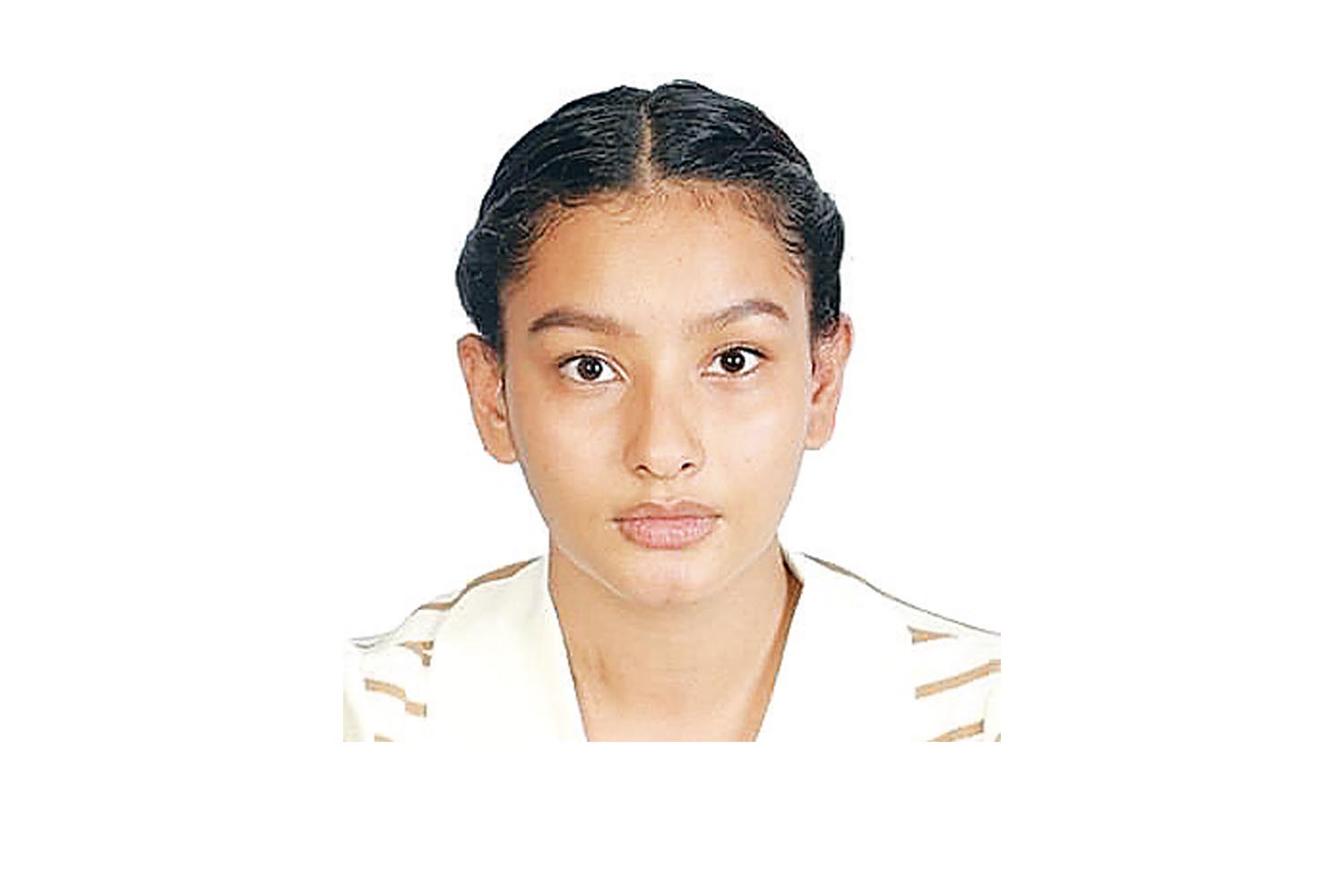
Sabita Thapa had both her arms amputated after an electrical accident in 2014. Photo: Courtesy of Sabita Thapa
Documents reviewed by the Post show that the authority’s own officials recorded serious concerns about the infrastructure around Thapa’s home. Internal correspondence stated that as houses expanded beneath the power line, the local distribution centre lacked the budget to replace the exposed wires with insulated cables.
One document acknowledged that the delay left the child with “irreparable damage” and permanent disability. Within a week of the accident, workers removed the exposed wires and installed insulated cables.
When Thapa’s father later applied for compensation and treatment expenses, NEA officials concluded that the case did not clearly qualify under the Electricity Accident Compensation Regulations then in force. Internal documents repeatedly stated that she was not eligible for compensation for limb loss or treatment expenses.
According to Thapa’s uncle, Jhalak Bahadur Thapa, officials initially believed Sabita had intentionally come into contact with the power line and treated the incident as an attempted suicide, making her ineligible for compensation. He said he repeatedly met with NEA officials and argued that the accident had been mischaracterised before the authority agreed to reconsider the case.
Officials ultimately recommended assistance on humanitarian grounds, citing the severity of her injuries, her family’s financial condition, and what one document described as due to having a “human conscience.”
In 2015, the NEA Board approved Rs375,000 for Thapa: Rs250,000 for the loss of both hands and Rs125,000 for medical treatment.
For the NEA, that payment appears to have closed the case. For Thapa, it barely covered the beginning. “I won’t deny it. We got the Rs375,000,” she said. “But it was nothing.”
Her uncle said the eventual scale of those costs was impossible to document when the compensation claim was being decided because many hospital bills and follow-up treatment expenses had not yet been incurred.
She says her family received no continuing treatment support, no lifetime medical coverage, no structured rehabilitation assistance, and no clear explanation of other relief they might have been entitled to, including the possibility of a job offer within the NEA for a family member. “After the accident, the only time I heard from them was when I had to pay the electricity bill,” she said. “And I am paying them.”
Thapa’s experience is far from unique. Electrical accidents continue to kill and injure people across Nepal. A study of Nepal Police records from July 2014 to July 2019 found 2,267 electrical injury incidents in five years, of which 59.1 percent were fatal. The number of reported incidents rose almost threefold during that period, from 259 to 681. Bagmati Province recorded the highest numbers of deaths and injuries, followed by Madhesh and Lumbini.
In 2024, the National Human Rights Commission began investigating the issue after reports of frequent electrocution deaths. Officials at the commission say hundreds of people die every year from electrocution, many due to mismanagement of electrical infrastructure.
In Madhesh Province alone, data provided by the provincial police office show that 449 people died of electric shock over the past five years, many while using water pumps to irrigate fields. In cases resulting in death, NEA forms a probe committee with local representatives and administration officials to determine whether there was negligence on its part. If negligence is established, the authority pays Rs500,000 in compensation.
But for those who survive with amputations or permanent injuries, the costs can be more complicated and long-lasting.
In 2021, seven-year-old Nirman Puri from West Rukum was looking after goats about 200 metres from his home when he was electrocuted. A dozer had dug a drain for a road and piled earth dangerously close to high-tension wires. Worried his goats might go near the wires, Puri used a stick to move them away. The stick touched the line. He survived, but his right arm had to be amputated at the shoulder. NEA agreed to pay for hospital bed and medicines, but his mother had to take loans of Rs600,000 to cover other costs of the amputation.
NEA spokesperson Rajan Dhakal said compensation is determined by the policy in force at the time of an accident and finalised by the committee formed to investigate each case.
He said compensation cannot be treated as an open-ended liability for the authority. “Compensation is not unlimited,” he said. “We do not cover accumulating expenses. There is no unlimited liability, but we look at what happened, when it happened, the scenario, and the time frame.”
“Compensation is only paid one time, not for a lifetime,” he said. “We do not pay again and again.”
He noted that the compensation system has changed over time and that the amount victims receive depends on the rules in place at the time of the accident. “We may have paid around Rs350,000 then for Thapa, and I’m not sure, but the compensation now would be around Rs1 million,” he said.
Changes in the rules do not automatically apply to older cases, he said. “Even if things change, we do not compensate for any differences, even if the number goes from Rs350,000 to Rs1 million.”
Dhakal also said NEA has to be careful because not every claim is straightforward. He noted that the agency has “seen cases where people have jumped onto poles to receive compensation.”
He added that once compensation is approved by the committee, it is final. “Even if the injury does not completely heal, there is no law in Nepal for re-compensation.”
Still, he said the rules continue to be updated by the distribution sector of the NEA and that Thapa and victims like her may check whether they qualify under any future provisions.
Such cases raise an uncomfortable question for a public utility that reported a net profit before tax of Rs9.067 billion in the previous fiscal year: how much responsibility does NEA bear after an accident is investigated, compensated once, and officially closed?
Dhakal says the authority follows the rules. Thapa says the rules did not follow her life.
She believes the government and NEA must acknowledge what her family has had to live with. “If not compensation, the government should give a job,” she said. “If not a job, then proper compensation. Give my parents their hard-earned money back.”
Thapa says she does not want to be seen only as a victim. She believes she can work and support herself, but says justice now means giving her parents the security they never had after the accident.
For the NEA, Thapa’s case is another file closed after a committee decision in 2015. For Thapa, it remains a life shaped by two seconds of electric shock and twelve years of consequences.
She says she is not asking anyone to return what cannot be returned.
“What I lost, you cannot give it back,” she said. “You cannot give my childhood back. You cannot take back my painful trauma. But what the government can do, please do it.”




 20.73°C Kathmandu