In Nepal’s high Himalayas, a year of work must be done in two months
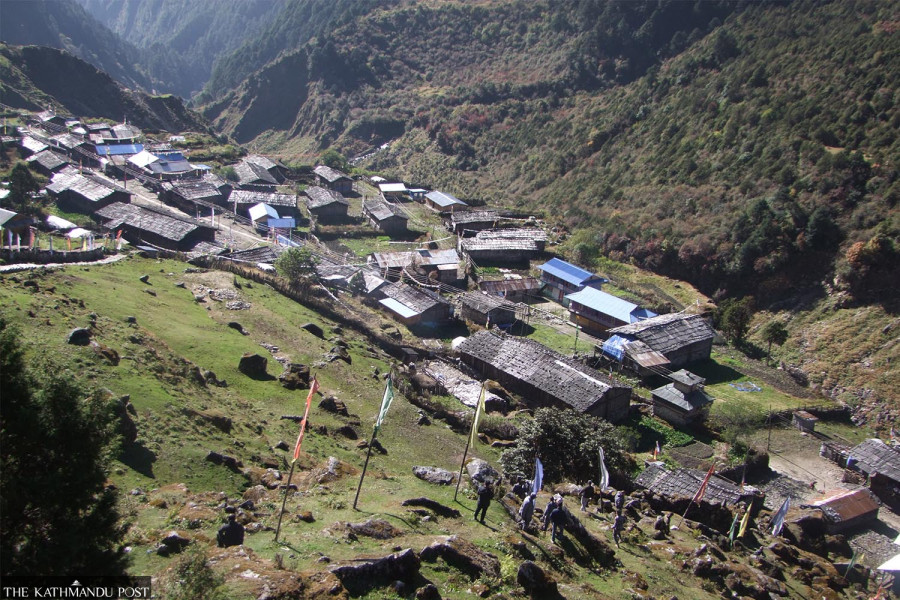
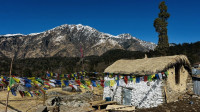
In Taplejung’s highest settlements, villagers have just two snow-free months to build trails, bridges and drainage systems before winter brings life to a halt. Olangchunggola is a remote settlement which lies in ward 7 of Phaktalung Rural Municipality. The geopolitical and administrative machinery of these remote areas operates on a highly compressed timeline. Ananda Gautam/TKP
For the first time in over two months, Nupu Sherpa of Olangchunggola in Taplejung finally found a rare moment of leisure on Saturday to chat with his neighbours. His days typically begin before dawn, feeding yaks and chauris and attending to household chores before spending the rest of the day building local drainage systems and footpaths. This fiscal year, his village received a modest budget allocation of Rs900,000 from the local ward office to complete these essential infrastructure projects.
"The project works in our village are finally nearing completion," said Nupu. "The consumer committee members will now head down to the rural municipality headquarters to submit the bills and invoices to collect the final payments. Once the hard-earned wages are distributed among us, we can finally breathe a sigh of relief." While the standard daily wage for manual labour in these remote terrains hovers around Rs1,000, Nupu noted that executing local budget-driven projects to strict engineering specifications leaves very little financial surplus for the workers.
Olangchunggola is a remote settlement which lies in ward 7 of Phaktalung Rural Municipality. The geopolitical and administrative machinery of these remote areas operates on a highly compressed timeline. Chheten Sherpa, the ward 7 chief, and other elected representatives have already descended to Tapethok, the administrative centre of the rural municipality. They made the arduous journey to secure budget assurances for the upcoming fiscal year of 2026-27. Before their departure, the ward officials held extensive community consultations to decide how to allocate future resources.
Nearby, in Papung Tokpegola in ward 5 of the neighbouring Mikwakhola Rural Municipality, the installation of a religious statue at Sodo Pokhari, situated at an altitude of 3,100 metres, was recently completed. The project was jointly funded by the local government and financial contributions from Nepali diaspora communities living in the United States. According to Topla Sherpa, a ward member, this initiative represents the largest development project undertaken in the upper settlement this year.
"Every single one of the thirteen families living in Tokpegola participated in the construction," said Topla. "We also received vital manual assistance from the residents of the lower Papung settlement, who walked a full day just to help us complete this project."
In settlements rising above 3,000 metres, this period of the year brings human activity for development. These high-altitude settlements remain completely deserted throughout the freezing winter months, with residents returning only after April. Consequently, all development and construction work must be squeezed into this narrow seasonal window.
Taplejung features several settlements located at 3,100 metres, including Olangchunggola, Ghunsa, Phale, and Tokpegola, while Yangma and Khambachen sit at a staggering 4,200 metres, marking the highest human habitations in the region.
During the winter, these high-altitude villages turn into ghost towns as residents migrate to lower places to escape the biting cold. The upward migration begins after February, and the locals reside permanently in their mountain homes from April through August. Local schools and government offices operate regularly only during these summer and monsoon months.
"No matter how heavily it rains, we have no choice but to work during this season," Nupu explained. "In winter, heavy snowfall completely covers our project sites, making any physical labour impossible. During the monsoon, despite the persistent downpours, the ground remains clear enough for us to work."
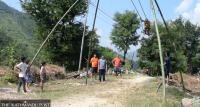
To execute development plans, villagers form consumer groups. When projects require working far from the settlement, they pack tents, cooking utensils, rice, and vegetables to set up temporary camps.
"Wherever the project site is, we must camp there and work from dawn until dusk," said Chheten Sherpa, adding, "Villagers routinely put in 13 to 14 hours of intense manual labour every single day. If we do not maintain this grueling pace, it is absolutely impossible to complete any infrastructure project within our short working window."
According to former ward chair Chheten Bhote, the division of labour is meticulously planned beforehand, with specific individuals assigned to cooking, fetching tea, and transporting heavy building materials. Because of the limited time available, families leave their children and livestock under the supervision of just a few designated caretakers so that every able-bodied adult can join the construction work. The development landscape in these rugged areas consists primarily of building basic footpaths and suspension bridges.
These high-altitude border regions suffer from systematic isolation, particularly aggravated by the prolonged closure of the Tiptala Pass trade route with Tibet. China closed its border points due to the Covid pandemic in 2020 and they remained closed for about four years, disrupting the lives and livelihoods of people in the northern settlements along the Tibetan border.
"The area is big geographically. A project completed in one location this year must be replicated in an entirely different place next year. Our budgets are minimal, and the funds are quickly exhausted on basic repairs,” said Topla, a ward member from Mikwakhola-5. “Life for Himalayan residents follows a completely different rhythm; if we choose to remain in the village from November to February, we must sit completely idle with our hands folded."
The arrival of winter snow in November brings all agricultural and outdoor activity to a halt. Local residents speak with growing concern about changing weather patterns, saying heavy snowfall has recently begun occurring as late as April and May. Preparing for winter requires immense logistical planning, including stockpiling food, winter clothing, and collecting dried fodder like buckwheat and barley stalks, or wild grasses, to sustain their yaks and chauris.
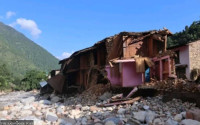
The monsoon brings another wave of hardship as transport links frequently break down. Swollen rivers wash away vital bridges and wipe out walking trails. Ward chair Chheten recalled numerous occasions when the absence of proper bridges forced him to take a long detour through Ghunsa and Papung to reach the district headquarters of Phungling, turning what should have been a one-day journey into a grueling five-day trek.
Furthermore, the extreme climate brings unique ecological challenges. During heavy snow or prolonged rains, wild animals from the upper conservation areas migrate downstream in search of food. They are often highly aggressive and pose a severe threat to villagers and livestock.
While the federal government actively distributes firewood and blankets to communities in the Tarai plains during cold waves, residents of the high-altitude border settlements say the state remains oblivious to the hardships they endure through their long winter and monsoon seasons. Basic medical care is nonexistent. If a child develops pneumonia in the winter or contracts a waterborne disease during the monsoon, finding a doctor is impossible.
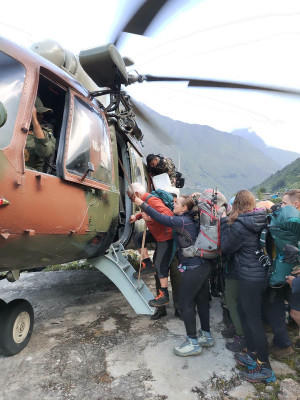
In medical emergencies, the community has no choice but to raise money for costly chartered helicopter evacuations. Although police personnel remain stationed year-round in Olangchunggola, Ghunsa, and Papung, the complete absence of healthcare infrastructure means these border communities are left to fend for themselves.




 22.41°C Kathmandu