Banished after release, jailed Bhutanese can’t return even to their former refugee camp
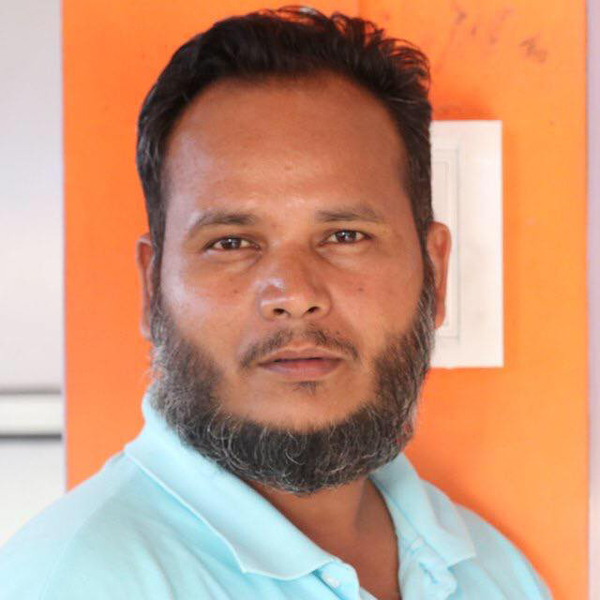
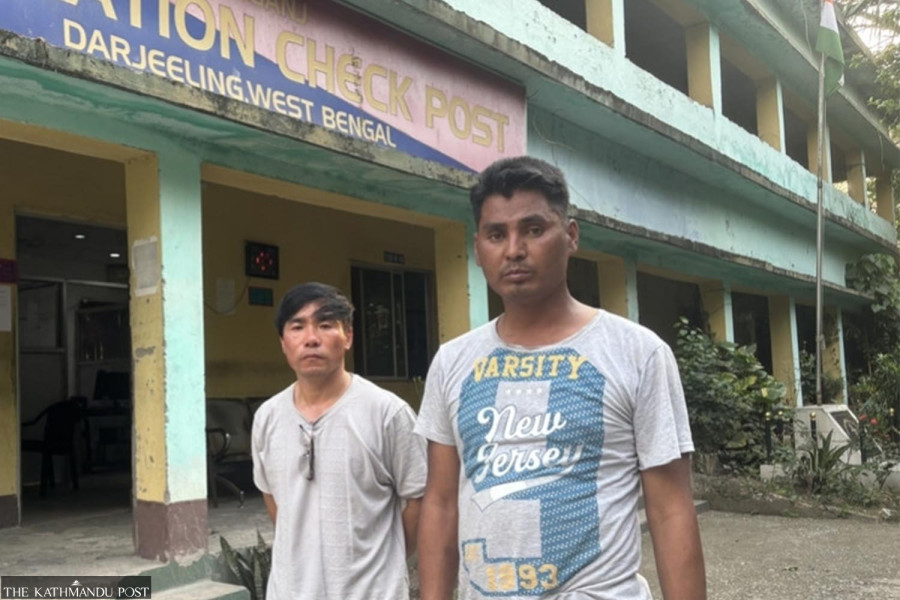
Former Bhutanese political prisoners Chatur Man Tamang and Hasta Bahadur Rai are unable to enter Nepal after spending more than 18 years in Bhutan jail because they were not given release documents.Chatur Man Tamang (left) and Hasta Bahadur Rai, before heading for Bhutan earlier this month. Post file photo
After spending more than 18 years in a Bhutanese prison, Chatur Man Tamang and Hasta Bahadur Rai thought they were finally heading home. For the two former political prisoners, home meant the refugee camps in eastern Nepal where they grew up after being expelled from Bhutan as children in the early 1990s.
Instead, they now find themselves stranded at the India-Nepal border, with no country willing to accept them.
“If they had proof of release from the Bhutanese prison, it would be easier for us to take them in,” said Sanchahang Subba, secretary at the Beldangi refugee camp. “Unless we have documentary proof, we cannot allow them here.”
Tamang, 42, and Rai, 44, were released from Bhutan’s Chamgang Central Jail on June 1 after serving 18 years and three months in prison. Both were among Nepali-speaking Bhutanese refugees who grew up in camps in Jhapa after their families were expelled from Bhutan around 1992.
According to the two men, Bhutanese security personnel escorted them to Jaigaon, a town on the India-Bhutan border, after their release. Each was allowed to take a television set and a few bags and was given 30,000 Indian rupees as travel expenses.
Before leaving, they said, security personnel warned them not to return.
“They told us never to come back to Bhutan,” Rai recalled. “They said that if we returned, even by mistake, we would be sent back to prison.”
Although they were released from jail, they were not provided with official release certificates. This has become the main obstacle preventing them from entering Nepal.
On June 2, the two travelled to Panitanki on the Nepal-India border, hoping to enter Nepal through Kakarbhitta and return to the Beldangi refugee camp.
Their journey ended there.
Border personnel refused to allow them to cross because they lacked identification documents. Apart from a medical prescription belonging to Tamang, who has diabetes, they had no papers establishing their identities.
After spending the day at the border and approaching immigration authorities for assistance, they were forced to return to Jaigaon.
“We had to turn back after the camp secretary insisted that we show our prison release papers,” Rai said.
The two men are now staying at the home of a Nepali-speaking labourer in Jaigaon who offered them shelter after hearing their story during an auto-rickshaw ride.
“I took them in out of sympathy as fellow Nepalis,” the labourer told the Post by phone. “But I could face problems if authorities find out that I am sheltering them.”
He urged the authorities and humanitarian agencies to facilitate their return to Nepal as soon as possible.
At one point, Tamang considered returning to Bhutan to obtain the necessary documents, but fear held him back.
“I thought about going back and asking for the papers, but I am terrified,” he said. “They clearly told us never to return.”
Since being denied entry into Nepal, the two have been trying to find out how they might obtain proof of their release. Neither knows whom to contact or which authority could help.
“We are afraid we could be arrested again if we go back,” Rai said. “We don't know who to ask or where to go.”
According to human rights activist Gopal Krishna Siwakoti, records at Nepal’s refugee camps confirm the identities of both men. Efforts are now underway, in coordination with the United Nations High Commissioner for Refugees (UNHCR) and the International Committee of the Red Cross (ICRC), to facilitate their return to the camps.
“Once these two agencies verify their identities, they will have the documents to reach the refugee camps,” Siwakoti said.
Tamang and Rai were children when their families were expelled from Bhutan and entered Nepal in the early 1990s. They spent their childhood in refugee camps in Jhapa and later became involved in campaigns demanding the repatriation of Bhutanese refugees.
Around 2008, determined to return to what they regarded as their ancestral homeland, the two crossed into Bhutan. Their attempt ended shortly after they entered the country when Bhutanese security personnel arrested them near Samjong.
They were subsequently sent to Chamgang Central Jail, where they spent the next 18 years and three months.
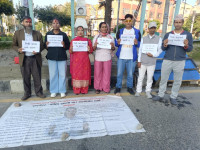
While they were behind bars, the Bhutanese refugee movement continued in Nepal. Refugees repeatedly staged protests demanding the right to return to Bhutan. Sit-ins and demonstrations were organised at the Mechi bridge, but India never opened a route that would allow refugees to travel back to Bhutan.
Instead, international efforts shifted towards third-country resettlement. Over the years, most Bhutanese refugees left the camps and resettled in countries such as the United States, Australia, Canada and Norway.
Today, only a few thousand refugees remain in the camps. Many of them are the elderly or infirm.
With no family remaining in the camps and no home elsewhere, returning to the refugee settlements where they grew up was their only plan after release.
Cross-border movement has become stricter since the Covid-19 pandemic, with authorities requiring identity verification and supporting documents at border points. The tightened measures have directly affected the two former prisoners.
“If border controls were not this strict, we would have quietly entered the camp by now,” Tamang said. “It wasn't like this before. Crossing the border has become very difficult.”
The two men possess no documents recognised by any country. They have no Bhutanese identification, no Nepali citizenship certificates, nor Indian identity cards.
All they have is a medical prescription from a Bhutanese hospital, a few personal belongings and memories of more than 18 years behind bars.
“We wanted to step into Nepal and finally feel safe,” Rai said. “But we could not even get across the border.”
For now, the two men remain stranded, uncertain where they belong and unsure which country, if any, will accept them.




 23.98°C Kathmandu