When ministers speak the language of intimidation, rule of law comes under pressure
Critics fear ministers’ conduct could encourage similar excesses among officials tasked with serving the public. A grab from a video shows Minister Lamsal making controversial remarks.
When Physical Infrastructure Minister Sunil Lamsal went to inspect the Nagdhunga-Mugling road project on Sunday, his primary focus appeared less on administrative bottlenecks and more on physical intimidation. Flanked by Dhading’s Chief District Officer Laxmi Pandey Gautam and senior security officers, Lamsal issued a chilling directive targeting a sub-contractor responsible for relocating electricity poles along the highway.
"Find out where this electricity pole relocation contractor is on this earth, bring him here," said Lamsal, his outburst captured on a video that quickly went viral across social media networks. "If he refuses to work, break his legs. I don’t care about the consequences."
While the aggressive stance found applause among some people frustrated by perennial infrastructure delays, it triggered intense condemnation from legal experts, rights defenders, and business communities. The incident is not an isolated outburst but forms part of an emerging, worrying pattern of behaviour within the current administration. Observers note that Cabinet ministers, emboldened by populist rhetoric, are consistently flouting established legal guidelines, weaponising state machinery, and using retaliatory language that undermines democratic institutions.
Former Inspector General of Nepal Police Chandra Kuber Khapung raised immediate concerns online, asking publicly: "Is this order issued by the minister truly in accordance with our existing laws?"
This is by no means the first controversial remark by high-ranking officials in the Balendra Shah-led administration.
The main opposition Nepali Congress also reacted sharply. Party Vice-President Bishwa Prakash Sharma urged Prime Minister Shah to rein in his Cabinet colleagues. "Are we heading towards a lawless society? If we are not, then please put a leash on the statements of your ministers, prime minister," said Sharma. He linked Lamsal's remarks to other recent abuses of authority, such as government staffers pushing a three-wheeler down a cliff in Dhangadhi and police destroying smartphones seized from students during SEE examinations in Siraha.
Lamsal's highhandedness extends beyond words. Following his direct orders on May 11, the Kathmandu Valley Crime Investigation Office in Teku detained Ramesh Sharma, chairman of Sharma & Company, alongside Pitambar Badu of Lama Construction, bringing them directly to the ministry. The deployment of a specialised unit meant for serious crimes to handle contractual disputes sent shockwaves through the private sector.
"The police force is not an executive tool to settle construction disputes," said Hemanta Malla Thakuri, a retired deputy inspector general of Nepal Police. "If a contractor fails to deliver, the Department of Roads or the respective line agency must initiate actions. Deploying criminal investigators to threaten businesspeople is a misuse of state authority."
The Federation of Contractors' Associations of Nepal said Lamsal's behaviour has created an atmosphere of terror within the private sector. "The minister used violent words that cannot be found in any public procurement handbook or standard dictionary," said Shiva Hari Ghimire, general secretary of the federation.
"The government must first understand the structural reasons behind project delays. If a contractor fails to perform, the Public Procurement Act explicitly provides the authority to terminate the contract and reassign the work. Bypassing legal mechanisms to issue violent threats is inhumane and sends an alarming message to investors,” said Ghimire.
Laxmi Pandey Gautam, chief district officer of Dhading, said everyone shares the minister’s concern that work should not be delayed.
“It is the minister’s wish, as well as ours, that there be no delay in work. There is nothing more to it than that,” she told Kantipur. Multiple attempts to contact Minister Lamsal went unanswered.
This culture of intimidation flows from the top. Before assuming office, Shah set the tone during a Rastriya Swantantra Party (RSP) election rally in Dhangadhi. "A road that should take two years is not finished even after twenty. We want it completed in eighteen months. That is our agenda. Whether we have to tie contractors to trees, force them to lie down on the dirt roads, or throw them into cages, the work must finish," he declared.
Although RSP Chairman Rabi Lamichhane later attempted to soften the rhetoric during a rally in Itahari, stating that his party intends to bind errant contractors with the law rather than physical ropes, the trend has persisted.
Yet, even after the RSP led the government, the stream of controversial remarks from government ministers has shown no signs of abating.
Recently, Finance Minister Swarnim Wagle used the floor of Parliament to threaten opposition lawmakers who questioned changes in tax rates. Instead of addressing policy queries, Wagle warned that he would expose the past personal scandals of his critics. "I hope the lawmakers pointing fingers at me possess the moral height to withstand scrutiny. We are not ignorant of your past deeds. Those scandals will also be made public soon," warned Wagle.
While the prime minister’s initial remarks were dismissed as poll campaign hyperbole, recent actions show a systemic disregard for due process. On June 4, government secretary Krishna Hari Pushkar was detained from his residence and interrogated for four hours by the Kathmandu Valley Crime Investigation Office, allegedly for sending text message to the prime minister seeking personal favour.
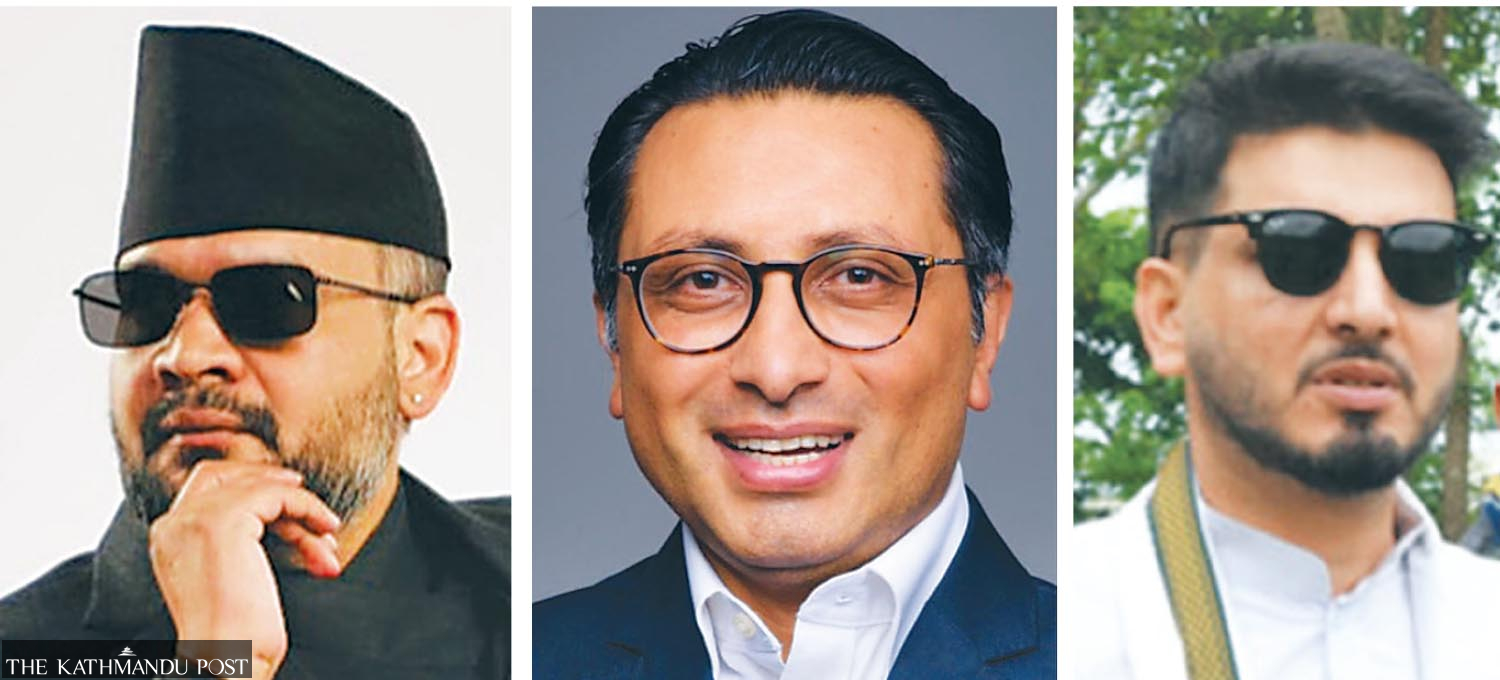
This combo photo shows (from left to right) Prime Minister Balendra Shah, Finance Minister Swarnim Wagle and Infrastructure Minister Sunil Lamsal. Post file photo
Shah later mocked the incident on social media. "I also want to become an ambassador. If anyone has the prime minister's number, please share it,” he wrote on his social media account.
Legal experts argue that such behaviour erodes the core of the rule of law. "An official who issues such degrading and illegal threats from a public position should not only be removed from office but also prosecuted in a democracy," said senior advocate Dinesh Tripathi. "When governance mimics gangsterism, public trust in the state completely evaporates."
Mohna Ansari, a former member of the National Human Rights Commission, warned that such language filters down to the rank and file, encouraging police officers and lower-level bureaucrats to abuse their authority. "This is not the language of democratic leaders; it is the language of hoodlums. If ministers normalise violence and intimidation, society will emulate them," said Ansari.
The opposition has challenged the government's highhanded tactics. Responding to Wagle's threats in parliament, CPN-UML lawmaker and former minister Padma Aryal demanded that the government open investigations immediately instead of using them as blackmail. "The government holds the files. If you have evidence of corruption against the opposition, open them today. We will not run away from any probe," asserted Aryal.
International and domestic precedents show that such behaviour often carries severe political costs. In the United Kingdom, Gavin Williamson resigned in 2022 following an investigation into bullying and threatening messages sent to colleagues. In India, the Election Commission banned Union Minister Maneka Gandhi from campaigning for forty-eight hours in 2019 after she threatened Muslim voters, while Bharatiya Janata Party MP Pragya Thakur was removed from a defence advisory panel for public remarks glorifying violence.
Nepal has its own history of ministerial accountability. In July 2018, then Law Minister Sher Bahadur Tamang resigned following public outrage over insensitive remarks regarding Nepali female medical students in Bangladesh. Similarly, in 2022, then Physical Infrastructure Minister Renu Kumari Yadav was forced to issue a public apology after the National Human Rights Commission cautioned her for publicly threatening to repeat political violence.
Former physical infrastructure secretary Keshav Kumar Sharma offered a more moderate view, suggesting that Lamsal's words might have been metaphorical. "A minister's words do not instantly result in broken bones. Sometimes aggressive language is used out of frustration to push slow projects forward. However, it is always better to summon the parties to the ministry for a formal review rather than issuing public threats," he said.




 14.81°C Kathmandu