Travellers and transport operators are facing growing difficulties on major road links connecting Ilam, Panchthar and Taplejung as incomplete bridges and repeatedly damaged diversions continue to disrupt movement.
Several bridge projects along the Mechi Highway, the Mid-Hill Highway and the Tamor Corridor remain unfinished, while temporary diversions built to maintain connectivity are frequently washed away by floods or damaged by landslides.
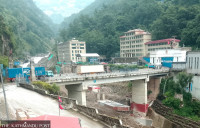
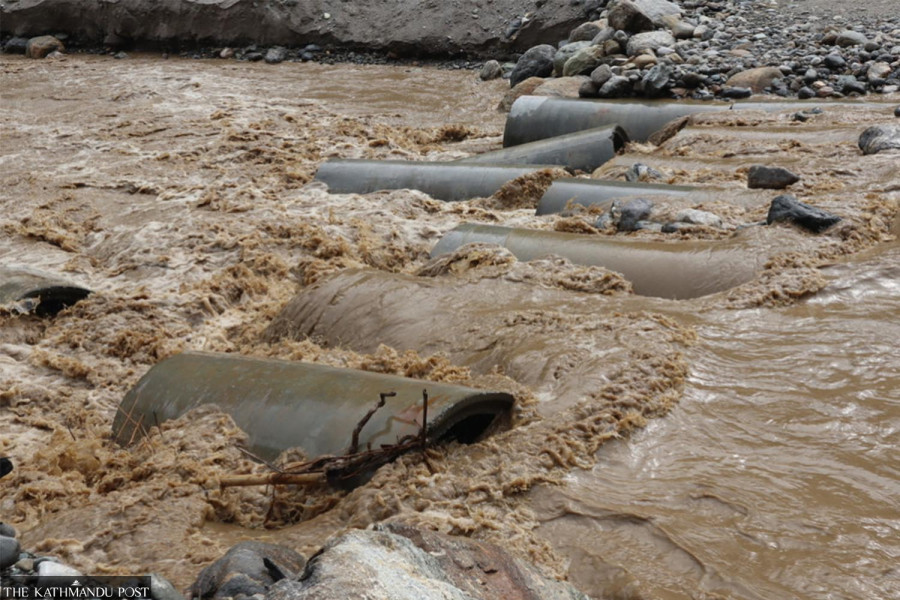
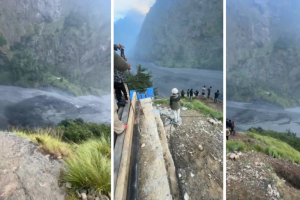
The Mai river-Rajduwali section of the Mechi Highway, which connects Charali in Jhapa with Ilam, Panchthar and Taplejung, has become particularly vulnerable. Floods in the Mai river repeatedly wash away diversions, while debris at Rajduwali often leaves vehicles stranded for hours.
Transport services and freight vehicles are currently operating through a temporary track built at the site of a landslide that occurred last year.
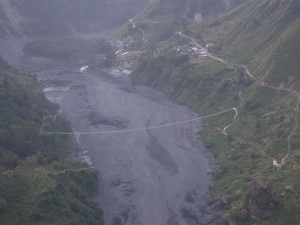
To provide an alternative route, work began on installing Bailey bridges over the Puwa and Jogmai rivers along the Kechana-Kanchenjunga Road. However, construction has yet to be completed.
Laxmi Tamang, who drives a jeep daily between Phidim and Birtamode, said repeated flood damage to temporary structures and diversions has caused significant hardship for passengers and transport businesses.
“A journey between Ilam and Birtamode that normally takes six hours now takes up to ten hours,” he said. “Rain can start at any moment and trigger flooding, forcing vehicles carrying passengers to remain stranded on the road for hours.”
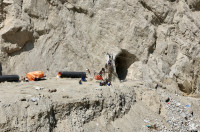
According to Pawan Bhattarai, chief of the Road Division Office in Ilam, preliminary studies suggest that water seepage from the Puwa river tunnel has contributed to continuous landslides in the Rajduwali area. He said the road section has become more hazardous after landslides began occurring regularly two years ago.
Bhattarai said the division has been forced to concentrate much of its manpower and equipment in the area because of the recurring landslides.
Although two alternative roads exist around Rajduwali, the lack of permanent bridges continues to cause problems. A Bailey bridge is being built over the Puwa river at a cost of around Rs25 million, and another over the Jogmai river for about Rs32 million. Preparatory work is underway at both sites.
The bridges are to be installed with technical support from the Indian government, and an Indian technical team is expected to arrive for the work.
“If rainfall does not create further obstacles, our target is to bring them into operation by mid-June,” Bhattarai said. However, he expressed concern that slow progress could delay completion before the monsoon becomes fully active.
A separate Bailey bridge is also being planned at Belase in the Mai river under the Kechana-Kanchenjunga Road project. The permanent bridge, estimated to cost Rs250 million under a multi-year plan, has been delayed due to insufficient budget allocation in the current fiscal year, prompting authorities to pursue a temporary solution.
Diversions at Belase have been repeatedly washed away by floods. Since mid-April, floodwaters have swept away the diversion three times. A diversion rebuilt on May 4 was washed away the same night, disrupting traffic, while flooding again blocked the road for several hours on May 23.
Risks have also increased along the Tamor Corridor, which connects Panchthar and Taplejung with Dhankuta through Dharan and Barahakshetra in Sunsari, as the monsoon season approaches.
Bridges over the Nawa and Nuwar Hova rivers along the corridor have yet to be built. Transport services are regularly suspended whenever water levels rise, forcing passengers and freight operators to wait for hours during periods of flash flooding.
Conditions are equally concerning on the Tharpu-Chyangthapu section of the Mid-Hill Highway in Panchthar. The absence of bridges at sites including the Dobhane Oyam river and the Phalam river, along with ongoing road construction, has made travel increasingly difficult.
The Tharpu-Chewabhanjyang section of the highway has become particularly hazardous due to delays by the contractor. Even moderate rainfall frequently disrupts transport and freight services, while flood events worsen the situation considerably.




 20.1°C Kathmandu