Nepal’s Supreme Court has long followed an informal but deeply rooted practice in which the senior-most justice is eventually elevated to the position of chief justice. Though not written in law, the convention has guided judicial succession for decades and is widely seen as a stabilising norm in the institution.
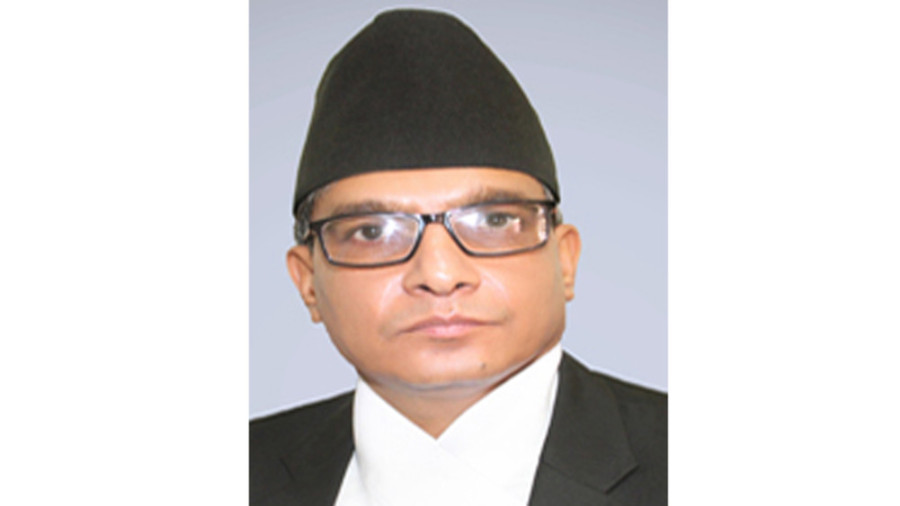
This time, however, the Constitutional Council, led by Prime Minister Balendra Shah, has set that practice aside. It has recommended Manoj Kumar Sharma, who is fourth in the seniority order, for appointment as chief justice, bypassing senior justices Sapana Pradhan Malla, Kumar Regmi and Hari Prasad Phuyal.
The decision has sparked discussion within legal circles, among practising lawyers and in political forums. The key question being raised is what factors led the council to select Sharma over three more senior justices.
The debate has also focused on Sharma’s professional profile. He is not widely known for public legal commentary or academic writing, and has not been prominently associated with landmark constitutional debates. Despite holding a doctorate, his public intellectual presence within judicial discourse has remained limited, adding to questions around his selection.
Before assuming office, Sharma must be approved by the Parliamentary Hearing Committee and then appointed by the President as the 33rd chief justice of Nepal. With the current political configuration of the committee, where Prime Minister Shah’s Rastriya Swatantra Party holds significant influence, observers say his approval is unlikely to face major procedural hurdles.
If confirmed, Sharma, now 56, is expected to serve a full six-year term, longer than many recent chief justices who retired early after reaching the constitutional age limit of 65. He is set to retire in May 2032 at the age of 62.
Born in June 1970 in Birgunj, Parsa, Sharma holds a Bachelor of Law from Nepal Law Campus, a Master’s degree in Commercial and Constitutional Law from Pune University in India, and a PhD in Labour Law from Tribhuvan University.
He began his legal career in 1995 as an advocate. Early in his practice, he worked at Pioneer Law Firm before establishing his own practice. He later co-founded the ShreeMaRa (Sreemara) Law Firm with Ramesh Badal, who later served as Attorney General under the KP Sharma Oli government, and lawyer Shreekanta Baral. The firm’s name was formed from the initials of the three partners.
Alongside litigation work, Sharma was involved in commercial legal consultancy and later engaged in teaching. However, his career remained largely focused on advisory work rather than regular courtroom advocacy before the Supreme Court.
Sharma is the nephew of former Chief Justice Damodar Prasad Sharma. During Damodar Sharma’s tenure as chief justice and chair of the Judicial Council, Manoj Sharma was appointed as an Additional Judge of the then Appellate Court in Butwal in June 2013.
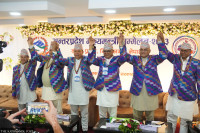
After his appointment, he was part of a group of judges who visited the CPN-UML headquarters in Balkhu to thank then party chair Jhala Nath Khanal, an act widely viewed at the time as reflecting political proximity in judicial appointments.
Later, Manoj Sharma was transferred to the Patan Appellate Court. However, following the Constitution of Nepal 2015, which removed the provision for additional judges, he was relieved of his post.
While some judges in similar positions were later reinstated, Sharma was not initially brought back to the bench. He returned to legal practice for several years, focusing mainly on in-house advisory work in law firms rather than courtroom litigation.
A turning point in his judicial career came in April 2019, when then-chief justice Cholendra Shumsher Rana recommended him for appointment as a Supreme Court justice. The recommendation immediately drew scrutiny over whether Sharma met constitutional eligibility requirements, particularly continuous legal practice or prior High Court service.
A writ petition was filed challenging the appointment, arguing that Sharma lacked sufficient judicial or litigation experience and did not have a strong public profile in the courtroom. The then chief justice defended the decision, describing Sharma as a “highly qualified legal professional with a PhD brought into the Supreme Court to strengthen its capacity”.
The petition was later dismissed by a single bench of Justice Tej Bahadur KC.
Once appointed to the Supreme Court, Sharma was involved in several politically sensitive and legally significant cases. He was part of the bench that issued a decision granting a major tax exemption in the Ncell tax dispute review case, a ruling that drew public attention and debate.
Sharma also, along with Justice Sapana Pradhan Malla, was on the bench that overturned lower court detention orders and ordered the release of driver Prithvi Malla in a case involving a fatal drink-driving incident.
In another major ruling, Sharma was part of the Constitutional Bench majority that upheld the appointment of 52 constitutional officials made by the KP Sharma Oli-led government without parliamentary hearings.
More recently, when a petition challenging the qualifications of Attorney General Narayan Kandel was not registered by the Supreme Court administration, Sharma upheld the administrative decision from a single bench, declining to allow the petition to proceed.
Following his recommendation as chief justice, government spokesperson and Education Minister Sasmit Pokharel said the decision was based primarily on “performance indicators”, particularly case disposal rates. However, within judicial circles, Sharma is not widely recognised as a judge with landmark jurisprudential contributions.
The recommendation has already prompted reactions inside the judiciary and beyond. Supreme Court justices held informal discussions following the decision. In the Constitutional Council meeting on Thursday, National Assembly chair Narayan Dahal and opposition leader Bhishma Raj Angdembe recorded their dissent to Sharma’s nomination.
On Friday, three writ petitions were submitted at the Supreme Court challenging the recommendation, but the court administration declined to register them for hearing. The Nepal Bar Association said the decision could have “long-term implications for the independence and credibility of the judiciary”.
Former prime ministers Sushila Karki and Baburam Bhattarai, and Nepali Congress President Gagan Thapa, have also criticised the recommendation, questioning the departure from seniority and transparency in judicial appointments. Former attorney general Ramesh Badal, once Sharma’s law firm partner, said recent decisions of the Constitutional Council reflect a broader effort to weaken institutional checks and balances.
Sharma’s professional associations have also come under renewed public scrutiny due to past institutional ties to former chief justice Damodar Prasad Sharma and former chief justice Rana, both of whom have faced allegations of judicial irregularities, though none of those allegations has been legally established against Sharma himself.
Rana, responding to the recommendation, said the Constitutional Council must have found Sharma suitable for the post and declined to comment further.
As Sharma moves towards likely confirmation, he is expected to face immediate institutional challenges. The Supreme Court is currently under pressure over questions of credibility, political influence in appointments, internal divisions and declining public trust.
His tenure is likely to be assessed not only on administrative performance but also on whether he can restore confidence in a judiciary facing sustained scrutiny over transparency, independence and internal power dynamics.




 14.5°C Kathmandu