Monkey attacks drive Udayapur farmers out of villages
Despite repeated discussions by local governments, an effective solution for monkey control has yet to be found. Local residents say that monkeys have started entering settlements due to the depletion of forests and the lack of sufficient food in the wild.
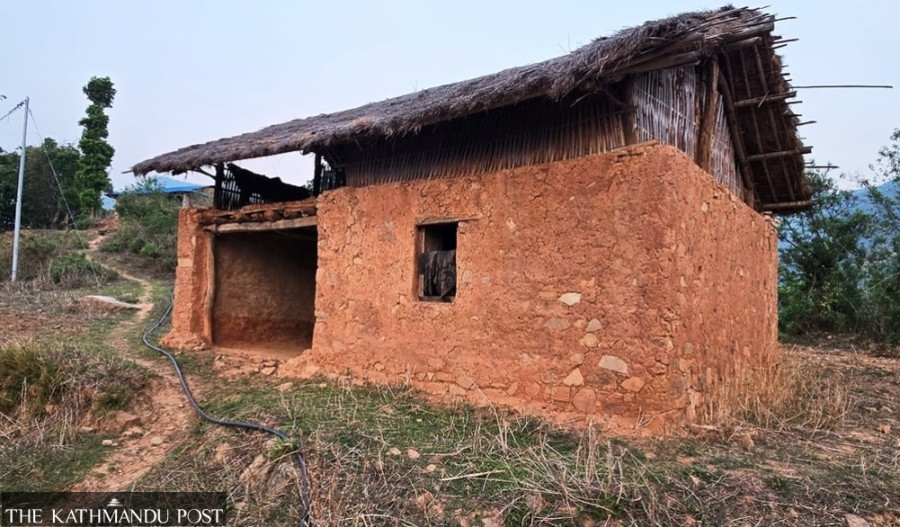
Chakra Bahadur Magrati of Bhadaure, Tapli Rural Municipality-5, in the remote hilly region of Udayapur, has been forced to abandon the fields he spent a lifetime tilling, along with his ancestral home and village. He was left with no choice after monkeys began raiding his annual harvests of paddy, maize, millet, fruits and vegetables every year. Despite trying various deterrents, his crops could not be saved, leading the Magrati family to migrate to Kirtipur in Kathmandu.
He currently earns a living through daily wage labour. “Farming was our life, but the monkeys never let us gather the harvest,” Magrati said, expressing his distress. “When months of hard work are wiped out in an instant, there is no alternative but to leave the village.”
Magrati is not alone. Numerous families from Bhadaure and surrounding hamlets, including those of Ishwor Nepali, Krishna Magrati, Sharada Bhattarai and Nar Bahadur Karki, have been displaced due to the monkey menace. Dinesh Khilinge of Madale in Tapli-5 shares a similar plight.
“We could never bring the maize grown in the fields into the house,” he said. “It is impossible to guard the crops all day; you never know when they will arrive and destroy everything. Eventually, I had to leave the fields barren and migrate.”
In response to the farmers’ desperation, Tapli Rural Municipality allocated a budget of Rs800,000 in the fiscal year 2025-26 to purchase guns to scare monkeys. A gun was given to each of the 42 area development committees. According to Dhungaraj Bishwakarma, chairperson of the rural municipality, the monkeys initially fled at the sound of blank firing.
“At first, they would run as soon as they heard the noise,” he said. “Now, they have stopped caring even when the guns are fired. Since it is legally prohibited to kill them, other control measures have also proven ineffective.”
Uddhav Khatri, a farmer from Gurans in Katari Municipality-2, is worried as monkeys have begun destroying pea-sized mangoes directly on the trees. He said his hard work goes to waste as the monkeys ruin the produce from the moment the trees begin to blossom.
According to local residents, monkeys have started entering settlements due to the depletion of forests and the lack of sufficient food in the wild. Complaints are rising that they are now not only targeting fields but also entering houses and causing havoc. Katak Bahadur Magar of Dhungre in Udayapurgadhi Rural Municipality-4 said, “We keep watch during the day, but you never know when the troop will arrive and destroy everything.” Residents say monkeys are destroying vegetables and fruits in the kitchen garden and even items kept on house balconies.
Balraj Rai of Tamlichha, Limchungbung Rural Municipality-2, said the problem has become more complex due to a shortage of able-bodied men in villages.
“Young people have gone abroad or to cities in search of employment,” he said. “Only the elderly and children remain in the villages. As fields are left barren, the monkeys are entering the villages even more.”
He added that the monkeys’ behaviour has become more aggressive than before. “Previously, they would run away when chased; now they actually try to pounce on us,” he said.
Despite repeated discussions by local governments, an effective solution for monkey control has yet to be found. Rajesh Chandra Shrestha, mayor of Katari Municipality, said the problem is not limited to Udayapur.
“Farmers across the country are suffering from the monkey menace,” he said. “This is not a situation that local councils alone can solve. The federal government needs to formulate a clear policy and implement a long-term solution.”
Experts say the increasing abandonment of cultivable land in the hills, displacement of farmers and decline in agricultural output are not merely local issues but challenges linked to national food security.




 15.28°C Kathmandu