The Dhorpatan Hunting Reserve has launched its first-ever census of snow leopards, marking the first formal effort to estimate the population of the species in the high-altitude region.
Snow leopards are known to inhabit the reserve’s upper Himalayan terrain, but authorities said no systematic count had been conducted until now.
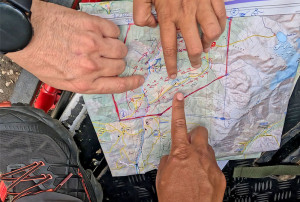
A technical team has been deployed, and camera traps have been installed along potential movement routes of the species, according to reserve information officer and ranger Sagar Subedi.
“The main habitat of snow leopards is around the snowline,” Subedi said. “We have installed cameras in six blocks of Dhorpatan, ranging from 3,200 metres to 5,000 metres above sea level.”
A total of 56 sensor-based cameras have been placed in cliffs and trails across Phagune, Barse, Dhustung, Seng, Sundaha and Togadi, areas identified as likely movement corridors for the species. The devices will remain in the field for around one and a half months as part of the census.
Snow leopards typically move along the snowline and take shelter in caves, often travelling through steep and snowy terrain. Subedi said the technical team has also been conducting field monitoring alongside camera installation.
“The census will be carried out based on camera-captured images, along with evidence such as footprints and droppings,” he said. “Fifteen staff members and experts are involved in this campaign.”
The team will revisit the sites every 15 days to replace camera batteries and ensure continuous monitoring.
A decade ago, the reserve carried out a red panda census using camera traps and field surveys. Although it did not produce detailed population data, officials estimated around 1,200 red pandas in the area.
Established in 1986, the government declared 1,325 square kilometres across Baglung, Myagdi and Rukum districts as a hunting reserve, where endangered species such as the red panda, snow leopard, pheasant and Himalayan bear are protected.
The Department of National Parks and Wildlife Conservation opens regulated hunting in the reserve through global tendering. In the current fiscal year 2025/26, 11 naur and eight jharal were hunted in the first season from mid-October to mid-November 2025, while 14 naur, 10 jharal and 13 wild boar were hunted in the second season from the second week of April to the fourth week of April 2026. The reserve collected Rs 417.79 million in revenue from hunting this year.




 20.77°C Kathmandu
.jpg)