For farmers in the south-eastern plains of Kailali, the monsoon once arrived less as a blessing than a threat. Paddy transplanted with sweat and hope in June would often be washed away overnight by floods in August and September. The swollen Mohana, Kandra, Kandha, and Patharaiya rivers routinely swallowed entire harvests, leaving households struggling to keep their kitchens running.
That pattern, however, is beginning to change.
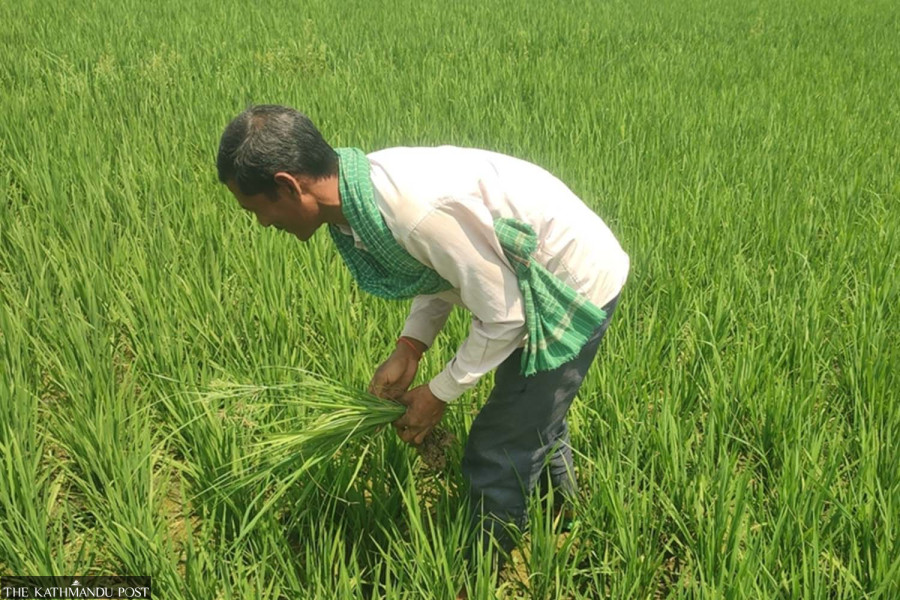
While farmers have not overcome floods, they have adapted to them. Across parts of Kailali, many have shifted their dependence to spring paddy (known as chaite dhan in Nepali), transplanted months earlier and harvested before peak monsoon flooding. The strategy is simple: harvest before the rivers rise.
Kailali remains one of Nepal’s most flood- and inundation-prone districts. Each year, floods displace thousands of families and damage crops. Unseasonal rainfall compounds the problem, often pushing communities into food insecurity. In response, farmers have begun transplanting paddy as early as March, adopting what agronomists describe as a form of climate adaptation.
The crop cycle begins with seedbeds prepared in late January. Within about 120 days, by early June, the paddy is ready for harvest. Farmers say yields are often higher than those of paddy transplanted during the monsoon.
The shift is most visible in Bhajani, Tikapur, Joshipur, and Kailari, areas historically hit hardest by floods. In Bhajani, wards 3 and 8 have even been designated as paddy zone areas due to the rapid expansion of spring paddy cultivation.
The transformation has altered local food systems. Farmers who once relied solely on wheat and purchased rice for consumption are now producing enough paddy to meet household needs and generate surplus for sale. The change has brought both economic relief and psychological security.
Punshi Lama, 50, from ward 8 of Bhajani Municipality, said spring paddy has helped her family avoid hunger. She has been cultivating the crop for the past four years. After setting aside enough for annual consumption, she sells the remainder. Last year alone, she earned Rs30,000 from paddy sales.
“Earlier, there was no practice of transplanting spring paddy. Monsoon crops would fail, and sometimes we had to go hungry,” Lama said. “Those who had money bought rice from the market. Those who didn’t suffer the most.”
Lama has lived with the threat of floods since the 1980s. She said flooding has intensified over time, causing greater damage to farms, homes and daily life.
Sitaram Dagoura, a farmer from ward 3 of Bhajani, recalls being ridiculed when he first began transplanting paddy during spring nearly two decades ago. He claims to be the first in the area to try the practice, starting with a local variety known as Munwa.
Dagoura said people initially dismissed him as irrational for transplanting paddy in March, insisting the crop was meant for June. He said some villagers even blocked irrigation to his field, forcing him to dig an underground channel to bring in water.
When the crop succeeded, scepticism turned into curiosity. Dagoura began distributing seeds to other farmers. Today, he cultivates paddy on about 8.5 bighas (5.75 hectares) of land and sells around 400 quintals last year.
Agriculture officials say the area under spring paddy cultivation in Kailali is expanding each year. Tek Bahadur Bista, information officer at the Agriculture Knowledge Centre in Kailali, said production and productivity are both rising.
“Yields can exceed expectations with improved seeds, modern technology and adequate fertiliser,” Bista said.
The provincial government has also prioritised the crop. Agriculture contributes around 33 percent to Sudurpaschim Province’s gross domestic product, according to fiscal year 2023-24 data. Under the “One local unit, two products” campaign in the 2025-26 budget, spring paddy has been included as a priority commodity, with an allocation of Rs704 million.
The expansion is being supported by provincial agencies, the Agriculture Knowledge Centre, local governments and the Prime Minister Agriculture Modernisation Project.
Dhiraj BK, a former chair of a paddy zone area in Bhajani, said the crop has made farmers in flood-prone areas more self-reliant. He cultivates paddy on more than two bighas (1.35 hectares) and has worked under the Prime Minister Agriculture Modernisation Project.
“Nepal could move towards self-sufficiency in rice if the government supports farmers with modern equipment, improved seeds and fair pricing,” he claimed.
However, Bista from the Agriculture Knowledge Centre offered a more cautious view. “Spring paddy is mostly grown in areas where monsoon paddy fails. It can reduce rice imports to some extent, but not significantly,” he said. “Imports can be reduced meaningfully only if we expand cultivation and produce two paddy crops annually.”
He also said that Nepal imports a significant quantity of rice, suggesting that domestic production should prioritise similar varieties.
Despite gains in production, farmers face persistent challenges.
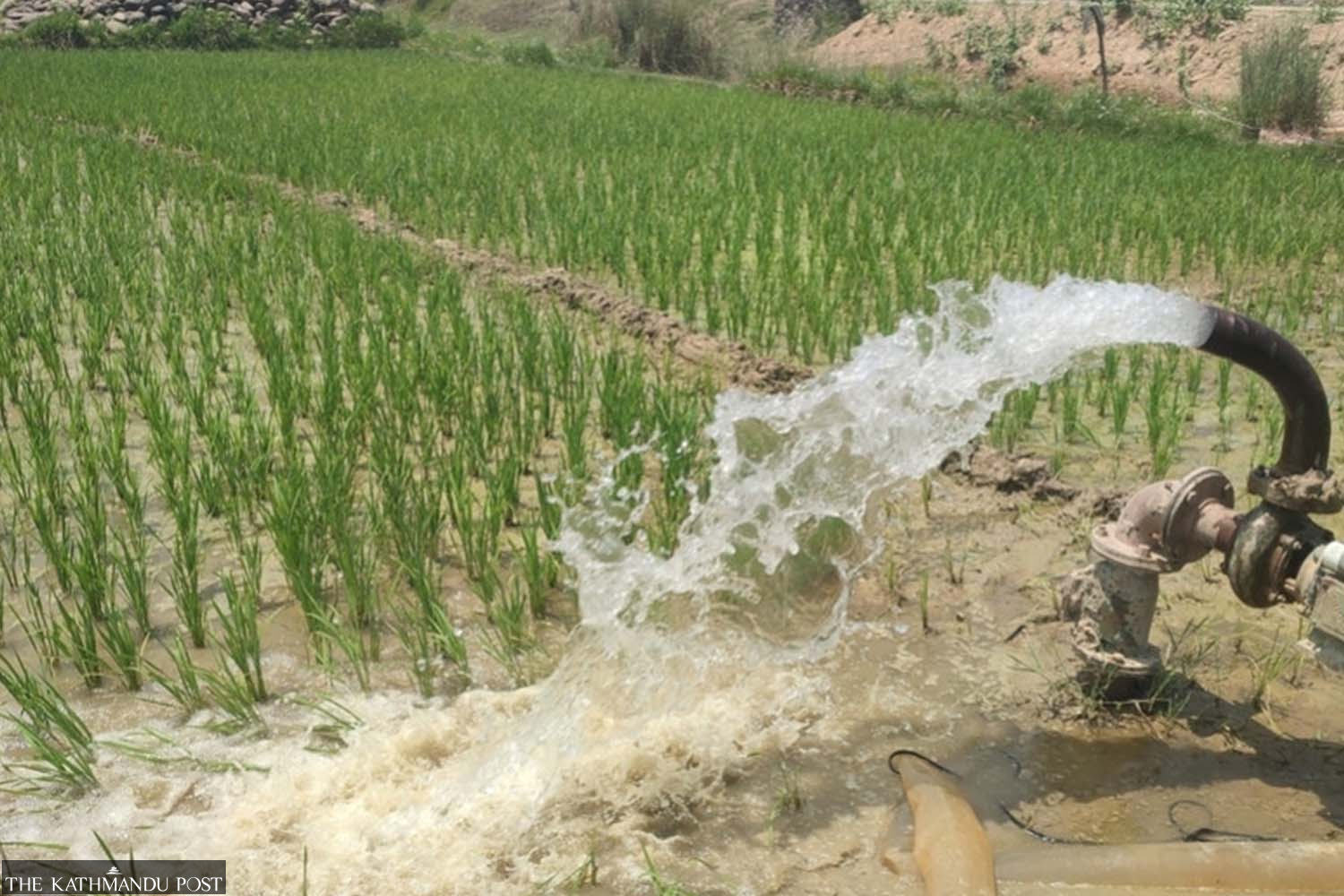
Irrigation remains inconsistent, and rising fuel costs have made land preparation expensive. Pest infestations require frequent pesticide use, adding to input costs. Farmers say subsidies provided by government agencies are insufficient.
Access to subsidies itself is restricted. Farmers must be part of registered groups or cooperatives to qualify, excluding many who cultivate independently. Even eligible farmers face lengthy bureaucratic procedures, requiring extensive documentation and incurring additional costs.
Pricing is another major concern. Although the government sets a minimum support price of Rs28 per kilogram, farmers say they are often forced to sell at Rs22 to Rs25 per kilogram, well below their cost of production, which they estimate at Rs35 to Rs36 per kilogram.
“Buyers dictate the price. If we don’t agree, they simply refuse to purchase,” said farmer Hira Lal Chaudhary. “We are forced to sell at a loss.”
Krishna Chaudhary, who has been cultivating paddy for 12 years, said she earned Rs400,000 from sales last year but remains uncertain about the future.
“If we don’t get a fair price this year, I will reduce the area under cultivation next year,” she said.
Post-harvest challenges add to the burden. The harvest period coincides with the onset of monsoon rains, increasing the risk of damage. Farmers say drying machines are essential but unaffordable.
Farmers are calling for up to 85 percent subsidy on equipment, arguing that the remaining cost could be managed individually or through cooperatives.
Seeds are another concern. Farmers report delays in the availability of improved varieties. While some prefer higher-yielding coarse paddy, government subsidies often prioritise fine paddy varieties such as Hardinath-1, 2, 3 and Chaite-5.
Experts have also raised concerns about soil health. Paddy is a nutrient-intensive crop, and continuous cultivation without rotation can degrade soil fertility.
Mathura Yadav, coordinator of the National Paddy Research Programme in Hardinath, said crop rotation is essential. “Paddy absorbs large amounts of nutrients. Continuous cultivation can weaken the soil,” he said. “Farmers should rotate with legumes or use green manure to restore nitrogen levels and improve organic matter.”
However, Bhanu Bhakta Pokharel, chief scientist at the Nepal Agricultural Research Council, said proper management could mitigate these risks.
“Paddy cultivation alone does not necessarily degrade soil if balanced fertilisation is applied,” he said, recommending a mix of chemical and organic fertilisers.
Experts also advise incorporating crop residues back into the soil and conducting regular soil testing to maintain fertility.
Pokharel recommended Chaite-5, a fine paddy variety with good yield and market demand, as a viable option to reduce imports of fine rice. He noted that spring paddy benefits from longer sunlight exposure, contributing to higher productivity.
Despite the challenges, spring paddy has emerged as a critical adaptation strategy for farmers facing increasing climate variability. It offers a pathway to food security and income generation in areas where traditional cropping patterns are no longer viable.
Yet, its long-term success will depend on more than just farmer initiative. Experts say sustained gains will require coordinated support in pricing, mechanisation, seed systems and market access.
Without that, the gains seen in Kailali risk remaining fragile, even as farmers continue to adjust to a changing climate.




 14.89°C Kathmandu