Evicted new mothers and children struggle in temporary shelters
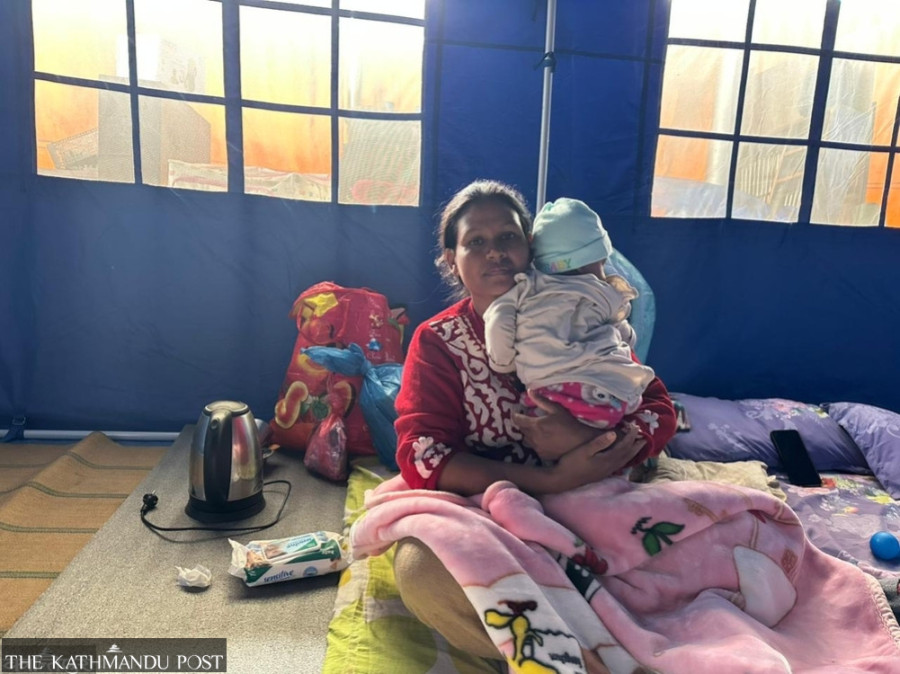
Families are facing hardship without food choices, infant care facilities and uncertainty over resettlement. Sabina Nepali with her four-month-old daughter at a holding centre in Kirtipur. She arrived on Saturday after being displaced from a squatter settlement in Sinamangal. Aarati Paudel/TKP
In a corner of a holding centre in Kirtipur, 35-year-old Sabina Nepali breastfeeds her infant, trying to calm the child amid constant noise and unfamiliar surroundings. She arrived Saturday with her four-month-old daughter after being displaced from a settlement in Sinamangal in the government’s eviction drive.
Heavy rain on Tuesday soaked the bedding of many families at the centre, prompting authorities to distribute tents. Nepali now sits inside one, with a small bag of clothes, baby wipes and an electric kettle beside her.
“At home, we could eat what we wanted. Here, we get tea and biscuits in the morning and have to eat whatever is cooked for everyone,” she said.
Feeding her infant has become difficult. “Milk is not enough. At home, I used to cook porridge. How can I do that here? I mix baby food with hot water and feed her,” she said.
She said she had to sleep without a tent for four days after arriving. Mosquitoes and exposure made conditions worse. “My baby was bitten by mosquitoes all over her face and body. I only got a mosquito net after complaining,” she said.
Her experience reflects broader concerns over preparedness before relocating displaced families. In the initial days, many reported difficulties accessing hot water, particularly mothers and the sick.
In an audio message shared among the displaced and accessed by Kantipur, a mother of an eight- to ten-month-old baby said, “There is no milk powder or porridge. There is no facility to heat water. Breast milk is not enough. For the first two to three days, I could prepare porridge only once a day despite repeated requests.”
Food restrictions at the Radhaswami Satsang Nepal centre have added to the hardship, with meat, fish and eggs not allowed. “We are not allowed to eat meat or even eggs here,” another woman said in an audio clip.
Women with infants said the lack of partitions means noise spreads easily, making it hard for babies to sleep. Nepali, who is staying with the other two sons, aged 21 and 16, said, “Even if it was a hut, our own home was ours. The children also feel that. Here, the noise makes her cry throughout the evening.”
Before the eviction, Nepali worked as a domestic helper to support her family, while her husband, employed at a garment factory in Banasthali, visited once a week. She lost her job after being displaced.
“The money I earned helped manage daily expenses,” she said. “Even if we ate simple food, we cooked it ourselves.” She left behind furniture, including beds and cupboards, when their home, where they stayed for 19 years, was demolished.
Metropolitan Police Chief Bishnu Joshi said authorities are assisting in managing the displaced. “We are supporting arrangements at Radhaswami, where food is being provided,” he said. Forty-eight women and children live in the centre.
He added that two pregnant women among the displaced have been taken to the hospital, and efforts are ongoing to support children’s education. Long-term resettlement plans are yet to be finalised by the government and the Ministry of Urban Development.
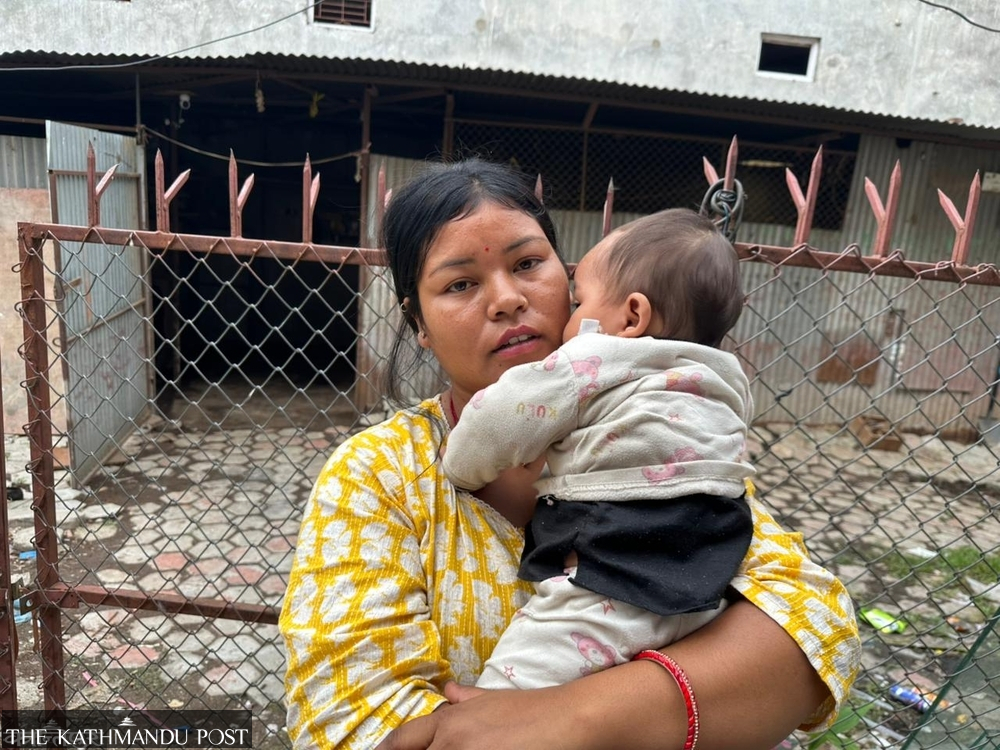
Some families have been placed in hotels, but challenges persist. Asma Syaba, 27, is staying at a lodge near the New Bus Park with her five-year-old daughter and seven-month-old son after being displaced from Manohara.
“At the hotel, we eat whatever is provided. I cannot ask for separate food just because I am a new mother,” she said.
Syaba had been living in a rented hut before it was demolished. Her husband is working in Kuwait, leaving her to manage alone. After the eviction, she stayed with relatives before being moved to the hotel.
She said feeding her infant and maintaining hygiene remain difficult. She has also not been informed about when they will be relocated to temporary housing.
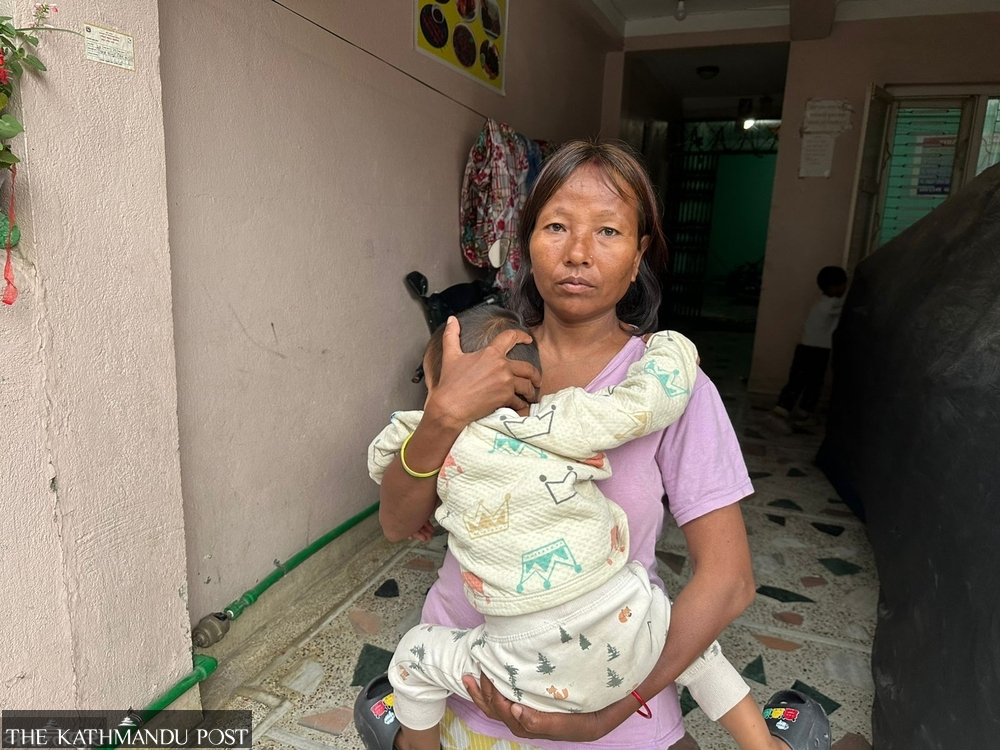
Sangita Singh, 40, is staying at another hotel near the New Bus Park with her 18-month-old daughter and two sons aged seven and eight after being displaced from Shantinagar. Her husband had gone abroad for work a few months ago.
“I was alone with small children when bulldozers arrived. It was frightening,” she said. “I tried to find a room, but no one would rent to me because I have many young children.”
After registering at a temporary shelter, she was moved to the hotel. However, she said the environment remains difficult. “There is constant movement in the evening, and my daughter cannot sleep due to the noise,” she said, adding that her children struggle with shared meals.
“It is hard to think about what to do next. My sons’ schooling has already started. I hope the government arranges something soon,” she said.
Kathmandu Chief District Officer Ishwar Raj Paudel said authorities are collecting data on displaced families requiring support.
“Within 15 days, a detailed screening will be conducted to determine whether they own land, and arrangements will be made accordingly,” he said.
For now, families remain in holding centres, hotels and lodges, facing uncertainty as they wait for a more stable solution.




 22.06°C Kathmandu