



 14.74°C Kathmandu
Sat, Oct 17, 2026
National
NHRC implicates Oli, Lekhak, officials over protest crackdown
Watchdog says the government’s failure to anticipate the magnitude of protest led to avoidable deaths, destruction.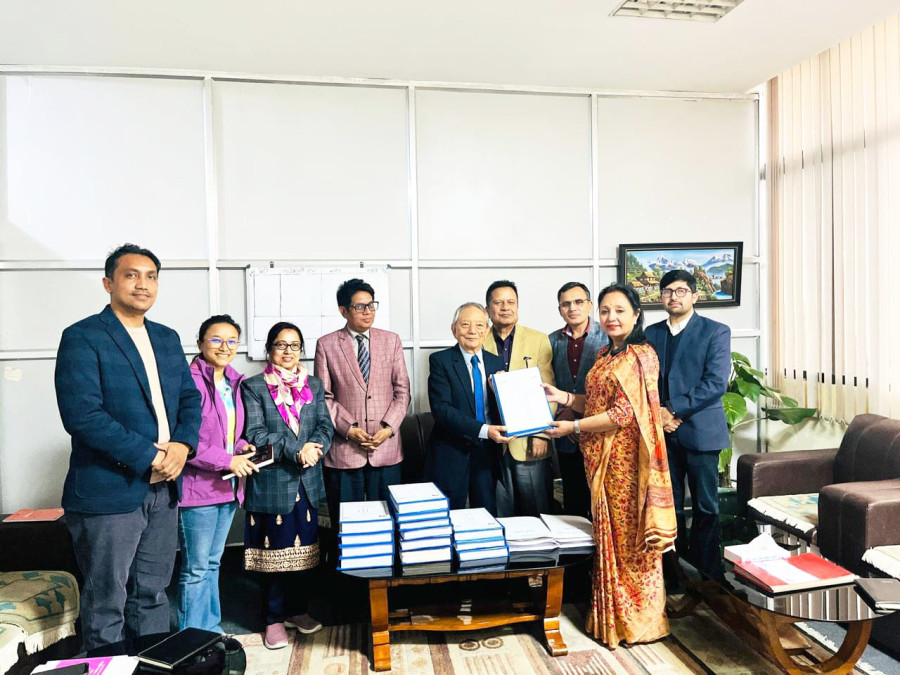
bookmark
Binod Ghimire
Published at : March 21, 2026
Updated at : March 21, 2026 08:33
Kathmandu
The National Human Rights Commission has held then-prime minister KP Sharma Oli, concerned ministers and officials as well as the organisers of the Gen Z uprising accountable for the huge loss of life and damage to property during the two-day movement.
The constitutional human rights body has concluded that the failure of the Oli administration to anticipate the magnitude of the protest contributed to the scale of the casualties and destruction on September 8 and 9.
Led by commission member Lily Thapa, a study team was formed to investigate alleged state excesses during the youth-led protest, which was followed by arson, looting and destruction of public and private properties. The committee, after six months of study, submitted the report to commission chairperson, Top Bahadur Magar, on Friday.
“Action has been recommended against several officials based on the positions they held and their role in the atrocities,” said an official involved in the study. “While criminal investigations have been recommended against some, others have been recommended for minor administrative action.”
The report recommends action against all those found responsible for human rights violations on September 8 and those responsible for arson, looting and destruction on the second day.
As many as 77 people, including 19 killed in indiscriminate firing by police on September 8, died during the two-day movement. Thousands of buildings were also looted and set on fire on the second day. Among the structures gutted was the government’s main administrative centre.
It has recommended legal action against then-home minister Ramesh Lekhak, then-police chief Chandra Kuber Khapung, then-Kathmandu chief district officer Chhabi Rijal, among others. It has concluded that incumbent police chief Dan Bahadur Karki also needs to be investigated.
During its investigation, the commission recorded statements from 90 individuals, including Oli, then-home minister Lekhak, members of the National Security Council (NSC), the Central Security Committee (CSC), and the Kathmandu District Security Committee.
Statements were also recorded from then Kathmandu Metropolitan City mayor Balendra Shah, and Rastriya Swatantra Party chair Rabi Lamichhane, among others. Even as it had asked the Chief of the Army Staff to be present for a statement, he sent a major general to respond on behalf of the national defence force.
In addition, the probe committee held discussions with 586 others, including protesters and victims.
“Other than recording the statements, we have also analysed the forensic and ballistic reports before drawing a conclusion,” said Thapa. The forensic reports were analysed to determine how bullets were fired and whether the use of lethal force was necessary. The investigation into the September 8 incident focused on where and how bullets struck and whether firing was justified.
Other than the government’s failure to anticipate the gravity of the protests, the commission also found that the NSC and the CSC failed to carry out their duties. While the NSC is led by the prime minister, the home minister leads the CSC.
Thapa said she expects the commission to approve the report and make it public next week.
The commission also examined the mobilisation of security forces and accountability issues. In the process, it reviewed and analysed around 400 videos.
The commission further analysed forensic reports to determine how bullets were fired and whether the use of lethal force was necessary. The investigation into the September 8 incident focused on where and how bullets struck and whether firing was justified.
“The protest was peaceful on the morning of the first day. However, excessive use of force against the demonstrators in the afternoon turned the situation violent,” the report concludes, according to an official.
“Even on the second day, violence was the outcome of the first day of the atrocities. However, it cannot be justified on any pretext. Thus, those involved in the destruction need to be booked under the existing laws.”
The commission has studied in detail whether the Kathmandu metropolis was reluctant to mobilise the fire brigades to douse fires, and has also analysed whether Lamichhane’s decision to flee from prison instigated the protesters.
While the constitutional rights body has submitted its report, the government has yet to release a separate report submitted by a commission led by former justice Gauri Bahadur Karki. Commission member Lily Thapa expressed confidence that the report would be made public after approval.
The Sushila Karki administration has been reluctant to release the Karki commission’s report, even as pressure mounts from citizens across different walks of life. Dozens of Gen-Z activists continue to hold regular protests demanding that the report be made public.
Binod Ghimire
Binod Ghimire covers parliamentary affairs and human rights for The Kathmandu Post. Since joining the Post in 2010, he has reported primarily on social issues, focusing on education and transitional justice.



Most Read from National

Flood sweeps away houses, bridges in Gorkha

Torrent of black mud and rocks engulfs settlements along Budhigandaki

From blankets to handmade dolls, two foreign women bring comfort to flood survivors
British Gurkha veterans issue ultimatum to Nepal government over long-standing grievances

Budhi Gandaki flood washes away three bridges in Gorkha
Editor's Picks

Constitutional Bench caught in seniority, ‘pick and choose’ dispute

A Dom boy’s long road to becoming a doctor
From blankets to handmade dolls, two foreign women bring comfort to flood survivors

News Analysis: When institutional defence exposes institutional fault lines

It’s a bird … it’s a plane … it’s the Indian ambassador’s farewell tweets
E-PAPER | October 17, 2026

×