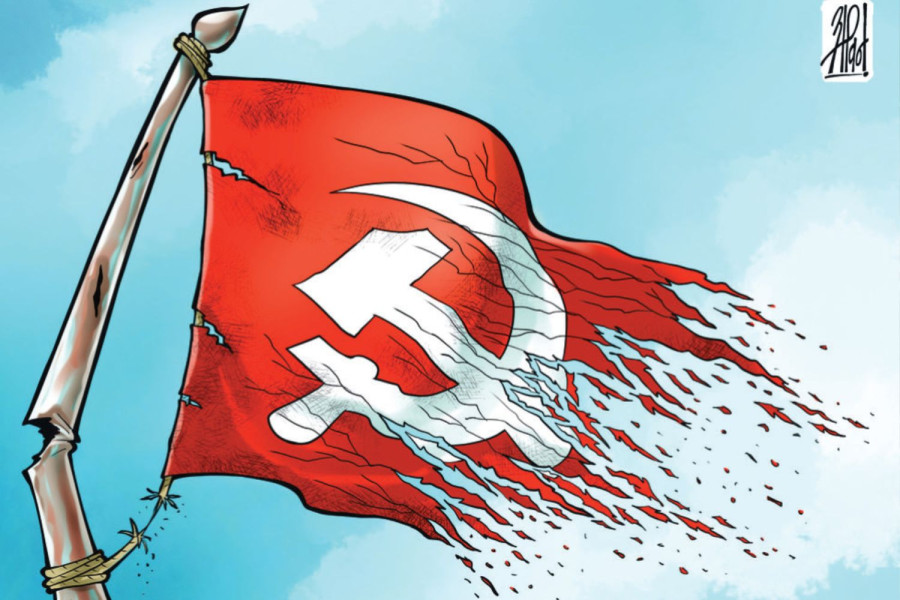
Why are South Asia’s communist bastions crumbling?
Leftist leaders and analysts say the steady decline of communist parties stems from a mix of ideological drift, leadership failures, and changing voter expectations.
One Prachanda, With Mao’s Red Book tucked in his bag, Wandering from door to door seeking shelter In the Magar hamlets of Rukum— Was left behind somewhere along the way there.
Another Prachanda, Forgetting the very trails he once carved, Marching on highways built by others, Was left behind too, Amid the crowd of the satiated.
– Prachanda, left behind by Raju Syangtan
Six years ago, journalist and poet Raju Syangtan penned a free verse directed at Pushpa Kamal Dahal, chairman of then CPN (Maoist Centre). The poem served as a poignant critique of how the Maoist movement and its leadership were drifting away from their foundational beliefs. In the wake of the March 5 general election, those verses have transitioned from mere artistic commentary to a definitive political autopsy.
The recent electoral results suggest that it is not just the Maoist movement, but the entire leftist movement in Nepal that has been left behind by a changing electorate. However, the downward trajectory of the left is not a story unique to Nepal; it is a shared affliction across communist parties in South Asia.
In the recent House of Representatives election, Dahal, now the coordinator of Nepali Communist Party (NCP), managed to win his seat, but many of his fellow comrades did not. On February 14, while campaigning for the election, Dahal reached Bheridanda in Chunbang, Rukum East, in what was an emotional homecoming for him.
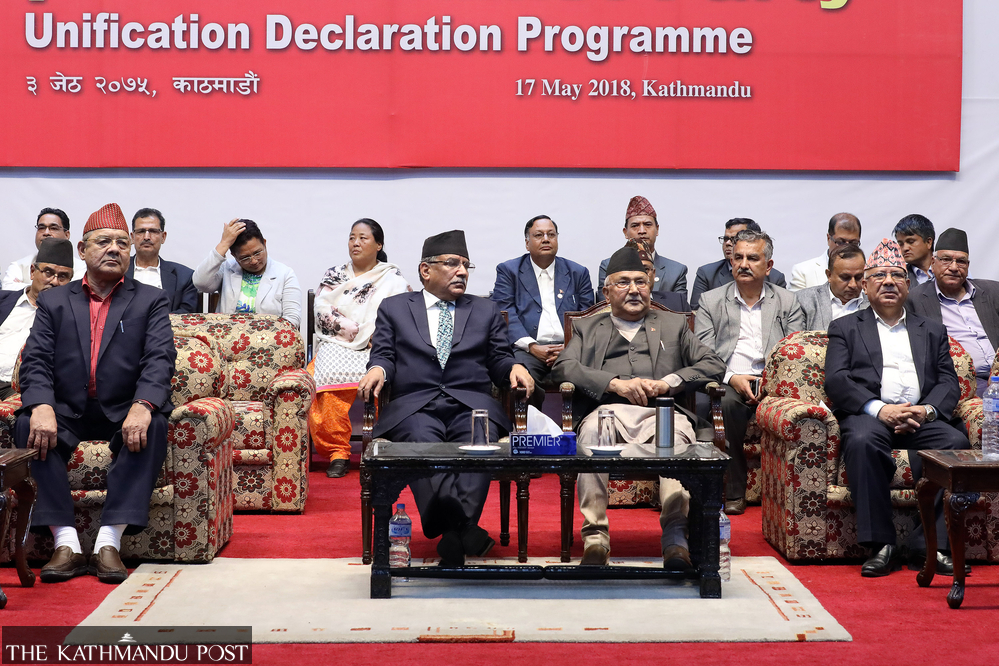
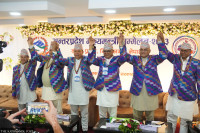
Leaders of the CPN-UML and the then CPN (Maoist Centre) during the two party’s merger function at Kathmandu in May, 2018. Post File Photo
The Chunbang meeting of the then Maoists in 2005 is regarded as historic. This very meeting decided to cooperate with parliamentary parties, endorsing a political line to move towards competitive politics. It concluded that collaboration with parties such as the Nepali Congress and CPN-UML was necessary, leading to the 12-point political agreement signed on November 22, 2005. This paved the way for the second people’s movement.
At the Chunbang meeting, a song written by former Rukum East lawmaker Purna Gharti and composed and sung by Mohit Shrestha had gained wide popularity within the party. During the Maoist war, such artists and “people’s cultural activists” served as a bridge between the party and the masses. However, those cultural figures who once spread revolutionary zeal among the people have largely been abandoned by the party.
Madhav Kumar Nepal, co-chair of NCP alongside Dahal, lost the election in Rautahat. KP Sharma Oli of the CPN-UML—the largest left party—was defeated in Jhapa with a thumping margin by Rastriya Swatantra Party’s prime ministerial candidate Balendra Shah. The Maoist faction led by Netra Bikram Chand, which had launched a separate movement accusing the mainstream Maoists of ‘ideological deviation’, has virtually disappeared. Likewise, leaders such as Janardan Sharma and Ghanshyam Bhusal, who broke away from their respective parties claiming that the leadership was dissolving the communist movement, also failed to gain public trust.
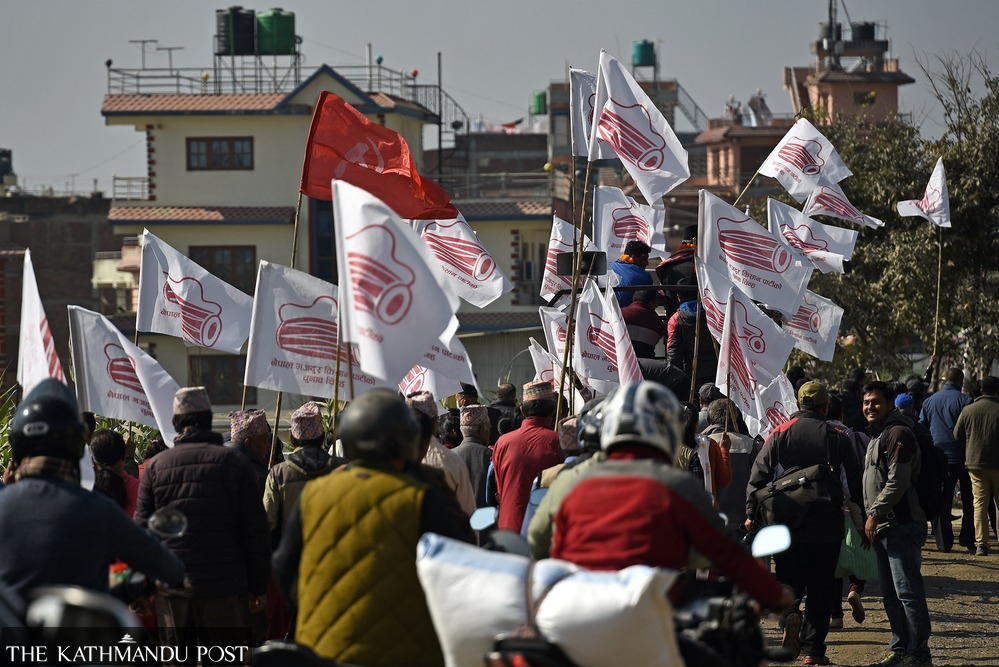
Nepal Majdoor Kisan Party holds a victory rally after it's 2079 electoral triumph in Bhaktapur-1.
In Bhaktapur-1, the political bastion of the Nepal Workers and Peasants Party (NWPP), collapsed this time. The party had been undefeated in the constituency since 1991, with its chairman Narayanman Bijukchhe winning consecutive elections in 1991, 1994, 1999, 2008 and 2013, while party secretary Prem Suwal won in 2017 and 2022. However, this time Suwal was defeated by RSP candidate Rukesh Ranjit, ending the party’s dominance in Bhaktapur.
Another left party, the Rastriya Janamorcha led by Chitra Bahadur KC, was also swept aside. In the first Constituent Assembly election of 2008, when a Maoist wave swept the country, the party had won in Baglung-2, where its chairman KC was elected. From 1994 to 2022, KC’s influence was visible in successive elections. He defeated Nepali Congress candidates in 1999 and 2008 and later became a proportional representation member in the 2013 Constituent Assembly.
Although KC won the 2022 election in alliance with the Nepali Congress and Maoist Centre, this time, the party failed to maintain its strength. In Baglung-1, it fielded Krishna Prasad Sharma Adhikari, who, despite support from NCP, was pushed to fourth place. Even in Pyuthan, considered a Janamorcha stronghold, the party’s performance was weak.
In his column in Kantipur daily on August 19, soon before the Gen Z movement last year, left analyst Hari Roka wrote, “If anyone still believes that the communist movement can move forward under the leadership of Oli, Dahal and Nepal, that person is either deluded or agrees to dissolve the communist movement.” Despite his criticism, Roka himself contested the recent poll from Khotang under an NCP ticket, and lost.
After the March 5 polls, among these left parties, only UML and the NCP are represented in Parliament. The UML secured just nine seats while the NCP won eight under the first-past-the-post system. Under proportional representation, UML obtained 16 seats and the NCP nine in the 275-member House of Representatives.
Left parties between them received around 2.3 million proportional votes this time, compared to nearly 2.8 million votes secured by UML alone in 2022. In the 2008 Constituent Assembly election, the Maoists alone had secured 3.1 million proportional votes. Despite merging several smaller factions, the NCP managed only 811,000 votes this time. Left parties are expected to hold only about 15 percent of seats in the HoR.
Left parties had never performed so dismally in the past parliamentary elections, barring the first one in 1959, when the Communist Party of Nepal won four seats.
After the 1990 People’s Movement, left parties maintained a strong presence in Parliament, although they frequently suffered splits due to internal conflicts and ideological differences.
In the 1991 election, UML won 69 seats, the United People’s Front 9, the Communist Party of Nepal (Democratic) 2, and NWPP 2. Altogether, left parties held 82 seats in the 205-member HoR. Despite a clear majority, the Congress could not complete its five-year term due to internal disputes, leading to mid-term polls after the prime minister Girija Prasad Koirala failed to endorse the government’s policy and programme.
In the 1994 midterm elections, left parties became even stronger. UML alone won 88 seats, becoming the largest party in the lower House, while NWPP secured four. However, UML split in 1998, weakening the left movement.
In 1999, the Congress won 111 seats, while UML’s strength declined to 71. Other left parties won only a handful of seats.
After the armed conflict, the Maoists entered the peace process, and the 2006 People’s Movement brought major political change. The first Constituent Assembly election was held on 10 April 2008, in which communist parties collectively won 352 of 601 seats. The Maoists emerged as the largest party, and Dahal became prime minister, forming the second communist-led government after the one led by Manmohan Adhikari in 1994.
In the 2013 Constituent Assembly election, left parties weakened. The Maoists fell to third place, while UML rose to second. The Nepali Congress secured 206 seats, UML 184, and the Maoists were reduced to 83.
The 2017 elections, held after the promulgation of the new constitution, saw a strong leftward wave. UML and the Maoists contested in an electoral alliance, winning nearly two-thirds of the seats—121 for UML and 53 for the Maoists. Including smaller left parties, they held about 64 percent seats in Parliament.
After the election, UML and Maoists unified to form the Nepal Communist Party. However, internal disputes between Oli and Dahal led to the party’s collapse. Oli dissolved Parliament twice, but the Supreme Court later reinstated it and invalidated the party unification, restoring UML and Maoists as separate entities.
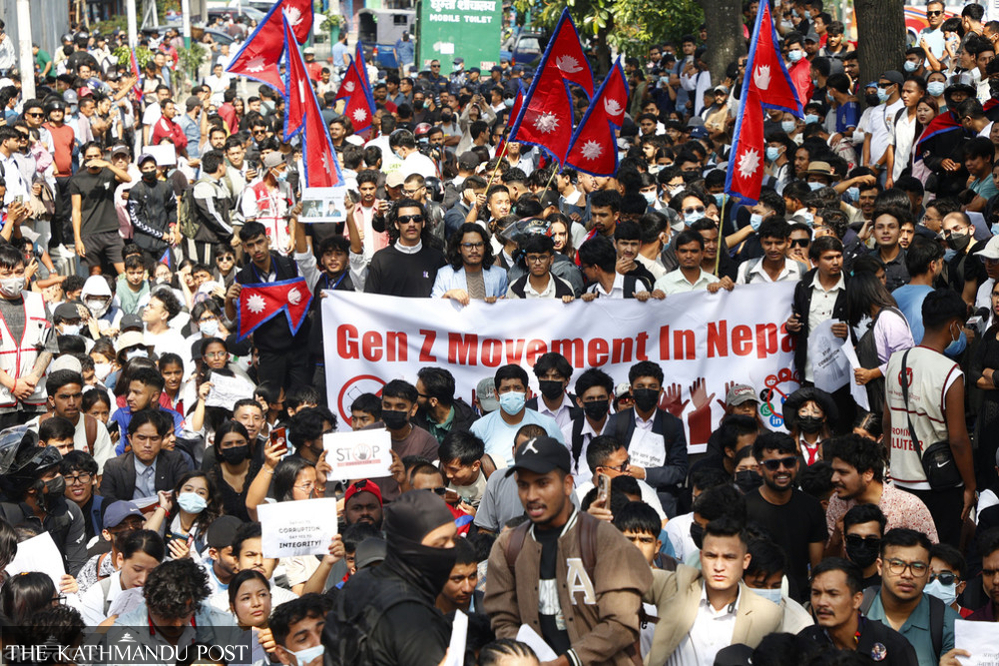
A Gen-Z protest at Maitighar Mandala on September-8, 2025.
In the 2022 elections, a total of 123 lawmakers from left parties were elected. UML secured 79 seats and the Maoists 32, while smaller parties gained a few seats. The latest election results, however, indicate a sharp decline in left politics in Nepal.
Why are the left parties losing?
Leftist leaders and analysts say the steady decline of communist parties stems from a mix of ideological drift, leadership failures, and changing voter expectations.
Binda Pandey, who faced disciplinary action within the UML for expressing dissent, argues that the left movement has weakened due to patronage-driven politics and the rise of opportunistic leadership. “In the past, party-building involved sacrifice and dedication,” she says. “Now, the focus has shifted to gains and opportunities.”
Pandey doubts the younger generation sees leaders such as Dahal and Oli as role models. “When we joined the left movement, we spoke of Pushpalal. We looked up to figures like Madan Bhandari and Manmohan Adhikari,” she adds. “Today’s voters, especially those born in the multiparty era, are in a majority. But our parties still present Oli and Prachanda as role models.”
Political analyst Chandra Kishore echoes similar concerns, pointing to a stark gap between rhetoric and practice among leftist leaders. “Madan Bhandari successfully brought leftist politics into parliamentary practice both conceptually and experimentally,” he says. “But today’s leaders are neither ideologically committed nor consistent in their behaviour and character.”
While communist leaders, according to Chandra Kishore, once contributed to social transformation through their austere lifestyles—whether during the Panchayat era or the Maoist insurgency—recent years have seen a disconnect from their traditional support base. “They have begun to resemble corporate agents,” he says. “Parties like UML and the Maoists operate like companies. The lifestyles of their leaders have become increasingly comfort-driven. The revolutionary image once associated with ‘comrades’ has faded.”
Bhusal agrees that the current leadership is incapable of advancing the communist movement. Now a leader of CPN (Unified), Bhusal says repeated warnings from within the movement were ignored. “The left movement emerged from the realisation that the state had been captured by a handful of capitalists and lacked organised power representing the masses,” he says. “Wherever the movement has failed to address this or forgot its class base and roots, it has weakened.” Bhusal accuses the leadership of depoliticising and de-ideologising the left parties, steering it away from core leftist principles.
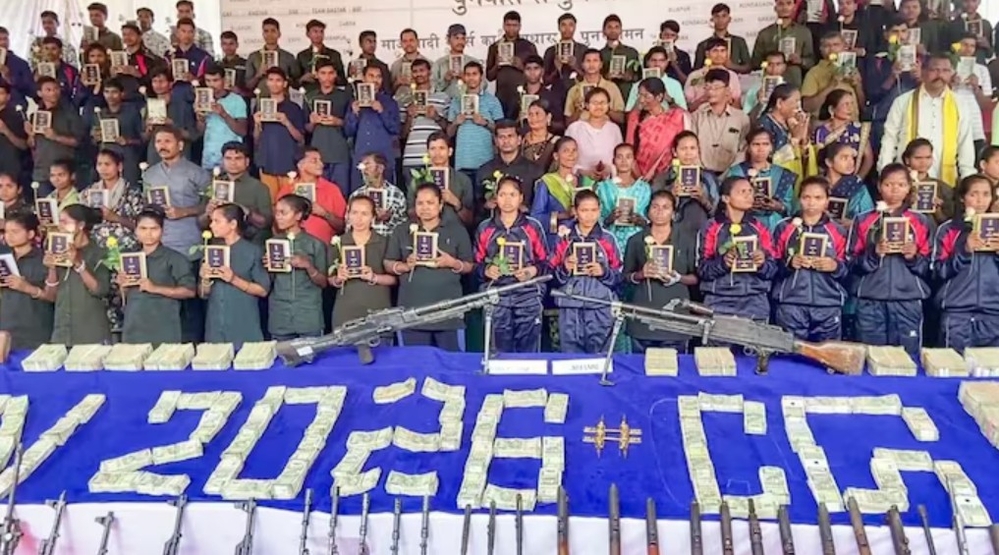
Surrendered Maoist leaders and cadres in Jagdalpur, in the Indian state of Chhattisgarh, last week. Courtesy of India Today
Why are communist parties in decline in Nepal?
Leaders and analysts across South Asia say Nepal’s communist parties, once central to the country’s democratic transformation, are now in steady decline due to internal weaknesses, shifting voter expectations and rising public disillusionment.
Dipankar Bhattacharya, general secretary of the Communist Party of India (Marxist-Leninist), credits Nepal’s left for playing a decisive role in the transition from a constitutional monarchy to a multiparty republic. However, he says recent political shifts—particularly after the Gen Z movement in September—have altered the electoral landscape. According to him, dissatisfaction with leadership translated into support for the removal of the Oli government.
Bhattacharya compares Nepal with Sri Lanka and Bangladesh, where youth-led protests reshaped politics. “In all three countries, there was frustration with leaders of old parties,” he says. “In Nepal, traditional parties contested elections but were defeated by new alternatives.” He points to the 2022 mayoral victory of Balendra Shah in Kathmandu as an early sign of voters seeking change.
According to him, instability and repression further shaped public opinion. Since Nepal became a republic in 2008, around 14 governments have been formed, none of which has completed a full term. Corruption, unstable coalitions, ageing leadership and a widening gap with younger voters fuelled dissatisfaction, while police action during protests intensified anger, pushing voters towards new faces promising better governance.
Indresh Maikhuri, Uttarakhand leader of the Communist Party of India (ML), says that Nepal’s communist parties have forgotten their roots. “The left has also failed to bring generational change in leadership,” he says.
Adam Pal, a central committee member of the Inqalabi Communist Party in Pakistan, interprets the election results as evidence that a “Gen Z revolution” is still unfolding. “People rejected traditional parties, which created space for new leaders and forces,” he says, linking Nepal’s developments to a broader global trend of rising figures—from anti-inequality advocates to independent politicians—challenging established systems. However, he cautions that many new actors will dare not venture away from capitalist frameworks.
Meanwhile, Dhammika Patabendi, Sri Lanka’s environment minister and a central leader of the Janatha Vimukthi Peramuna, argues that Nepal’s left has been weakened not by ideology but by internal and structural problems. “Factionalism, splits, and power struggles eroded public trust. Even when unified, internal conflicts persisted,” he says.
He also points to a growing disconnect with younger voters. “Today’s youth see left parties as outdated in style,” Patabendi argues. “Although they once projected a revolutionary image, after the monarchy ended, they governed much the same way as traditional elites. Instead of working to transform society, they appeared to serve elite interests, which diluted their revolutionary credentials.”
Rise and fall of left politics in South Asia
By the mid-1980s, Marxist-Leninist parties governed nearly half of Europe. Today, however, no European country is led by a communist party. Outside states that formally retain communist systems, Nepal remains one of the few countries where left forces have recently led the government. Countries still under communist rule include China, Laos, Vietnam, North Korea and Cuba. Except for North Korea, all have adopted market-oriented economic reforms alongside one-party rule.
In India, left parties have experienced mixed fortunes. They governed West Bengal for 34 years, from 1977 to 2011, under a Left Front led by the Communist Party of India (Marxist). Today, however, they hold no seats in the 294-member state assembly. In contrast, the Left Democratic Front remains in power in Kerala, retaining a majority in the 140-member legislature. In Tripura, left parties still hold sway, while their presence elsewhere is marginal.
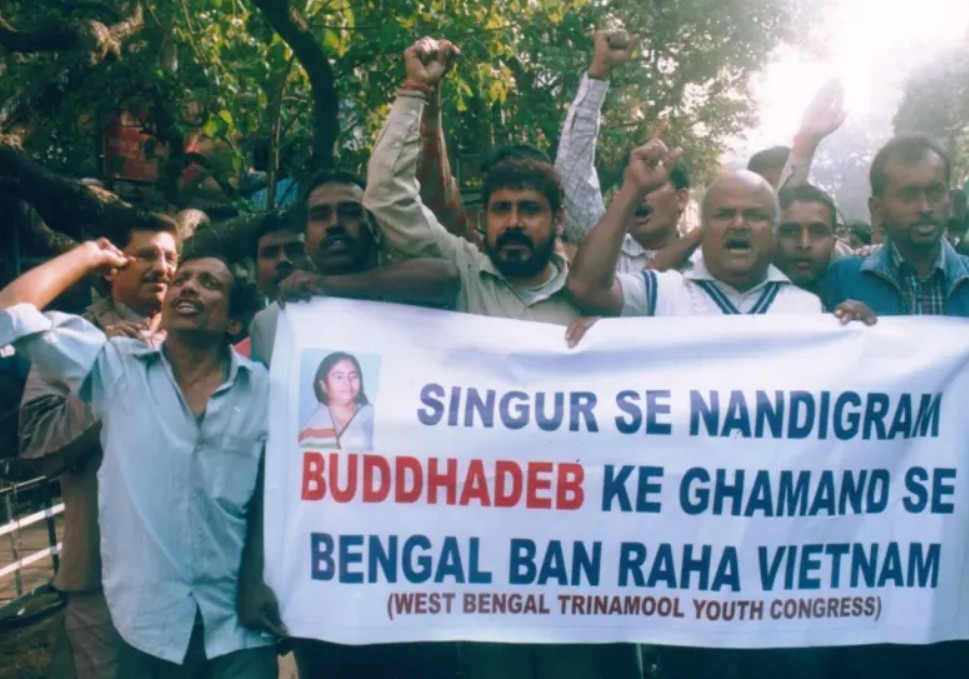
Cadres of India’s Trinamool Congress in a protest rally against Singur Nano Plant. Courtesy of BBC Hindi
West Bengal was once the epicentre of left politics in the region. It is also where the Communist Party of Nepal was founded in 1949 under the leadership of Pushpa Lal Shrestha. Despite notable achievements such as land reforms under “Operation Barga,” analysts say policy missteps contributed to the left’s decline. Indresh Maikhuri, of the Communist Party of India (Marxist–Leninist) Liberation, argues that the push for industrialisation, combined with neoliberal policies, eroded the left’s rural support base and led to its electoral defeat in 2011.
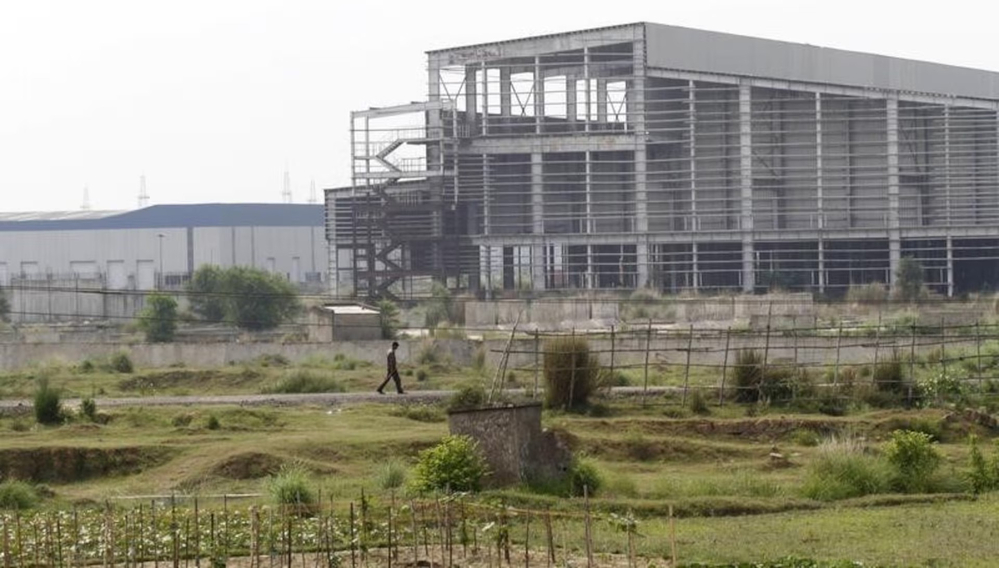
Manindra Nath Thakur, associate professor at the Centre for Political Studies, Jawaharlal Nehru University, adds that the failure to address youth aspirations proved decisive. Rising unemployment and unrest were not effectively tackled, while controversial land acquisition in Singur for a Tata Motors project alienated farmers. Protests in Singur and Nandigram propelled Mamata Banerjee of Trinamool Congress to power, reshaping West Bengal’s political landscape.
In contrast, Kerala’s left has endured by adapting to social change. The state’s emphasis on welfare, innovation and inclusive politics, including engagement with marginalised communities, has sustained its relevance. Notably, Kerala also made history in 1957 when E M S Namboodiripad became the world’s first democratically elected communist chief minister.
Beyond mainstream politics, India’s Maoists continue an armed struggle rooted in demands for land and tribal rights. Originating in the 1960s Naxalbari uprising under Charu Majumdar, the insurgency spread across several states, including Bihar, Andhra Pradesh, Punjab and Kerala. In recent years, however, it has weakened. Thousands of cadres have surrendered or been arrested, and violence has declined, though sporadic activity persists in states such as Chhattisgarh and Jharkhand.
Communists struggle to stay relevant in Pakistan and Bangladesh
In Pakistan, communist politics has remained on the fringes despite an early initiation. The Communist Party of Pakistan was founded in 1948 in Kolkata by leaders including Sajjad Zaheer, but was banned in 1951 amid fears it could threaten the Muslim-majority state. Since then, leftist groups have survived only in small, fragmented formations, occasionally speaking out on labour rights, geopolitics and conflicts such as tensions involving Iran and the United States.
Adam Pal of the Inqalabi Communist Party says the left missed historic opportunities to lead, particularly during the 1968-69 mass uprising and in the 1980s. He argues that adherence to a Stalinist “two-stage theory” led parties to align with the national bourgeoisie, weakening the independent revolutionary role of workers.
In Bangladesh, too, there are communist parties but they remain electorally marginal. Manzoor Moin of the Communist Party of Bangladesh cautions against generalising a decline across South Asia, noting that mass movements in countries like Sri Lanka, Nepal and Bangladesh emerged under different conditions.
However, he says Bangladesh’s left has struggled to gain public trust. A so-called progressive forceruled for nearly 17 years in an increasingly authoritarian manner, fuelling the rise of right-wing communal politics. Amid new political polarisation, leftist and alternative forces have failed to translate public discontent into meaningful electoral success.
Tata Group’s Nano plant in Singur, West Bengal. Reuters
Left rises to power in Sri Lanka after 2022 uprising
Leftist politics in Sri Lanka has undergone dramatic change, culminating in a return to power following the 2022 mass uprising. The country’s left movement dates back to 1936, to the formation of the Lanka Sama Samaja Party (LSSP), which later became a key part of the global Trotskyist Fourth International in the 1950s and 1960s. However, ideological splits and the emergence of the Communist Party of Sri Lanka fragmented the movement, weakening its influence from the mid-1960s onwards.
As traditional left parties declined, the Janatha Vimukthi Peramuna (JVP) emerged as a new force, launching an armed uprising in 1971 against state repression. The crackdown that followed reportedly killed around 10,000 supporters and led to the imprisonment of over 20,000. Despite this, the JVP later repositioned itself within democratic politics, campaigning against corruption, dynastic rule and economic mismanagement.
Sri Lanka’s prolonged economic crisis proved to be a decisive turning point. In 2022, widespread protests—known as the “Aragalaya” movement—erupted against then-president Gotabaya Rajapaksa and the powerful Rajapaksa family. Protesters rallied under slogans such as “Go Home Gota,” forcing Rajapaksa’s resignation amid severe economic collapse.
Anura Kumara Dissanayake, a key JVP leader who had secured only around three percent of the vote in the 2019 presidential election, rose to prominence during the movement as a vocal critic of corruption and economic mismanagement. He mobilised support from students, workers and civil society groups, positioning himself as a credible alternative.
According to Patabendi, the Srilankan minister, the crisis exposed deep-rooted inequalities, rising inflation and elite dominance, fuelling public anger and opening space for a “rebranded left”. Since September 2024, Sri Lanka has been governed by a left-led coalition under the National People’s Power alliance, which includes the JVP and over 20 allied groups, marking a significant political shift.
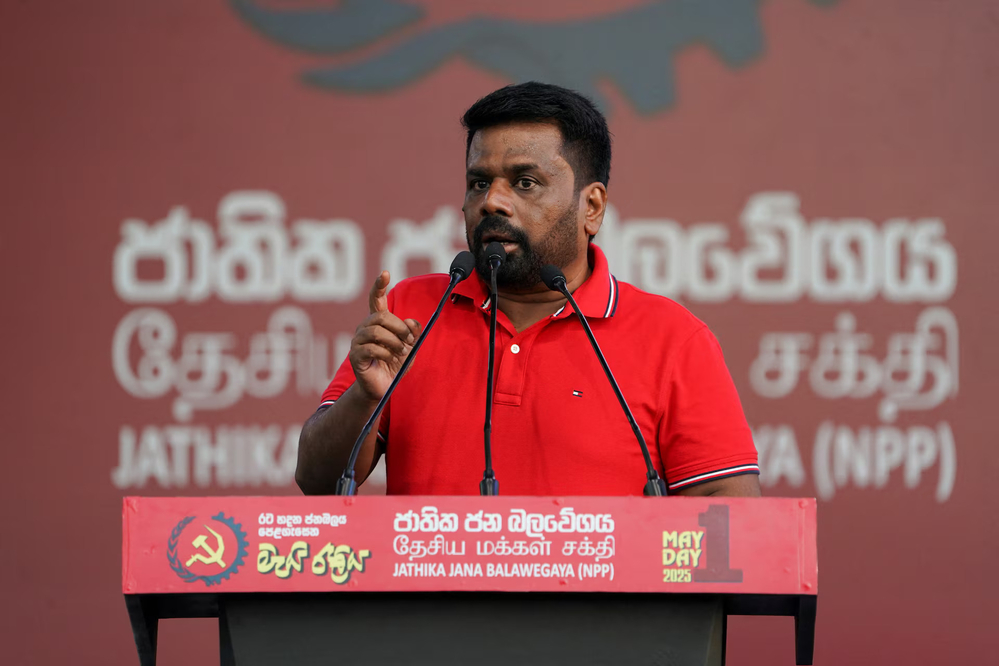
President of Sri Lanka Anura Kumara Dissanayake. Reuters
Bhutan’s Maoist insurgency and its decline
Bhutan witnessed a brief but notable Maoist insurgency in the 2000s, largely driven by exiled political groups. On 20 January 2008, a series of coordinated bomb blasts struck four locations, including Thimphu, between 11:10 am and 2:10 pm. Although no casualties were reported, the attacks were seen as an attempt to disrupt Bhutan’s first general election scheduled for March that year.
Responsibility for the explosions was claimed via email by the United Revolutionary Front of Bhutan, reportedly led by a commander known as “Karma”. Bhutanese authorities suspected links to Nepal-based outfits, including the Bhutan Tiger Force and the Communist Party of Bhutan (Marxist-Leninist-Maoist), which were believed to be interconnected. The Bhutan Tiger Force functioned as the armed wing of the party.
According to the South Asia Terrorism Portal, the Maoist party was established in refugee camps in Nepal, with goals including the abolition of monarchy and repatriation of displaced Bhutanese. Between 2003 and 2008, at least 24 people—eight civilians and 16 militants—were killed in related violence.
Bhutan banned the group, and officials now consider it effectively defunct, marking the end of a short-lived insurgent movement.
The future of left-wing politics in South Asia
In the most recent elections, voters largely rejected left-wing parties, but leaders like Bhusal remain optimistic about the potential revival of the communist movement. Bhusal argues that the current leadership cannot sustain the movement and that it is up to the new generation of activists and intellectuals to learn from past mistakes. “If left-wing workers and thinkers learn, the movement can rise again,” he says.
Bhusal emphasises the need for a grand reorganisation of the left, noting that young people quickly understand societal realities and must be taught what left-wing politics truly represents. Similarly, Pandey argues that traditional party role models, such as Oli and Dahal, are no longer relevant, as their style alienates rather than inspires.
Analyst Chandra Kishore identifies a long-term crisis in Nepali leftist politics, where theory and practice diverge. Left-wing parties have largely failed to engage with marginalised groups, including indigenous communities, Dalits, and Madhesi populations, weakening their grassroots influence.
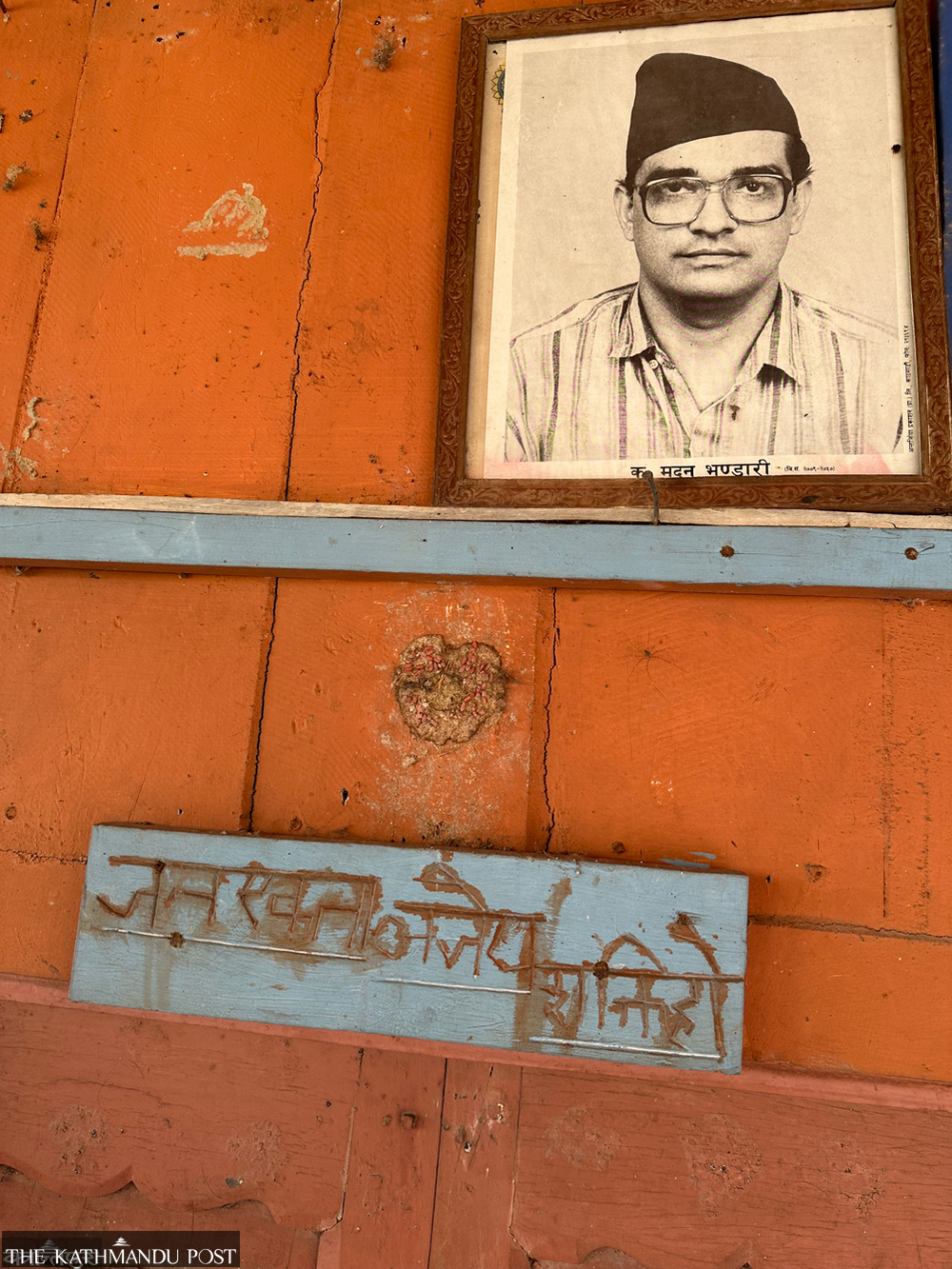
CPN-UML’s then General Secretary Madan Bhandari, who died along with UML leader Jibaraj Ashrit in a jeep accident at Dasdhunga on May 16, 1993 POST FILE PHOTO
External perspectives also support the case for renewal. Bhattacharya of the Communist Party of India (Maoist) sees recent electoral setbacks as a warning, urging structural reform to connect with new generations. Adam Pal stresses the importance of revolutionary leadership rooted in core communist principles, warning that urban youth are seeking alternatives when leftist parties drift toward liberalism.
Moin believes the recent decline in South Asian left-wing politics is only a temporary setback. He argues that understanding the priorities of the younger generation and redefining the movement can enable a revival.
Academic Thakur points to capitalism and technological unemployment as new challenges that traditional labour-based leftist strategies cannot address. Without connecting with Gen Z, he says, the left risks irrelevance. However, Thakur remains optimistic: with ideological adaptation and organisational innovation, left-wing politics can experience a renaissance, not just in Nepal but across South Asia, he says.
There is a clear consensus among these observers: leftist revival requires learning from the past, embracing youth, and reforming organisational structures to respond to contemporary social and economic realities.




 14.4°C Kathmandu