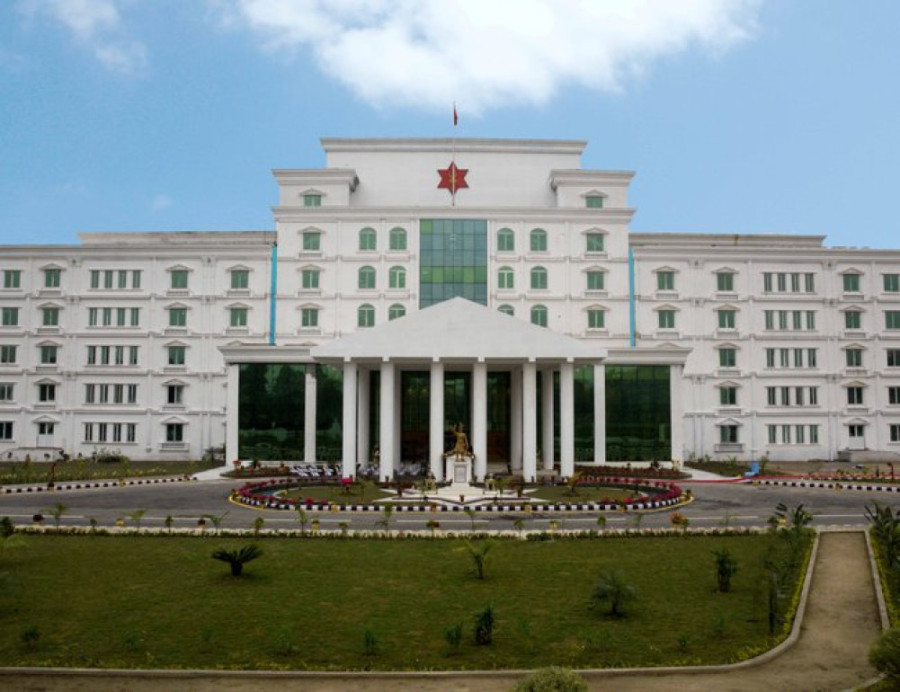
The Nepal government has officially handed over the construction of the 35-kilometre Lasikyap-Sisaul road section to the Nepali Army. This strategic stretch of the Bheri Corridor involves navigating extremely steep cliffs and hard rock, which has hindered progress for years despite multiple attempts by private firms to complete the track.
Physical Infrastructure and Transport Minister Madhav Chaulagain said that the Cabinet reached this decision on March 15. “Due to the remote geography and technical complexities, opening the track to the required standards proved difficult for civilian contractors,” said Chaulagain, adding that the government would soon allocate the necessary budget to ensure the army can expedite the process immediately.
The Bheri Corridor is a 317-kilometre link road connecting Jamunaha on the Indian border to the Tibetan border through Surkhet, Salyan, Jajarkot, Rukum West and Dolpa districts. According to the project office in Jajarkot, while 107 kilometres from Chhinchu of Surkhet to Jajarkot are blacktopped, other sections remain under construction or upgrading.
Previously, the army successfully opened the 118-kilometre Jajarkot-Dunai track in 2018, significantly improving accessibility in the once-isolated Karnali region.
Stakeholders believe this new assignment will finally bridge the gap to the north. Dhan Bahadur Budha, newly elected parliamentarian from Dolpa, emphasised the project’s economic potential. “Completing this corridor will be a catalyst for Himalayan tourism,” said Budha. “It provides direct access to Phoksundo Lake and the ancient Shey-Phoksundo religious sites, benefiting both domestic and international visitors.”
The 40-kilometre track from Morimla to Sisaul is already functional, leaving the Lasikyap-Sisaul stretch as the final hurdle. Local residents expressed relief at the Army's involvement, noting that private contractors often abandoned work due to the difficult topography and harsh work conditions.
The corridor is seen as a crucial trade and diplomatic artery between Nepal, India and China. Once finished, it is expected to transform the socio-economic landscape of the Karnali Province by promoting trade and spiritual tourism in the high-altitude settlements of Dho and Tinje, bringing long-awaited prosperity to the region.




 16.79°C Kathmandu